
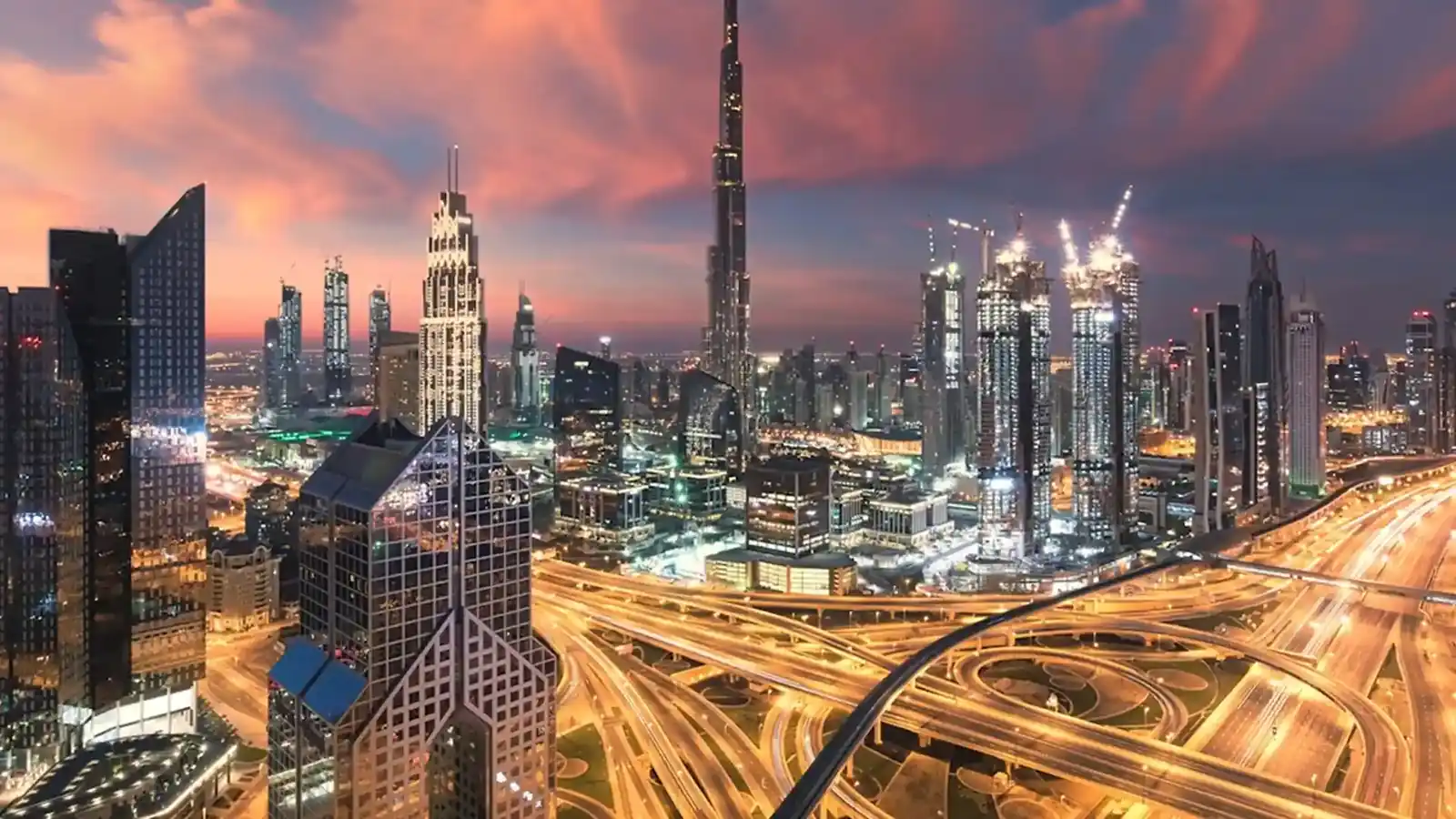
If you are looking to buy your first property in Dubai, there is a specific government scheme that can materially change what you pay and how quickly you get access to new inventory. It is called the First-Time Home Buyer Programme, and it is run directly by the Dubai Land Department (DLD). In this guide, we discuss what this scheme offers, who qualifies, and how to register. What Is the Dubai First-Time Home Buyer Programme? The programme is a DLD-led initiative that gives qualifying residents a set of built-in advantages when buying their first home in Dubai. These include priority access to newly launched units from real estate developers, preferential prices on units reserved by program participants, flexible payment plans for registration fees through eligible credit cards, and competitive mortgage offers from banks. The First-Time Home Buyer Programme is run directly by the Dubai Land Department. The scheme is for the end-users. It is not designed for investors flipping units or for people who already hold freehold property in the emirate. Who Is Eligible for the Dubai First-Time Home Buyer Programme in 2026? DLD lists four requirements: You are a resident of the UAE. Nationality does not matter; residency does. You do not currently own any freehold residential property inside Dubai. You are at least 18 years old. The property you plan to buy is valued below AED 5 million. Two clarifications from the DLD FAQ that catch people out: Owning property in Sharjah, Abu Dhabi, or any other emirate does not disqualify you. Owning property in a non-freehold area of Dubai does not disqualify you either. The disqualifier is specifically freehold ownership within Dubai. Worth knowing upfront The status is single-use. Once you buy a home under this programme, your first-time buyer eligibility is spent. You cannot reactivate it later by selling that property. What Benefits Do First-Time Home Buyers Get in Dubai? The first-time buyers receive the following benefits in this programme. On the property side, registered buyers get early access to new launches from partner developers and preferential prices on selected off-plan units. Payment plans are usually more flexible than the standard offer. On the fee side, DLD registration charges (normally paid upfront at 4% of the property value) can be split into interest-free instalments through eligible credit cards. On the financing side, the partner banks offer mortgage products with better interest rates and faster approval turnaround than their standard retail products. There is no requirement to take a mortgage to join, but the option is there. Emirati citizens receive additional benefits on top of the above. Which Developers Are Part of the Dubai First-Time Home Buyer Programme? The partner developer list is broad enough to cover most price points and communities in Dubai. As of the current DLD listing, participating developers include: Azizi Developments Beyond Developments Binghatti Properties DAMAC Properties Danube Properties Dubai Properties Ellington Properties EMAAR Majid Al Futtaim Meraas Nakheel Properties Palma Holding Wasl SKY VIEW SAMANA Reportage QUBE MANAM IRTH ARADA 4Direction Developments The list is updated from time to time, so check the official DLD page before assuming a particular developer is in or out. Who Are The Partner Banks For The Programme? Five banks are currently on the partner panel: Commercial Bank of Dubai Dubai Islamic Bank Emirates NBD Emirates Islamic Mashreq Bank Each bank sets its own rates and eligibility criteria for the programme’s mortgage products, so it is normal for two of them to quote very different offers on the same salary profile. Comparing at least two or three is sensible. How Do I Apply for the Dubai First-Time Home Buyer Programme? The application is fully online. There are no fees to apply, and no in-person visit is required. Register through the DLD website or the Dubai REST mobile app and submit your personal and residency details. If your application clears the eligibility check, DLD sends a confirmation email with your First-Time Home Buyer QR code attached. You can show the QR code to developers or bank relationship managers to access the programme benefits. If your application is rejected, DLD will state the reason. You can reapply later if you meet all four criteria. How Long Is the First-Time Home Buyer QR Code Valid in Dubai? The QR code will be valid until you complete a property purchase under the programme. There is no fixed expiry date attached to the code itself. If you register today and take eight months to find the right home, the code is still valid when you sign. Does the Programme Cover Off-Plan and Ready Properties in Dubai? Yes, both. For off-plan purchases, the value comes mainly through the developer side: early access, preferential pricing, and flexible payment schedules. For ready properties, the value comes mainly through the bank side: better mortgage rates and quicker processing. The developer benefits do not typically apply here because the seller is usually a private owner. What Should You Check Before Buying Your First Home in Dubai? The programme lowers some costs and gives you earlier access to inventory, but it does not remove the underlying financial weight of buying a home. A few things worth working through before signing anything: The total cost is well above the sticker price. DLD registration is 4% of property value. Agency commission is typically 2%. Add mortgage arrangement fees, valuation fees, initial service charges, and moving costs, and the real cash outlay is usually 7% to 8% on top of the price itself. Mortgage affordability matters more than mortgage approval. A bank may approve you for a loan that stretches your monthly budget uncomfortably thin. Run the numbers assuming rates rise by a percentage point or two over the life of the loan. For off-plan, the developer’s delivery record is not a detail. Check completion history on previous projects, verify the escrow account, and confirm the project is registered on DLD’s portal before paying anything. Have the Sales and Purchase Agreement reviewed by a property lawyer, not by the sales
Palm Jebel Ali vs. Palm Jumeirah: Key Differences, Property Prices & ROI
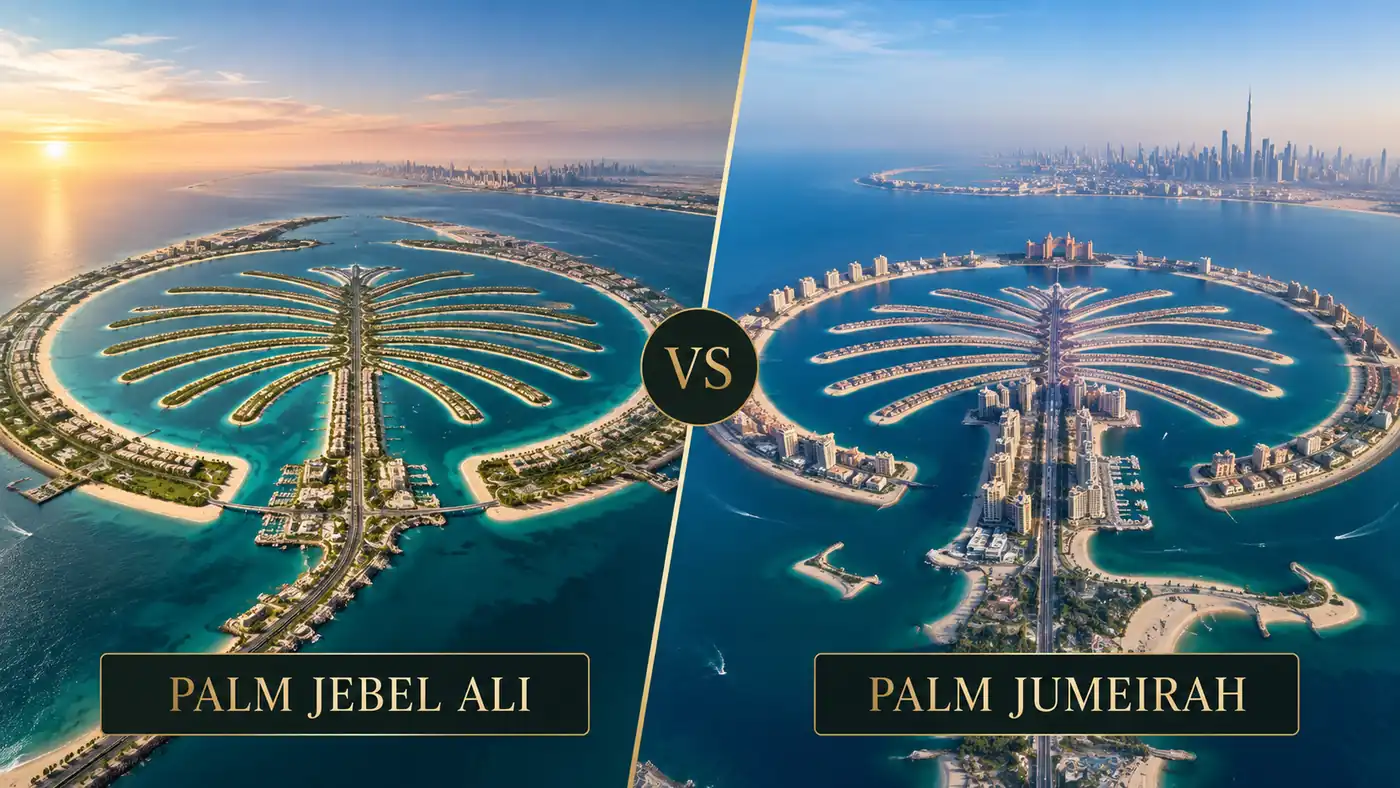
Dubai has two palm shaped waterfront islands. One is Palm Jumeriah and other is Palm Jebel Ali., but they offer very different propositions for buyers and investors in 2026. Palm Jumeirah has been lived in for close to twenty years, with beach clubs, five-star resorts, a monorail line and a resale market deep enough to absorb multi-million dirham trades every week. Palm Jebel Ali, relaunched in 2023 after a long pause, is still developing. It covers twice the footprint, is roughly a quarter built, and prices at a level Palm Jumeirah last saw more than a decade ago. These are two different asset types. One delivers rental income from day one, verified square footage, and a transaction record that buyers can audit. The other opens at launch pricing, with staged payments. Here, we compare key differences between Palm Jumeriah vs Palm Jebel Ali. Palm Jebel Ali vs Palm Jumeirah: Quick Comparison Here is the headline picture across the factors buyers ask about first. Factor Palm Jumeirah Palm Jebel Ali Master developer Nakheel Nakheel, plus joint venture partners Launch year 2001, first residents 2006 to 2007 Originally 2002, relaunched 2023 Land area Around 6.5 km² Around 13.4 km² Coastline added Around 78 km Around 110 km Structure Trunk, 16 fronds, crescent Seven linked islands, 16 fronds, crescent Build status, mid 2026 Fully operational Roughly 27% complete Typical villa plot Around 10,500 sq ft Around 21,000 to 26,000 sq ft Villa price per sq ft Around AED 6,000 and above Around AED 2,600 to 3,000 Market type Secondary resale, a few new launches Primary off-plan, direct from the developer Rental income Immediate Begins after handover Distance to Downtown Dubai Around 25 km Around 50 km Nearest major airport Dubai International (DXB) Al Maktoum International (DWC) Palm Jumeirah: Dubai’s Proven Waterfront Address Palm Jumeirah — Dubai’s established, fully operational palm island. Palm Jumeirah is one of the world’s largest man-made islands, and a spectacular feat of engineering covering 560 hectares of land. It is home to approximately 25,000 people and features luxury residences and waterfront homes, retail destinations, leisure attractions and world-class marinas. Reclamation began in 2001, the first residents moved in around 2006, and every year since has added restaurants, hotels, retail and transport links. Today, it is mostly a complete district, with schools within reach, a mall at its midpoint, a monorail spine and some of the highest value residential stock in the Gulf. Location and Connectivity The island links to Sheikh Zayed Road through a short tunnel and bridge system, connecting Dubai Marina minutes away and Downtown Dubai around 25 kilometres east. Dubai International Airport takes 35 to 40 minutes by car outside peak hours. For owners who value closeness to offices, international schools and nightlife, the location is hard to beat. Property Types on the Island Frond villas, trunk towers and crescent-branded residences make up Palm Jumeirah’s stock. Shoreline Apartments: Original low-rise blocks along the trunk, popular with tenants for beach and park access. Trunk towers: Palm Tower, Seven Palm and similar mid to high-rise stock, with Nakheel Mall at street level. Garden Homes and Signature Villas: Gated beachfront houses along the fronds, with private sand and mooring access. Crescent-branded residences: Atlantis The Royal, One&Only, Six Senses, W and Armani Beach Residences, the highest price tier on the island. Penthouses and sky villas: Scarce, often traded privately, and the segment behind record headline prices. Lifestyle and Amenities Everything a resident needs already exists. Beach clubs, fine dining, spas, marinas, supermarkets, clinics and a monorail connection to the Dubai Tram network all operate today. Short-term holiday home licensing through DTCM gives owners a second income route during peak winter months, which is a practical advantage for investors weighing seasonal demand. Palm Jebel Ali: Dubai’s Next Generation Island Palm Jebel Ali — a larger, next-generation island relaunched in 2023. Palm Jebel Ali is a larger and more deliberate project. The revised master plan covers roughly 13.4 km² across seven linked islands, adds around 110 km of shoreline, and makes space for approximately 35,000 families alongside more than 80 hotels and resorts. Around 30% of the island is reserved for green and open space, with solar-powered public infrastructure. Master Plan and Design Approach Where Palm Jumeirah maximised density along narrow fronds, Palm Jebel Ali spreads out. Plots are roughly double the size, frond widths are wider, and the residential mix extends past villas into apartments, townhouses and branded waterfront product. Villa Collections and Recent Launches Coral, Beach and Palm Central collections opened after the 2023 relaunch. The Coral Collection: Seven-bedroom ultra luxury beachfront villas on plots averaging around 20,000 sq ft, among the earliest releases after the 2023 relaunch. The Beach Collection: Five and six-bedroom G+2 beachfront villas with rooftop terraces, staff quarters and private garages, built up areas broadly in the 7,700 to 8,400 sq ft band. Palm Central Private Residences: A June 2026 release of 222 beachfront apartments and townhouses, opening a lower entry point on the island. Custom plots: Land parcels of roughly 23,900 to 26,000 sq ft for buyers commissioning their own G+2 beach villa. Nakheel commissioned several architecture practices for the villa designs, including WATG, SAOTA, NAGA Architects, LOCI, LW Design Group and Whitespace. The result gives the fronds visual variety instead of a single repeated façade. Construction Progress and Handover Timeline Nakheel’s published construction tracker put overall island progress at roughly 26.75% in mid June 2026, with substructure work above 93%, superstructure near 68%, building works around 22%, and MEP close to 19%. In April 2026, the developer awarded contracts worth more than AED 3.5 billion covering 544 villas across the early fronds, and roughly 700 villas from earlier Coral and Beach Collection phases had already sold. Timeline Early frond handovers carry target dates spanning late 2027 through 2030, depending on collection and release. Key Differences Between Palm Jebel Ali and Palm Jumeirah Location and Connectivity Palm Jumeirah sits central; Palm Jebel Ali lies further southwest near Jebel Ali Port. Palm Jumeirah occupies Dubai’s central
Buying vs Renting in Dubai: Which Is Right for You?
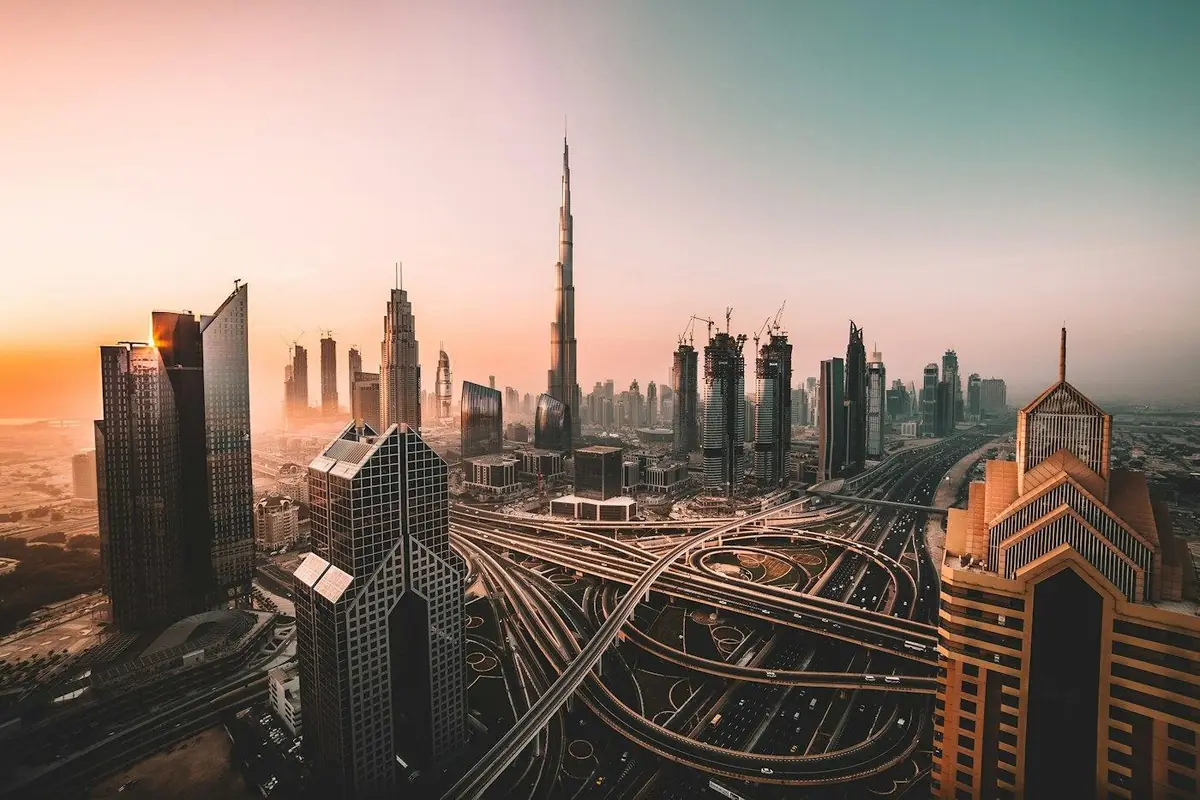
Dubai property prices are sitting 60 to 80% above where they stood in 2021, and rents have climbed right alongside them. This single fact has quietly rewritten the buying vs renting in Dubai conversation for 2026. If you are an expat, a long-term resident, or an investor comparing off-plan and ready property options, the old rule of thumb, “just buy, Dubai never falls,” is no longer good enough. We have to judge the folklore with real numbers: transaction costs, break-even timelines, rental yields by area, mortgage math, and the lifestyle trade-offs, in our question “Buying vs renting in Dubai”. Quick numbers: Total buying costs run 6 to 8% of the property price. The typical break-even point vs renting is 3 to 5 years. Average gross rental yield across Dubai runs 6 to 10%. Dubai’s Property Market in 2026: The Context You Need First Before comparing numbers, it helps to understand why this decision feels harder in 2026 than it did a few years ago. Dubai closed 2025 with record transaction volumes, and property prices in several communities rose sharply throughout the year. At the same time, an estimated wave of new residential handovers is entering the market in 2026, which analysts expect to soften price growth and give buyers slightly more negotiating room in the mid-tier segment. Rental yields remain historically strong, routinely cited between 6 and 10%, and higher in emerging communities. This is one of the reasons Dubai continues to outperform mature markets like London or Singapore on a pure income basis. Mortgage rates for residents currently lie in the 4.5 to 6.5% range, depending on the lender and loan-to-value ratio, and the UAE’s 50% Debt Burden Ratio cap limits how much any buyer can borrow relative to income. None of this makes the decision automatic. It just means the inputs have changed, and any comparison built on 2021 rent-to-price ratios is already out of date. Key takeaway: Property prices and rents have both risen substantially since 2021, but at different paces in different communities. The right decision is never “buy because Dubai always goes up.” It is a function of your timeline, your income stability, and the specific area you are comparing. The True Cost of Buying Property in Dubai Buyers often budget only for the sale price and sometimes face difficulties at the trustee’s office. On top of the purchase price, expect to pay government and transaction fees that typically total 6 to 8% of the property value. Fee Amount Notes DLD transfer fee 4% of purchase price Market convention: paid in full by the buyer DLD admin fee AED 580 (ready) / AED 40 (off-plan) Fixed administrative charge Trustee office fee AED 2,100 or AED 4,200 Depends on property value (above/below AED 500,000) Title deed issuance AED 250 to 580 One-time, on completion of registration Agent commission 2% + 5% VAT Standard on resale; often absorbed by developer on off-plan Mortgage registration (if financed) 0.25% of loan + AED 290 Only applies if you are taking a mortgage Conveyancing / legal fees 0.25% to 0.75% Optional but recommended for resale purchases Worked example: On an AED 2,000,000 ready property, expect roughly AED 126,000 to 160,000 in one-time transaction costs before you have paid a single dirham of the price itself. That is the hurdle renting does not have, and it is the reason short-term buyers frequently lose money even in a rising market. Before committing, it is worth reading a full DLD fees breakdown so there are no surprises at the trustee office. Ongoing ownership costs also matter: service charges (typically AED 12 to 30 per sq ft per year depending on the building and amenities), maintenance, and, if financed, your monthly mortgage instalment. The upside is that a portion of every mortgage payment builds equity, whereas 100% of rent is a sunk cost. The True Cost of Renting in Dubai Renting looks simple on the surface: one annual cheque, no maintenance, no DLD fees, but it carries its own line items that first-time renters often miss. Security deposit: typically 5% of annual rent for unfurnished units, 10% for furnished. Ejari registration: AED 155 (online) to AED 220 (at a trustee centre), mandatory for every tenancy contract. Agency commission: usually 5% of the annual rent, paid once at signing. DEWA connection and deposit: a refundable deposit plus a small connection fee for utilities. Annual rent increases: capped by the RERA rental index, but still a recurring variable your landlord controls, not you. No equity build-up: every dirham paid in rent is gone at lease end. There is no asset to show for it. The trade-off is flexibility: no exposure to market downturns, no responsibility for major repairs or service charges, and the freedom to relocate at the end of a 12-month term without transaction costs eating into your finances. Dubai Marina: one of the clearest test cases for the buy vs rent break-even calculation. Buying vs Renting in Dubai: Side-by-Side Comparison Factor Buying Renting Upfront cost 6 to 8% of property value + down payment (20 to 25% for expats) 5 to 15% of annual rent (deposit + commission) Monthly cost Mortgage instalment + service charges Rent only (utilities separate) Equity building Yes, builds ownership over time No, 100% cost, no asset Flexibility to relocate Low, resale takes time and cost High, move at lease renewal Exposure to market risk Full exposure, price can rise or fall None, landlord bears the risk Maintenance responsibility Owner (major repairs, service charges) Landlord (in most standard leases) Golden Visa eligibility Yes, from AED 2 million in property value Not applicable Best suited for 3+ year stays, stable income, long-term Dubai residents Under 3 years, uncertain plans, early-career expats The Break-Even Timeline: When Does Buying Actually Win? This is the single most useful number in the entire decision. Because buying carries 6 to 8% in one-time costs that renting does not, buying only becomes cheaper than renting after enough time has passed for equity growth and avoided rent
Palm Jebel Ali’s The Yard: First Retail & Lifestyle Destination to Open in 2027
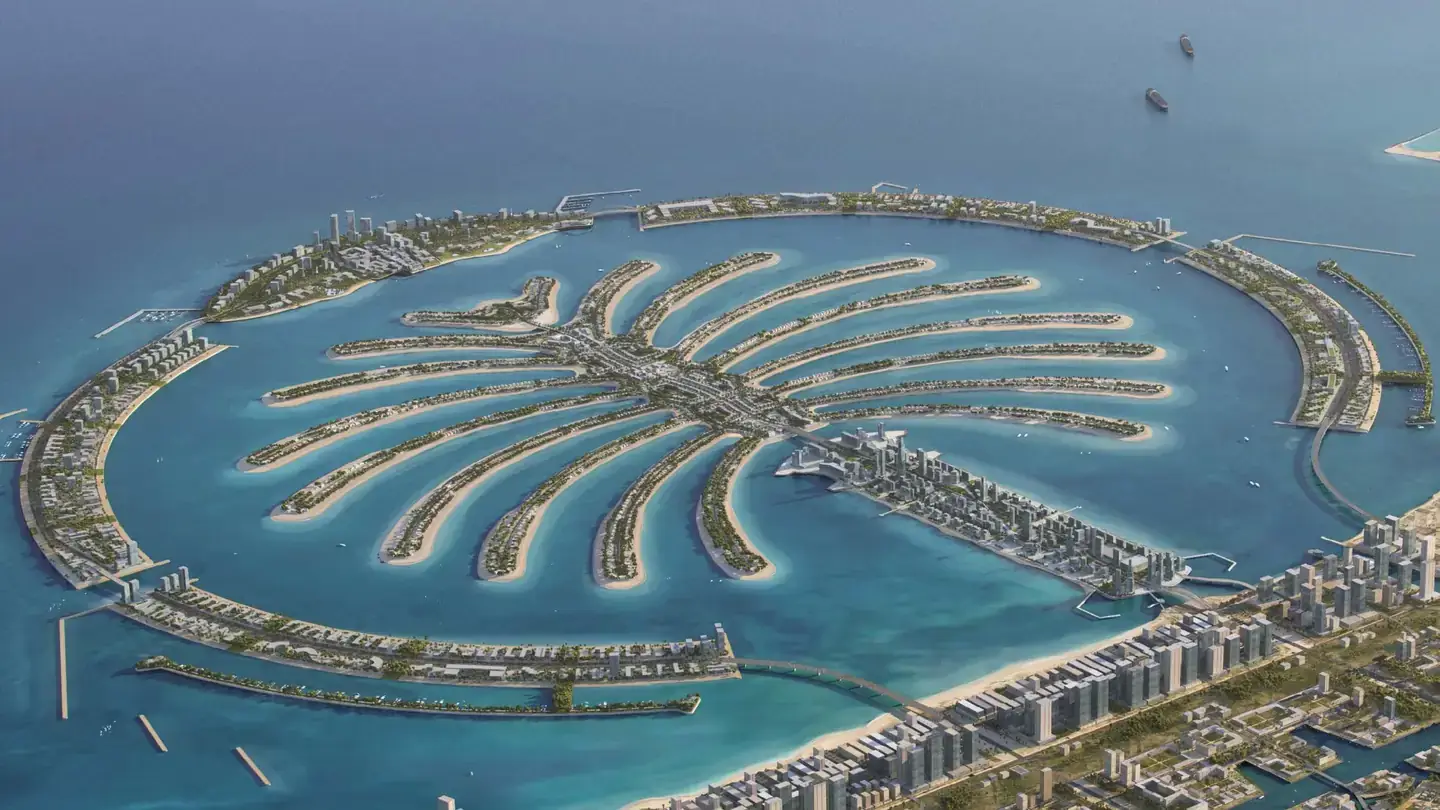
The Yard to Bring a New Retail Hub to Palm Jebel Ali Palm Jebel Ali is moving another step closer to becoming a fully functioning waterfront community with the announcement of The Yard, its first dedicated retail and lifestyle destination. Developed by Dubai Retail, The Yard is scheduled to open in 2027. The destination will cover approximately 70,000 sq ft of gross leasable area and bring together 26 concepts spanning retail, dining, wellness, healthcare and family-focused services. The destination is expected to serve approximately 20,000 residents across Palm Jebel Ali and surrounding communities. This is significant for Palm Jebel Ali because the development is progressing from a primarily residential and future-focused masterplan towards a more complete community where residents can access everyday services, food, healthcare and leisure facilities within the neighbourhood. What Is The Yard at Palm Jebel Ali? The Yard, Palm Jebel Ali’s first retail and lifestyle destination. The Yard is Palm Jebel Ali’s first retail and lifestyle destination. Apart from a conventional shopping centre, the project is planned as a community-focused waterfront destination. Its mix will combine everyday retail with dining, healthcare, wellness and family services. According to Dubai Retail, The Yard will feature: Feature Details Location Palm Jebel Ali, Dubai Project The Yard Developer/Operator Dubai Retail Opening 2027 Gross leasable area Approx. 70,000 sq ft Retail & lifestyle concepts 26 Expected catchment Approx. 20,000 residents Setting Waterfront Main contractor McLaren Construction Dubai Retail said The Yard will expand its portfolio to 57 malls and lifestyle destinations across Dubai. Which Brands Are Coming to The Yard Palm Jebel Ali? Several brands have already been confirmed for The Yard. The announced line-up includes: Waitrose American Hospital Piccoli Jumeirah International Nursery Bateel Café Friends Avenue The combination is notable because it goes beyond traditional retail. For example, Waitrose provides an everyday grocery option, while American Hospital adds healthcare services. Jumeirah International Nursery brings family and education-related services, while Bateel Café, Piccoli and Friends Avenue add dining and lifestyle offerings. The remaining concepts are expected to add further variety across retail, dining, wellness and healthcare. What will The Yard cover in 70,000 sq ft area? One of the key details of the announcement is the scale of the destination. It will have approximately 70,000 sq ft of gross leasable area, giving it enough space to accommodate a diversified collection of 26 concepts. Based on the announced concepts and project description, The Yard Palm Jebel Ali is expected to cover several everyday requirements. Category Expected offering Retail Grocery and everyday shopping Dining Cafés and food concepts Healthcare Medical services Wellness Health and lifestyle services Education Nursery services Social spaces Communal areas and terraces Outdoor lifestyle Waterfront promenade access Why The Yard Is Important for Palm Jebel Ali The Yard adds community infrastructure to the Palm Jebel Ali masterplan. The announcement comes at an important stage in Palm Jebel Ali’s development. The Palm Jebel Ali Frond F Villas are recently been announced. A large-scale masterplan requires supporting infrastructure alongside its residential components. The arrival of a dedicated retail and lifestyle destination indicates that Palm Jebel Ali is more than a collection of luxury villas and waterfront properties. 1. More everyday convenience Residents will have access to grocery shopping, healthcare, dining, childcare and other services within the wider community. This could reduce the need for frequent trips to established retail hubs elsewhere in Dubai. 2. Stronger community infrastructure Amenities such as nurseries, healthcare facilities, cafés and grocery stores can help a new residential area transition into a functioning neighbourhood. 3. More lifestyle options The waterfront terraces and communal spaces could make The Yard Palm Jebel Ali a social destination as well as a practical retail centre. 4. Supports Palm Jebel Ali’s long-term development As more residential properties are delivered, the demand for supporting amenities is expected to increase. The Yard provides part of that infrastructure. Who Is The Yard Designed For? The Yard is primarily being developed to support the growing residential population of Palm Jebel Ali and nearby communities. Dubai Retail expects the destination to serve around 20,000 residents across the surrounding communities. Its tenant mix also makes it relevant to different household groups. Families can benefit from nursery and healthcare services. Residents can use grocery, dining and everyday retail facilities. Visitors can use the cafés, communal areas and waterfront spaces. This broad customer base could help create regular footfall rather than relying solely on occasional shopping visits. When Will The Yard Palm Jebel Ali Open? The Yard is scheduled to open in 2027. Dubai Retail has appointed McLaren Construction L.L.C. as the main contractor for the development. The opening timeline is important because Palm Jebel Ali is being developed in phases. As residential communities become operational, supporting retail and lifestyle infrastructure will become increasingly important. How The Yard Could Change Palm Jebel Ali Palm Jebel Ali is one of Dubai’s major future waterfront developments. The introduction of The Yard adds another layer to that vision. The evolution can be viewed in three stages: Residential development → Community infrastructure → Lifestyle destination The first stage establishes homes and residential neighbourhoods. The second provides essential services such as grocery stores, healthcare and education. The third creates spaces where residents can dine, meet, socialise and spend leisure time. This Palm Jebel Ali retail destination combines elements of the second and third stages in a single waterfront destination. The Yard vs a Traditional Dubai Mall It is important not to compare The Yard directly with Dubai’s mega malls. The Yard’s stated purpose is much more community-focused. The Yard Traditional Mega Mall Community-focused Destination-focused Approx. 70,000 sq ft GLA Often much larger 26 concepts Hundreds of brands in major malls Designed for local residents Attracts residents and tourists Waterfront setting Primarily enclosed retail environment Everyday services Shopping, entertainment and tourism This smaller, community-oriented format could be particularly useful for a developing residential destination such as Palm Jebel Ali. Final Takeaway The Yard is an important addition to Palm Jebel Ali because it brings everyday community infrastructure
Why Hire a Real Estate Agent in Dubai? (2026 Investor Guide)
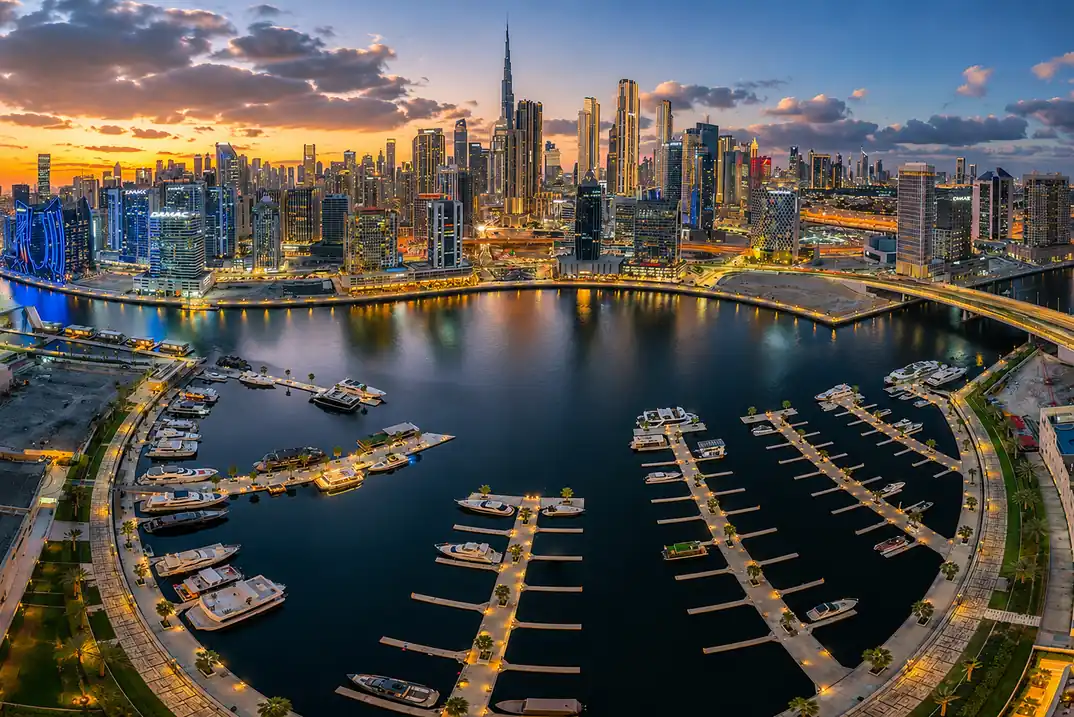
Dubai is one of the best places in the world to invest in property. The rental returns are strong. There is no annual property tax. And the right home can even earn you long-term residency. Although the buying process is simple, from legal approvals to price talks, one wrong step can break the deal. That is exactly why a good real estate agent in Dubai is worth having on your side. The right agent works on behalf of you, saves time, and helps you buy with confidence. The question is, why work with a real estate agent for property investment in Dubai? Do You Need a Real Estate Agent to Buy Property in Dubai? No, hiring a real estate agent is not legally required to buy property in Dubai, but it is highly recommended to protect your capital and ensure legal compliance. While buyers can legally purchase directly from developers or sellers, a licensed agent handles essential due diligence, price negotiations, RERA sales contracts (Form F / MOU), and Dubai Land Department (DLD) property transfers. Quick Take: Dubai Real Estate Agent Snapshot Key Detail Legal Mandate None (Direct seller/developer purchases allowed) Resale Commission Standard 2% of property price (+ 5% VAT) Off-Plan Commission 0% for buyers (Paid directly by the developer) Government Regulation Managed by RERA (Real Estate Regulatory Agency) Broker Verification Mandatory Broker Registration Number (BRN) A Quick Look at the Dubai Real Estate Market Before we talk about real estate agents in Dubai, we should know how the market works. The Dubai real estate market is mature and well-regulated. Every deal is overseen by the Dubai Land Department (DLD) and Real Estate Regulatory Agency (RERA). It has clear ownership records, escrow protection, and standard contracts on every deal. Here is why global investors invest in Dubai: High Rental Yields: Average gross yields range between 6% and 9%, outperforming major global hubs like London, New York, or Singapore. Capital Appreciation Potential: Population growth, infrastructure expansion, and limited luxury inventory drive long-term value increases across prime districts. Tax-Efficient Environment: Investors benefit from 0% annual property tax, 0% capital gains tax, and 0% personal income tax on rental earnings. UAE Golden Visa Qualification: Qualifying real estate purchases of AED 2 million or more unlock 10-year renewable residency visas for investors and their families. So, is property in Dubai a good investment? For most buyers who do their homework, yes. And a good Dubai property broker helps you do that homework properly. Can Foreigners Buy Property in Dubai? Yes, they can. This is one of the first questions people ask, and the answer is simple. Foreigners, including non-residents, can fully own property in Dubai’s freehold zones. There are more than sixty freehold zones in Dubai. You just need to understand two words: Freehold: You own the home and the land under it, forever. You get a full title deed from the DLD, and you can sell, rent, or pass it on. Leasehold: You get the right to use a property for a set time, often up to ninety-nine years, but you do not own the land. For investment, freehold almost always wins. It is easier to sell later, gives you full control, and can qualify you for residency. A good real estate broker in Dubai will point you toward freehold homes and confirm the area allows foreign ownership before you pay a thing. Wondering how to invest in Dubai real estate as a foreigner or non-resident? You can do it from anywhere. Virtual viewings, digital contracts, and a Power of Attorney let you buy without flying in. Your agent handles the moving parts on your behalf, which matters a lot when you are managing everything from abroad. What Are the Benefits of Hiring a Real Estate Agent in Dubai? Licensed Dubai property broker providing investment advice on freehold homes and Golden Visa eligibility. The benefits of hiring a real estate agent in Dubai go beyond property purchase. 1. Accurate Property Valuation & Market Analysis Getting the price right is the heart of a smart investment. A good agent checks recent sales, area trends, and rental data to set a fair market valuation. That stops you from overpaying and helps you spot homes with real growth ahead. When you invest in Dubai property with proper research, you get good returns. 2. Early Access to Off-Plan and Off-Market Deals Many of the best opportunities never reach public listings. Established brokers work directly with top developers like Emaar, DAMAC, Nakheel, and Sobha. That gives their clients early access and better prices. If you are looking at off-plan property in Dubai, an agent can lock in a good payment plan and a prime unit before the general launch. 3. Rigorous Due Diligence This is where a good agent makes a deal more suitable. Before you commit, they check: Developer credentials, past project delivery timelines, and financial stability. Active RERA escrow account details and construction progress tracking for off-plan buys. Outstanding service charges, mortgage clearance certificates, or liabilities on resale properties. Official Oqood registration documents for off-plan units or valid DLD Title Deeds for ready properties. This homework saves buyers time & capital, especially those purchasing from another country. 4. Strategic Price and Terms Negotiation Good negotiation in Dubai comes down to timing, market knowledge, and relationships. An agent who knows what sellers are willing to accept can win you a lower price, better terms, or waived fees. Often, those savings are far bigger than the commission you pay. 5. Comprehensive Regulatory and Legal Facilitation Every purchase goes through a set of processes. Your agent prepares the RERA forms, arranges the No Objection Certificate from the developer, coordinates with the trustee office, and manages the title transfer at the DLD. If done properly, you avoid delays and rejections. 6. UAE Golden Visa Qualification Advisory For many buyers, residency matters as much as rental income. A good real estate agent structures your purchase so it qualifies for the Golden Visa through property investment. Also, ensure the DLD-recorded
JVC Area Guide: Property, Prices, Off-Plan & Lifestyle
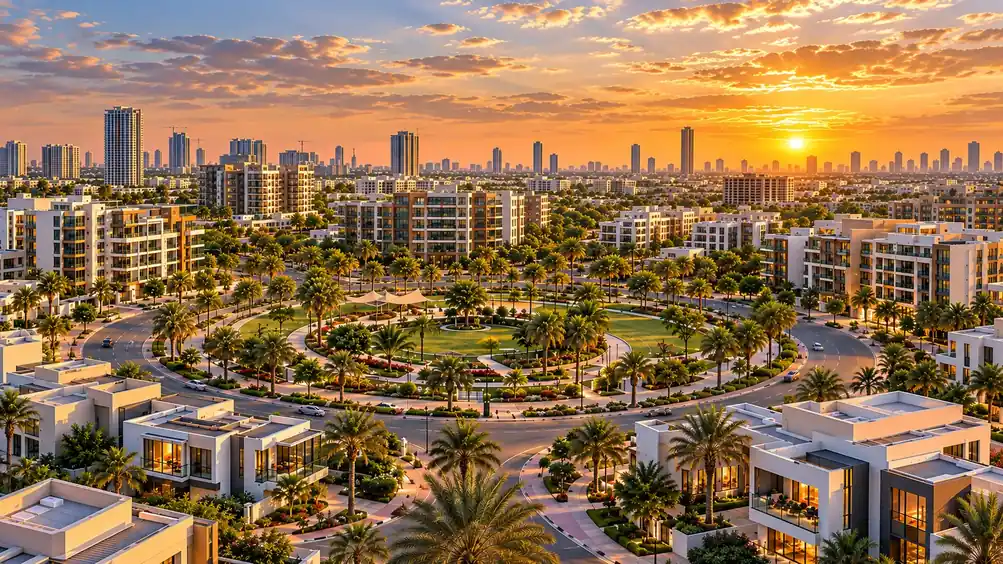
Jumeirah Village Circle, universally called JVC, is a large, family-oriented freehold community in the heart of New Dubai, master-developed by Nakheel around a circular street plan of parks, apartments, townhouses and villas. Sitting between Al Khail Road (E44) and Sheikh Mohammed Bin Zayed Road (E311), it has grown into Dubai’s most actively transacted mid-market district, and it carries the city’s largest off plan property pipeline, which makes it a favourite with value-focused buyers and yield investors. JVC at a Glance Master developer Nakheel Size Around 870 hectares, 10 districts (10–19), 300+ buildings Property types Apartments, townhouses, villas, plus a large off-plan pipeline Average price (ready) About AED 1,337 per sq. ft. (2026) Typical 1-bedroom rent AED 60,000 – 90,000 per year Gross rental yield Around 7% – 8.5% (up to 10% on some off-plan) Nearest Metro None yet; Blue Line planned. Dubai Internet City is nearest today Ownership Freehold, open to foreign buyers In this guide About JVC Location and districts Property price trends Rent in 2026 Off-plan property in JVC Districts and popular buildings Getting around Schools and nurseries Healthcare Daily life Things to do Where to eat Resident profile Things to consider Best time to visit JVC vs neighbouring areas FAQs About JVC Jumeirah Village Circle was launched by Nakheel around 2005 as a master-planned, family-oriented community offering affordable homes in a village-style setting. Officially part of Al Barsha South, it spans roughly 870 hectares and is laid out in a distinctive circular pattern of ten districts arranged around central parks and community facilities. What started as a quiet villa-and-townhouse community has matured into one of Dubai’s busiest residential districts, with over 300 low- to mid-rise buildings, more than 30 landscaped parks, Circle Mall, schools, nurseries and clinics. It offers a genuine mix of studios, one- to three-bedroom apartments, townhouses and villas, which is why it appeals to first-time buyers, families and investors alike. JVC is also the engine room of Dubai’s mid-market off plan property market. It records the highest apartment transaction volume of any mid-market community, and off-plan launches make up the majority of that activity, reshaping the district’s skyline year after year, as covered in the dedicated off-plan section below. JVC Location and Districts JVC sits centrally in New Dubai, between two of the city’s busiest corridors: Sheikh Mohammed Bin Zayed Road (E311) and Al Khail Road (E44), with Hessa Street (D61) on a third edge. That position gives quick access to Dubai Marina, JLT, Media City, Business Bay and Dubai Hills, which is a big part of its value proposition. The community is organised into ten districts, numbered 10 to 19, each with its own mix of apartments, townhouses and villas, with the gated Circle Villas around Central Park (District 19) at the premium end. Destination Approximate Drive Time (Off-Peak) Dubai Hills Mall 10 minutes Dubai Marina / JLT 12–15 minutes Mall of the Emirates 15 minutes Downtown Dubai / Business Bay 18–20 minutes Palm Jumeirah 18–20 minutes Dubai International Airport (DXB) 25–30 minutes Al Maktoum International Airport (DWC) 30–35 minutes JVC Property Price Trends JVC is one of Dubai’s best-value freehold markets. On the ready (resale) market, DLD data to mid-2026 puts the median price at around AED 1,337 per square foot, roughly 28% below the Dubai average and 40–45% below Downtown. Prices have climbed strongly, up around 8% year-on-year into 2026 and about 75% since the pandemic low, outpacing the wider market, driven by demand for affordable family housing. Unit Type Typical Purchase Price (AED) Studio 0.4 – 0.6 million 1 Bedroom 0.65 – 1.1 million 2 Bedroom 1.0 – 1.8 million 3 Bedroom 1.8 – 3.0 million Townhouse / villa 2.5 million and above Bayut’s H1 2026 figures put the average studio around AED 690,000, a one-bedroom near AED 1.15 million and a two-bedroom around AED 1.8 million, at a district ROI of about 7.15%. A two-bedroom apartment, a townhouse, or two smaller units combined can reach the AED 2 million threshold for the UAE’s ten-year Golden Visa (based on DLD-registered value), and buying an off plan property from an approved developer also counts. Our guide to the 2026 UAE visa rule changes covers current eligibility. One point worth noting: off-plan studios have transacted at a premium to ready studios, so buyers comparing a new launch with resale should weigh the entry price against the extra space an older unit may offer. How Much Does It Cost to Rent in JVC in 2026? JVC is a high-demand, high-yield rental market that undercuts almost every central district, which is its core appeal to tenants. Rents on new lets softened slightly through 2026 as a wave of new supply completed, giving tenants more choice, while newer buildings still command a 10–20% premium over older stock. The ranges below reflect typical 2026 levels. Unit Type Typical Size Annual Rent Range (AED) Studio 350–500 sq. ft. 38,000 – 60,000 1 Bedroom 600–900 sq. ft. 60,000 – 90,000 2 Bedroom 950–1,400 sq. ft. 85,000 – 130,000 3 Bedroom 1,500–2,200 sq. ft. 120,000 – 200,000 Bayut’s H1 2026 rental report put average asking rents in JVC around AED 54,000 for a studio, AED 79,000 for a one-bedroom and AED 113,000 for a two-bedroom, and ranked it the leading mid-tier community for tenants. Rent increases at renewal follow the DLD’s Smart Rental Index, and landlords must give 90 days’ written notice of any change. Tenants should also budget for the 5% municipality housing fee and, in many towers, district cooling charges billed separately from DEWA. Off-Plan Property in JVC If any Dubai community is defined by off-plan, it is JVC. It carries the largest off plan property pipeline of any mid-market district, and in recent DLD data off-plan made up the majority of transactions in almost every apartment category. For buyers, that means a genuine, constant choice between ready resale homes and brand-new launches on staged payment plans, all at some of the most accessible price points in the city. Why buy off-plan in JVC? Low entry
Palm Jumeirah Area Guide: Property, Prices, Off-Plan & Lifestyle
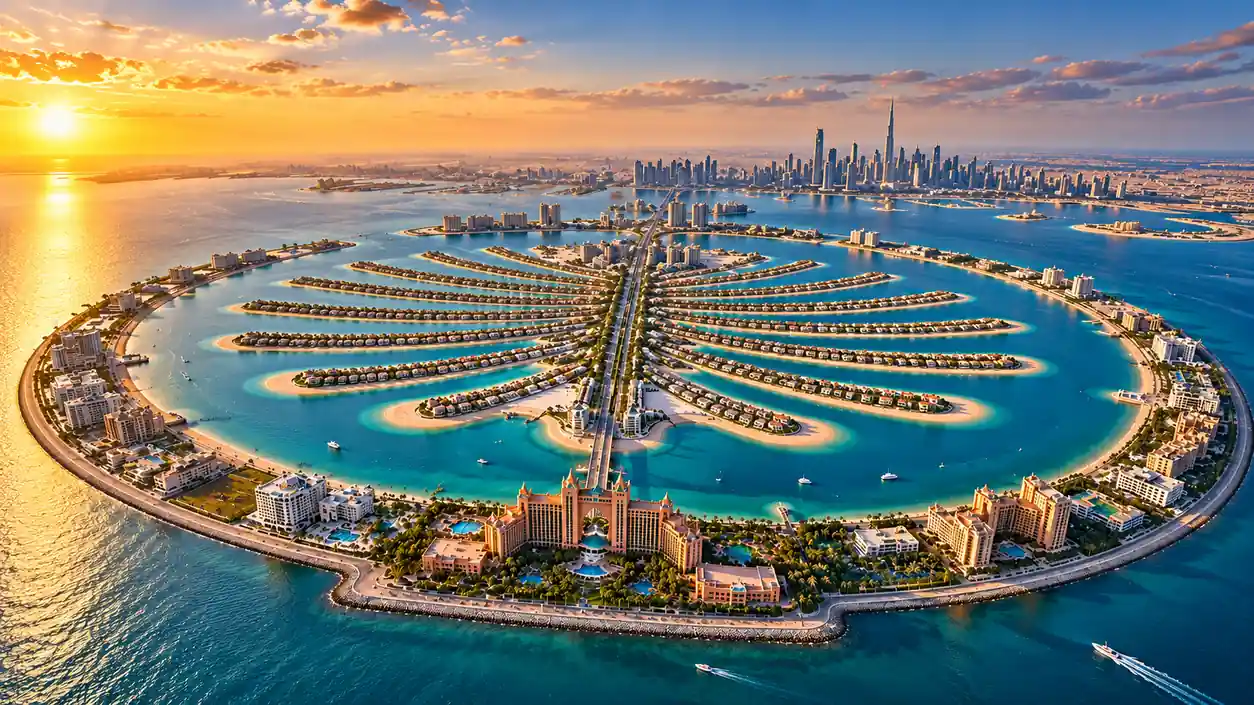
Palm Jumeirah is Dubai’s most recognisable address: a man-made, palm-shaped island built by Nakheel that reaches into the Arabian Gulf off the Jumeirah coast. Shaped as a trunk, 16 fronds and an outer crescent breakwater, it holds luxury apartments along the trunk, signature villas with private beaches on the fronds and a ring of five-star resorts on the crescent. It is the benchmark for waterfront living in the city, and one of the most sought-after, and most supply-constrained, off plan property markets in Dubai. Palm Jumeirah at a Glance Master developer Nakheel Layout Trunk (apartments), 16 fronds (villas), crescent (resorts) Property types Apartments, villas, penthouses, branded and off-plan residences Average apartment price About AED 3,500 per sq. ft. (2026) Typical 1-bed apartment rent AED 140,000 – 200,000 per year Gross rental yield Apartments around 5% – 6.5%; villas 3.5% – 5% Transport Palm Monorail to the Gateway, then Dubai Tram / Metro Ownership Freehold, open to foreign buyers In this guide About Palm Jumeirah Location and layout Property price trends Rent in 2026 Off-plan property in Palm Jumeirah Popular buildings and villa areas Getting around Schools and nurseries Healthcare Daily life Things to do Where to eat Resident profile Things to consider Best time to visit Palm Jumeirah vs neighbouring areas FAQs About Palm Jumeirah Palm Jumeirah was built by master developer Nakheel through the 2000s, using reclaimed sand and rock to create around 5.7 square kilometres of new land and more than 40 kilometres of fresh waterfront. The first residents moved in from 2007, and the island has since grown into a self-contained community of roughly 80,000 people, anchored by landmark resorts such as Atlantis The Palm and Atlantis The Royal. The island’s structure defines its property market. The 2-kilometre trunk carries mid- and high-rise apartment buildings and is home to Nakheel Mall and the monorail; the 16 fronds hold the original rows of beachfront villas along calm canals; and the crescent, an 11-kilometre breakwater, carries most of the hotels along with a handful of ultra-exclusive residences. Because the original villa rows sold out long ago and land is effectively fixed, almost all new supply now comes as apartment and branded off plan property along the trunk and crescent. That scarcity is central to the island’s investment case and is covered in the dedicated off-plan section below. Palm Jumeirah Location and Layout Palm Jumeirah connects to the mainland by a 1.4-kilometre bridge at the base of the trunk, with Sheikh Zayed Road (E11) a few minutes away. A subsea tunnel links the trunk to the crescent. It sits directly offshore from Dubai Marina, JBR and Al Sufouh, so the beach and business districts of “New Dubai” are close, while Downtown and the main airport are a longer drive. Destination Approximate Drive Time (Off-Peak) Dubai Marina / JBR 10–15 minutes Dubai Media City / Internet City 15 minutes Mall of the Emirates 15–20 minutes Downtown Dubai / Burj Khalifa 25–30 minutes Dubai International Airport (DXB) 30–35 minutes Al Maktoum International Airport (DWC) 35–40 minutes Expo City Dubai 30–35 minutes Palm Jumeirah Property Price Trends Palm Jumeirah is one of the most expensive addresses in the city, and prices have climbed strongly. Bayut’s H1 2026 data puts average apartment asking prices at around AED 3,529 per square foot, well above the citywide average of roughly AED 1,658. Values rose in the double digits year-on-year, and the island’s fixed supply of beachfront homes keeps upward pressure on both apartments and villas. Unit Type Typical Purchase Price (AED) Studio (trunk) 0.9 – 1.4 million 1 Bedroom apartment 1.5 – 3.2 million 2 Bedroom apartment 2.5 – 6.0 million 3 Bedroom apartment 4.0 – 10.0 million Frond villa (4–5 bed) 18 million and above Signature villa / branded penthouse 40 million to 200 million+ Even entry-level apartments comfortably clear the AED 2 million threshold for the UAE’s ten-year Golden Visa, based on DLD-registered value, with several properties under one owner allowed to be combined. As of 2026, the rules were simplified so the payment schedule no longer matters, only the total value, which makes an off plan property on the Palm a straightforward Golden Visa route. Our guide to the 2026 UAE visa rule changes covers the current position. How Much Does It Cost to Rent in Palm Jumeirah in 2026? Palm Jumeirah sits at the top of Dubai’s rental market. Rents cover a very wide band, from trunk apartments to full frond villas, and eased slightly through 2026, with Bayut noting a fall of around 10% across apartment listings over twelve months. The ranges below reflect typical 2026 apartment levels; villas run far higher. Unit Type Typical Size Annual Rent Range (AED) Studio 500–800 sq. ft. 90,000 – 130,000 1 Bedroom 800–1,300 sq. ft. 140,000 – 200,000 2 Bedroom 1,400–2,000 sq. ft. 200,000 – 320,000 3 Bedroom 2,000–3,500 sq. ft. 300,000 – 500,000 Frond villa (4–5 bed) 5,000 sq. ft.+ 1.3 million and above Registered DLD contracts and Bayut listings put the average apartment rent on the Palm around AED 250,000 to AED 350,000 a year across all sizes, with branded and beachfront towers commanding a clear premium. Rent increases at renewal follow the DLD’s Smart Rental Index, and landlords must give 90 days’ written notice of any change. Palm Jumeirah is also one of Dubai’s strongest short-term holiday-let markets, where furnished sea-view units and villas can outperform annual leases. Off-Plan Property in Palm Jumeirah With the original villas long sold and no new land to reclaim, almost every new home on the island now arrives as off plan property, mostly apartments and hotel-branded residences along the trunk and crescent. Supply is limited and demand is high, which is exactly why off-plan launches on the Palm are treated as trophy assets by lifestyle buyers and investors alike. Why buy off-plan on Palm Jumeirah? Scarcity and prestige: New off-plan property on the Palm is rare, so launches tend to sell out fast and hold their value through the market cycle better than most
JLT Area Guide: Property, Prices, Off-Plan & Lifestyle
5 Best Islands to Invest in Abu Dhabi in 2026 | Buyer Guide The biggest mistake investors make in Abu Dhabi isn’t choosing the wrong project. It’s choosing the wrong island. Unlike Dubai, Abu Dhabi isn’t a single market. Each island has its own buyer, its own price story, and its own return profile, so the question isn’t where to invest in the capital. The capital closed 2025 with a record AED 73.2 billion in residential sales, up 55% year-on-year, according to Cavendish Maxwell. But that headline offers very different opportunities. Here are the top 5 Islands to invest in Abu Dhabi 2026. Saadiyat Yas Al Reem Al Maryah Al Hudayriyat 1. Saadiyat Island: The Ultra-Luxury Crown Saadiyat is where Abu Dhabi’s wealth concentrates. It ranked first in the emirate in 2025 with AED 13.7 billion in residential sales, roughly four times its 2022 level, according to ADREC data. When ultra-high-net-worth investors invest into the capital, this is where a large number of investors invest. The island is the emirate’s most international market and its largest driver of foreign direct investment. Branded residences set the ceiling here: Four Seasons and Nobu Residences offer a luxury side, while entry-level apartments start from around AED 17,000 per square metre. Villa prices rose about 13% across 2025, and off-plan apartment sales grew a striking 125%, led by projects like Mamsha Gardens and The Beach House. With the Guggenheim Abu Dhabi and Zayed National Museum still in the pipeline, Saadiyat’s cultural pull, and its scarcity of beachfront land, keep the long-term outlook firm. Best for: Capital preservation, branded luxury, and buyers who want a trophy asset that holds value. 2. Yas Island: The Entertainment Hub If Saadiyat is luxury, Yas is a footfall. Ferrari World, Warner Bros. World, and the Yas Marina F1 circuit are already here, and the confirmed Disney theme park, expected to open in the early 2030s, has made the entire island on every investor’s radar. The numbers back the momentum. Yas recorded the sharpest apartment price growth in the emirate in 2025 at roughly 18%, with apartment rents climbing around 23% over the same period. That combination is why Yas is widely considered Abu Dhabi’s best area for short-term and holiday rentals, with yields typically in the 5% to 6.5% range and entry villa prices that stay more reachable than Saadiyat’s. Best for: Short-term rental income, holiday-home investors, and anyone betting on tourism-driven demand. 3. Al Reem Island: The End-User Magnet Al Reem is the island where people actually live. Reem Mall, Central Park, premium schools, and offices are all inside the island itself, which is why it consistently posts one of the highest apartment transaction volumes in the capital. Apartment prices here rose around 17% in 2025, close behind Yas. For investors, the appeal is liquidity and yield rather than luxury headlines: rental returns commonly is in the 7% to 8% range, and the depth of end-user demand makes units easier to rent and easier to exit. Together with Yas, Al Reem accounted for close to 40% of total residential sales volume across the emirate. Best for: Steady rental income, first-time investors, and buyers who prioritise liquidity over prestige. 4. Al Maryah Island: Abu Dhabi’s Wall Street Al Maryah is the capital’s financial district. In December 2025, Mubadala and Aldar announced a joint venture worth more than AED 60 billion to develop the island’s final undeveloped landbank, nearly 500,000 sqm on the north side. The scale is what makes this one hard to ignore. The expansion will deliver over 450,000 sqm of new Grade A office space, effectively doubling the island’s commercial supply, plus more than 3,000 new luxury waterfront residences. It’s like the Wall Street of Abu Dhabi, already hosts more than 11,000 active licences and close to 40,000 professionals. Major brands & government offices like FAB, Four Seasons, AGDM, HSBC, Rose Wood are here. Branded homes like W Residences and The St. Regis are already in the pipeline to meet that demand. Best for: Long-term capital growth, investors who understand that corporate demand drives residential prices, and those buying ahead of a district’s maturity. 5. Al Hudayriyat Island: The New Emergent Hudayriyat is a landmark mixed-use waterfront development in Abu Dhabi, bringing together sport, leisure and luxurious coastal living in one master-planned community. In the first quarter of 2026, it recorded roughly AED 11.97 billion in transactions, the highest of any residential destination in the emirate that quarter, overtaking both Saadiyat and Al Reem. Villa prices on the island grew about 27% over the same period, among the strongest appreciation anywhere in the capital. What sets it apart is that the lifestyle is already built. Surf Abu Dhabi (the world’s largest wave pool), a UCI-standard velodrome, 16 km of open beaches, more than 220 km of cycling tracks, and the emirate’s largest urban park are operating today. The island’s signature move is architectural: hilltop villas built on man-made hills rising as high as 45 to 60 metres, delivering 360-degree views of Abu Dhabi and the Arabian Gulf. Developed by government-backed Modon, most units clear the AED 2 million Golden Visa threshold. Best for: Lifestyle-led buyers, sports and wellness demand, and investors chasing appreciation in an early-stage, low-density market. How to Choose the Right Abu Dhabi Island The islands don’t compete so much as serve different goals. Matching the island to your objective is the whole game: Want luxury and capital preservation? Saadiyat. Want short-term rental income? Yas. Want steady yield and liquidity? Al Reem. Want long-term financial district growth? Al Maryah. Want a lifestyle with strong appreciation? Al Hudayriyat. In Abu Dhabi, the project matters less than the postcode. Choose the right island and the rest of the decision gets a lot easier. Browse live listings and price trends across all five islands on First Stone Real Estate to see which one fits your investment goal. FAQs Which is the best island to invest in Abu Dhabi in 2026? It depends on your goal. Saadiyat leads
JBR Area Guide: Property, Prices & Lifestyle
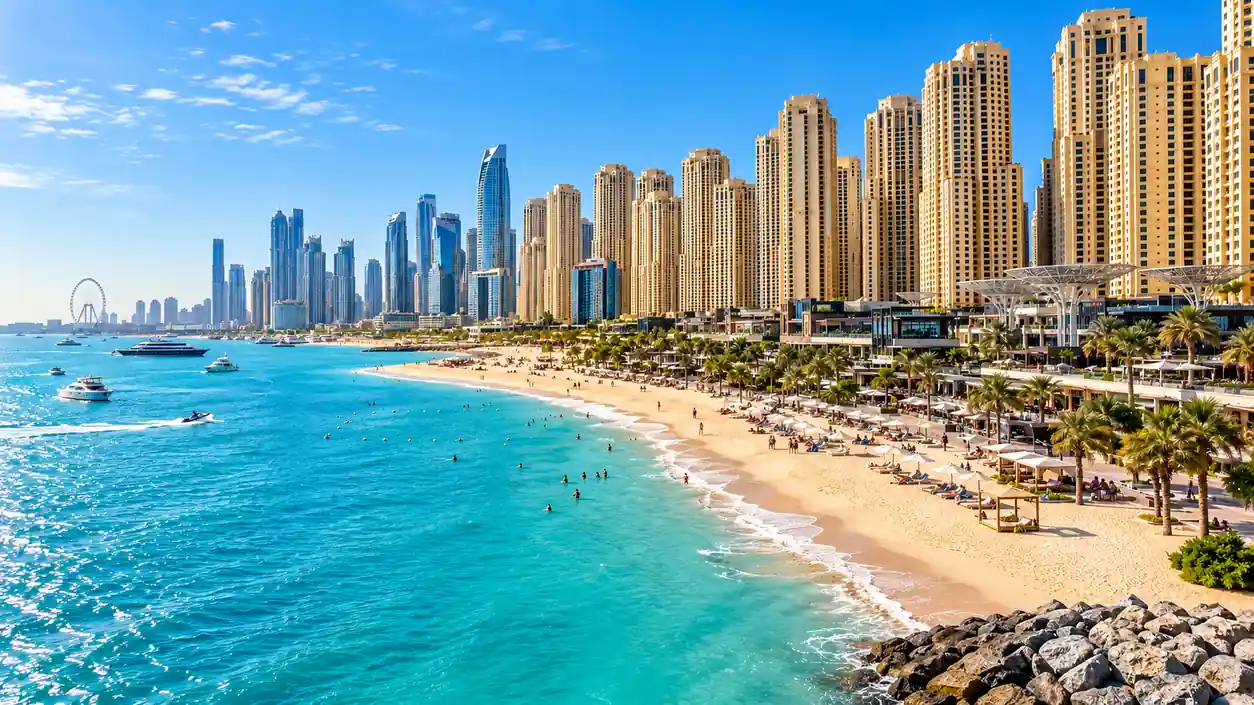
Jumeirah Beach Residence, almost always called JBR, is a beachfront community running along a 1.7-kilometre stretch of the Arabian Gulf on the seaward edge of Dubai Marina. Master-developed by Dubai Properties, it is made up of around 40 towers grouped into six clusters, with the lively beachfront promenade known as The Walk at its centre. It is one of the few places in the city where residents step from their lobby straight onto a public beach. JBR at a Glance Master developer Dubai Properties (Dubai Holding) Size 1.7 km beachfront, around 40 towers, six clusters Property types Apartments, penthouses, serviced and branded residences Average price About AED 2,250 per sq. ft. (2026) Typical 1-bedroom rent AED 110,000 – 150,000 per year Gross rental yield Around 6% – 7% Nearest tram / metro JBR 1 & JBR 2 (Dubai Tram); DMCC / Sobha Realty (Red Line) Ownership Freehold, open to foreign buyers In this guide About JBR Location Property price trends Rent in 2026 Clusters and popular towers Getting around Schools and nurseries Healthcare Daily life Things to do Shopping Where to eat Resident profile Things to consider Best time to visit JBR vs neighbouring areas FAQs About JBR Jumeirah Beach Residence was built in the 2000s by Dubai Properties, part of Dubai Holding, as a beachfront extension of the fast-growing Dubai Marina district. Conceived as one of the world’s largest single-phase residential developments, it was designed around a Mediterranean- and Arabic-inspired look and a resort-style, live-by-the-beach lifestyle. The community is organised into six residential clusters, each a group of towers: Shams, Amwaj, Rimal, Bahar, Sadaf and Murjan. Together they hold close to 7,000 apartments across roughly 35 residential towers, with the remaining five towers operating as hotels. The beachfront promenade, The Walk, opened along the ground floor of the towers, and the beachfront retail-and-dining strip known as The Beach, developed by Meraas, was added later facing the sand. JBR’s setting has only strengthened over time. It sits directly opposite Bluewaters Island, home to Ain Dubai, the giant observation wheel, reachable on foot across a dedicated pedestrian bridge. With no new beachfront land left to build on, JBR’s supply is effectively fixed, which underpins both its rents and its resale demand. JBR Location JBR runs along the coast on the outer edge of Dubai Marina, with the Arabian Gulf on one side and the Marina’s towers just behind it. Sheikh Zayed Road (E11) is a short drive inland, and the community connects to Bluewaters Island by pedestrian bridge. Its position puts the beach, the Marina and the wider “New Dubai” business districts all within easy reach, though it sits further from the Downtown and airport side of the city. Destination Approximate Drive Time (Off-Peak) Dubai Marina Mall 5 minutes Bluewaters Island / Ain Dubai 5 minutes (or a short walk) Dubai Media City / Internet City 10–15 minutes Palm Jumeirah 15 minutes Downtown Dubai / Burj Khalifa 20–25 minutes Dubai International Airport (DXB) 30–35 minutes Al Maktoum International Airport (DWC) 30–35 minutes Expo City Dubai 25–30 minutes JBR Property Price Trends JBR trades at a premium to Dubai Marina next door, driven by its direct beach access and fixed supply. Market data for 2026 puts the average price at roughly AED 2,200 to AED 2,275 per square foot, a little above the Marina and well over the citywide average of around AED 1,658 per square foot. Prices appreciated sharply over the previous two years, with some trackers noting close to 20% growth, before settling into a steadier pattern through the first half of 2026. Because JBR’s towers date mostly from the mid-2000s, buyers can find comparatively spacious layouts at beachfront prices, especially in the older clusters. Newer branded towers on the strip, such as the FIVE, Address and One JBR developments, sit well above the community average. Unit Type Typical Purchase Price (AED) Studio 0.9 – 1.4 million 1 Bedroom 1.5 – 2.5 million 2 Bedroom 2.2 – 4.0 million 3 Bedroom 3.5 – 8.0 million (view and tower dependent) Penthouse 10 million and above Many two-bedroom apartments and most sea-facing units clear the AED 2 million mark, which is the threshold for the UAE’s ten-year Golden Visa (based on DLD-registered value, with several properties under one owner allowed to be combined). Our guide to the 2026 UAE visa rule changes covers current eligibility. JBR is popular with short-term-rental investors: its beachfront location and tourist footfall make furnished holiday-home lets a strong strategy, and sea-view units typically command a rental premium over interior-facing ones. How Much Does It Cost to Rent in JBR in 2026? JBR rents are among the higher waterfront bands in the city, and sea-facing units sit well above those facing the Marina or interior. Rents softened slightly through 2026, with Bayut noting an easing of around 9% across the community’s listings over six months, giving tenants a little more room to negotiate. The ranges below reflect typical 2026 market levels. Unit Type Typical Size Annual Rent Range (AED) Studio 500–800 sq. ft. 70,000 – 100,000 1 Bedroom 750–1,300 sq. ft. 110,000 – 150,000 2 Bedroom 1,300–1,700 sq. ft. 150,000 – 220,000 3 Bedroom 1,800–3,000 sq. ft. 210,000 – 350,000 Registered DLD contract data puts average rents at around AED 80,000 for a studio, AED 115,000 for a one-bedroom, AED 159,000 for a two-bedroom and AED 215,000 for a three-bedroom, with advertised asking rents running higher. Among the clusters, Rimal, Sadaf and Murjan are the most in demand with tenants. Rent increases at renewal follow the DLD’s Smart Rental Index, and landlords must give 90 days’ written notice of any change. On top of rent, tenants should budget for the 5% municipality housing fee and, in many towers, separate district cooling charges billed apart from DEWA. Furnished and serviced units in the branded towers sit at the top of every band. JBR Clusters and Popular Towers JBR is organised into six residential clusters, each a group of numbered towers, plus a set of newer standalone branded buildings
Business Bay Area Guide: Property, Prices & Lifestyle
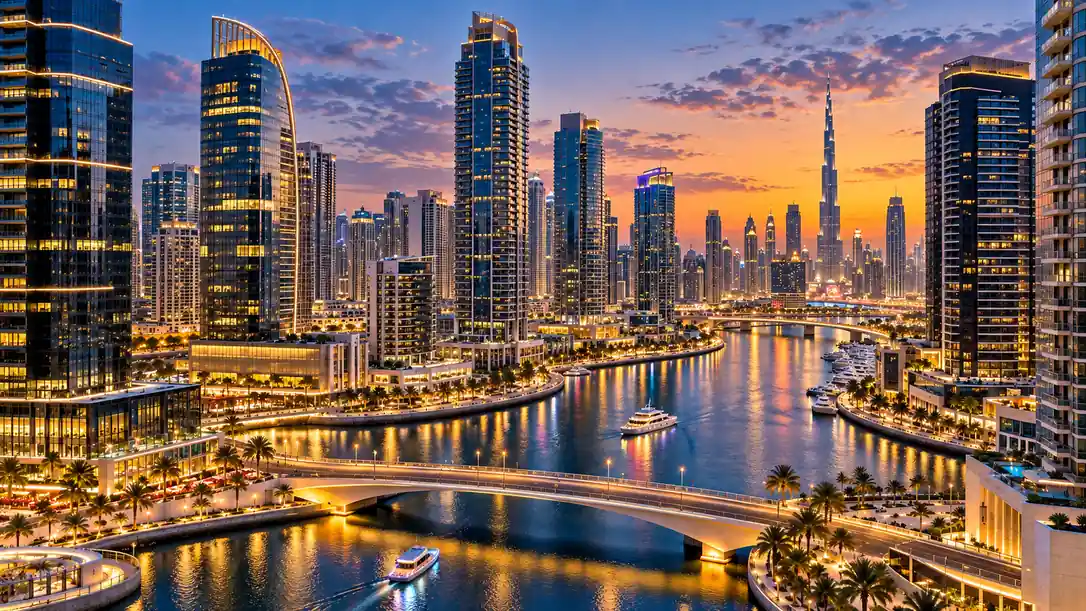
Business Bay is a central, mixed-use district built along the Dubai Water Canal, directly south of Downtown Dubai and next to DIFC. Master-developed by Dubai Properties as a new central business district, it now spans close to 47 million square feet and more than 240 towers, mixing Grade-A offices, freehold apartments, serviced and branded residences, hotels and canal-front dining into one of the city’s most connected addresses. Business Bay at a Glance Master developer Dubai Properties (Dubai Holding) Launched 2003 Property types Apartments, serviced and branded residences, offices Average price About AED 2,500 per sq. ft. (2026) Typical 1-bedroom rent AED 80,000 – 140,000 per year Gross rental yield Around 6% – 7% Nearest Metro Business Bay (Red Line) Ownership Freehold, open to foreign buyers In this guide About Business Bay Location Property price trends Rent in 2026 Popular projects Getting around Schools and nurseries Healthcare Daily life Things to do Shopping Where to eat Resident profile Things to consider Best time to visit Business Bay vs neighbouring areas FAQs About Business Bay Business Bay was launched in 2003 as part of Sheikh Mohammed bin Rashid Al Maktoum’s plan for a new commercial heart for Dubai, often described at the time as an attempt to build the city’s answer to Manhattan. Dubai Properties, part of Dubai Holding, master-planned the district as an extension of Dubai Creek, along a channel that would later become the Dubai Water Canal. Its growth came in broad phases: Early phase (2005–2010): Groundwork and the first residential clusters. The man-made creek extension that runs through the district was excavated between 2005 and 2007, and Executive Towers, one of Business Bay’s earliest and largest residential complexes, was completed around 2010. Business Bay Metro station opened on the Red Line in October 2010, before many towers were finished. Canal phase (2013–2016): The turning point. The 3.2-kilometre Dubai Water Canal, extending the creek from Business Bay out to the Gulf at Jumeirah, was built between 2014 and 2016 and inaugurated in November 2016. Its promenades, bridges and the landmark Sheikh Zayed Road waterfall reshaped the district’s waterfront and its appeal. Mixed-use phase (2016 onward): Developers pivoted from purely commercial towers to mixed-use living. Marasi Business Bay, a canal-side project with promenades and marinas, broke ground in 2017, and branded and serviced residences from names such as DAMAC, Omniyat, Paramount and SLS filled in the skyline. Today Business Bay stands alongside Downtown Dubai as a live-work-play district. Roughly a fifth of its floor space is offices, with the balance in homes, hotels and retail, and its central location keeps both rental demand and new launches strong. Business Bay Location Business Bay sits directly south of Downtown Dubai, with DIFC to the north and the Dubai Water Canal running through its centre. It fronts Sheikh Zayed Road (E11), with Al Khail Road (E44) and Ras Al Khor Road (E66) along its other edges, which makes it one of the easiest districts in the city to drive in and out of. Al Safa, City Walk and the Jumeirah coast lie just across the canal. Destination Approximate Drive Time (Off-Peak) Downtown Dubai / Burj Khalifa 5–8 minutes DIFC 10 minutes The Dubai Mall 10–12 minutes Jumeirah Public Beach / La Mer 12–15 minutes Dubai International Airport (DXB) 15 minutes Dubai Marina / JBR 20–25 minutes Expo City Dubai 30–35 minutes Al Maktoum International Airport (DWC) 35–45 minutes Business Bay Property Price Trends Business Bay sits in the mid-to-upper tier of Dubai’s central apartment market: more affordable than Downtown next door, but well above the citywide average. DLD transaction data compiled by Property Monitor puts the average price at around AED 2,547 per square foot for the first half of 2026, against a citywide average of roughly AED 1,658 per square foot. Advertised asking prices tracked by Bayut averaged about AED 2,124 per square foot over the same period, and the area’s projected ROI came in at 6.29%, higher than Downtown’s. Prices were broadly stable through a volatile half-year. Regional tensions between February and April 2026 pulled Dubai’s second-quarter sales volumes below the record first quarter, but Business Bay held its position as one of the most-transacted apartment districts in the city, helped by deep liquidity and a steady flow of new launches. Unit Type Typical Purchase Price (AED) Studio 0.65 – 1.2 million 1 Bedroom 1.3 – 2.0 million 2 Bedroom 2.2 – 3.5 million 3 Bedroom 3.5 – 7.0 million (view and tower dependent) Penthouse 8 million and above Bayut’s H1 2026 figures put the average studio at around AED 1.07 million, a one-bedroom at about AED 1.62 million and a two-bedroom near AED 2.49 million. Buyers targeting the UAE’s ten-year Golden Visa, which needs a property (or combined properties under one owner) worth AED 2 million or more at DLD-registered value, can often reach the threshold with a larger one-bedroom, a two-bedroom, or two smaller units combined. Our guide to the 2026 UAE visa rule changes covers current eligibility. Business Bay remains one of the more active off-plan markets in central Dubai, so buyers can choose between ready resale stock and newer canal-side launches on staged payment plans. How Much Does It Cost to Rent in Business Bay in 2026? Rents in Business Bay vary with view, floor and building, and canal- or Burj Khalifa-facing units sit well above interior ones. The ranges below reflect typical 2026 market levels. Unit Type Typical Size Annual Rent Range (AED) Studio 400–600 sq. ft. 55,000 – 85,000 1 Bedroom 650–950 sq. ft. 80,000 – 140,000 2 Bedroom 1,000–1,500 sq. ft. 120,000 – 190,000 3 Bedroom 1,500–2,400 sq. ft. 180,000 – 300,000 Bayut’s H1 2026 rental report put average asking rents in Business Bay at around AED 73,000 for a studio, AED 104,000 for a one-bedroom and AED 148,000 for a two-bedroom, and ranked it among the most popular mid-tier apartment areas for tenants who want a central location near Downtown and the metro. Rent increases at renewal follow the DLD’s Smart Rental Index,