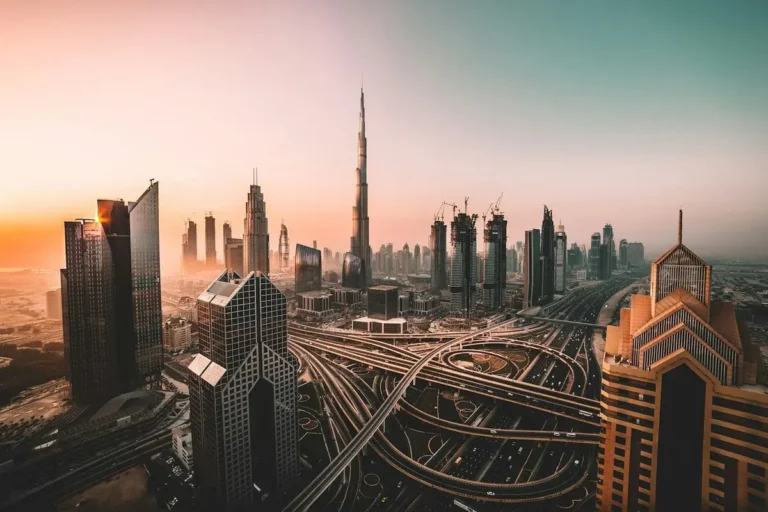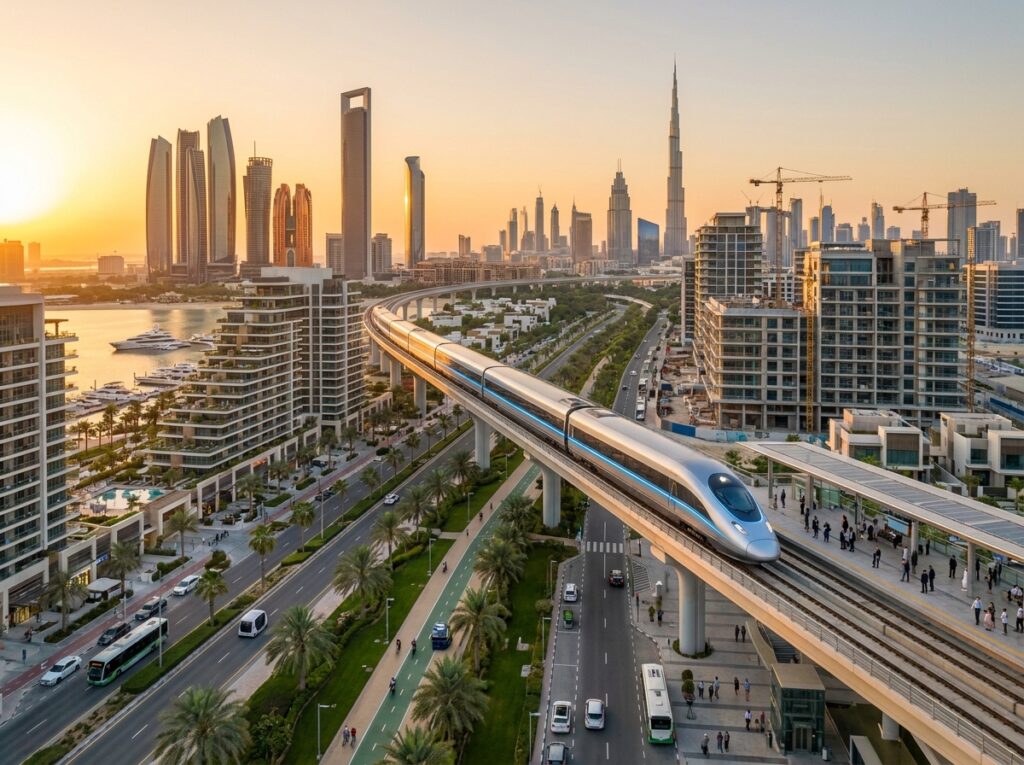
For decades, the journey between Abu Dhabi and Dubai was defined by the E11 highway — thousands of professionals making an exhausting 1.5 to 2-hour drive every single day, waking before dawn and losing precious hours to rush-hour traffic. In 2026, that changed. The launch of the UAE's national passenger railway is not just an infrastructure upgrade; it is a lifestyle revolution that is fundamentally reshaping where people choose to live and work.
For savvy real estate investors, this shift has opened one of the most lucrative off-plan investment windows in UAE history. Below is a closer look at how the railway started, its first passenger journey, the stations it connects, the impact it is already creating, and why properties positioned between Abu Dhabi and Dubai are set to rise in value.
⚡ Key Takeaways
- The first Etihad Rail passenger train ran on 30 June 2026 from Fujairah to Abu Dhabi.
- The Dubai station (Jumeirah Golf Estates) opens 30 September 2026 — directly linking Dubai and Abu Dhabi by rail.
- Train travel between the two cities will take about 57 minutes, roughly half the peak-hour drive.
- Corridor communities like Dubai South and areas near Jebel Ali are prime off-plan zones benefiting from the "transit premium".
How the Railway Started
The vision for a national rail network began as a central pillar of the UAE's "Projects of the 50" initiative, launched in 2021 to connect all seven emirates and eventually integrate with the wider GCC. For years, the 900-km Etihad Rail network quietly proved itself by running freight trains, taking thousands of heavy trucks off the roads.
In 2026, that same network reached a historic turning point: the transition from moving cargo to moving people. Passenger operations are run by Etihad Rail Passenger Services — a joint venture between Etihad Rail and global transport operator Keolis — with a fleet of 13 modern trains built by Spain's CAF, each carrying up to 400 passengers and capable of speeds up to 200 km/h.
The First Passenger Train: Where It Started and Where It Went
History was made on the morning of 30 June 2026. At 5:34 am, the very first Etihad Rail passenger train pulled out of Al Hilal City station in Fujairah and set off across the country toward Mohamed bin Zayed City station in Abu Dhabi.
The inaugural journey covered the Abu Dhabi–Fujairah corridor in about 1 hour and 45 minutes, gliding at speeds of up to 200 km/h — a route that would normally take far longer by road. Six daily return journeys now run on this introductory line, with fares starting at just AED 55 for Comfort Class and AED 120 for Premium Class.
Every Stop on the Etihad Rail Map
The full Etihad Rail passenger network will eventually connect 11 cities and regions in one continuous line, stretching from Al Sila in the far west to Fujairah in the east. The stations are opening in carefully planned phases — use the tabs below to explore each one.
The network goes live
The first two stations open: Mohamed bin Zayed City (Abu Dhabi) and Al Hilal City (Fujairah), launching the Abu Dhabi–Fujairah corridor with six daily return journeys.
Dubai joins the network
The Dubai station at Jumeirah Golf Estates and Al Dhaid (Sharjah) come online — the moment Dubai and Abu Dhabi are directly linked by rail. The Dubai station connects to the city via RTA feeder buses and taxis for smooth last-mile access. This is the date that matters most for investors.
The Al Dhafra region opens
Five western stations go live: Al Sila, Al Dhannah, Mirfa, Madinat Zayed and Liwa — extending the line deep into the Al Dhafra region.
The network is complete
Sharjah's University City station opens, completing the full national passenger network from Al Sila to Fujairah.
The Early Feedback: A Nation That Couldn't Wait
Public response has been overwhelming. When tickets first went on sale on 23 June 2026, seats for the opening day sold out within hours. On launch morning, hundreds of passengers packed the very first departure from Fujairah — a powerful signal of just how much demand there was for a faster, greener way to travel between the emirates.
Etihad Rail expects annual ridership to climb toward 36.5 million passengers by 2030, and executives project the passenger network alone will generate roughly AED 91 billion in economic and social benefits over the next 50 years.
What Happens When the Dubai Station Opens on 30 September 2026
This is the date that changes everything for residents and investors between the two cities. Once the Jumeirah Golf Estates station opens, Abu Dhabi and Dubai will be directly linked by rail for the first time. Here's what that means for everyday life:
The Abu Dhabi–Dubai connection
Travel between the two economic capitals will take around 57 minutes by train — roughly half the typical peak-hour drive. A separate high-speed line, capable of up to 350 km/h, is planned to eventually cut this to just 30 minutes.
Freedom of location
Previously, if you worked in Abu Dhabi you had to live in Abu Dhabi. Now a professional can accept a high-paying job in the capital while living in a vibrant Dubai community like Jumeirah Golf Estates or Dubai South — or the other way around.
Productive, comfortable commutes
Guaranteed seating, reclining premium seats, charging points, air-conditioned comfort and onboard dining turn a stressful drive into productive work time or relaxing downtime.
A greener, safer UAE
Shifting journeys from road to rail is expected to cut commute times by 30–40%, reduce carbon emissions and ease pressure on the highways — lowering congestion and accident rates.
Why This is a Goldmine for Off-Plan Investors
This is where the massive opportunity lies for clients of First Stone Real Estate. Because the train allows people to reach employment hubs in either city while living elsewhere, rental demand is surging in the "middle ground" communities near the Abu Dhabi–Dubai corridor and upcoming transit hubs.
Here's why investing in off-plan properties in these zones is one of the smartest financial moves you can make today:
1. Capitalising on the "transit premium"
Real estate experts refer to the price surge that happens when a new train station opens as the "transit premium". By buying off-plan properties right now in areas like Dubai South or near Jebel Ali, you lock in today's entry prices. By the time the property is handed over and the railway is fully integrated, the market value of your asset will have naturally appreciated by double digits.
2. High rental demand from cross-emirate commuters
Renters prioritise convenience above all else. A beautifully designed off-plan apartment or townhouse located 10 minutes from a high-speed train station will rarely sit empty. You'll attract high-income corporate tenants who work in Abu Dhabi but prefer the Dubai lifestyle — ensuring premium rental yields and long-term stability.
3. Early adopter advantage
The golden rule of real estate is to invest before the masses realise the true value of an area. The official Dubai station opening on 30 September 2026 will trigger a wave of mainstream buyer interest. Securing an off-plan unit right now puts you steps ahead of the market curve.
Build Your Wealth with First Stone Real Estate
The connection between Abu Dhabi and Dubai is no longer just a highway — it's a high-speed corridor of economic growth. Don't wait until the trains are packed and prices have peaked.
Claim Your Free Off-Plan Strategy Session →Fill out the form and the experts at First Stone Real Estate will provide you with a highly curated list of the best off-plan projects perfectly positioned to benefit from the UAE's railway revolution.