
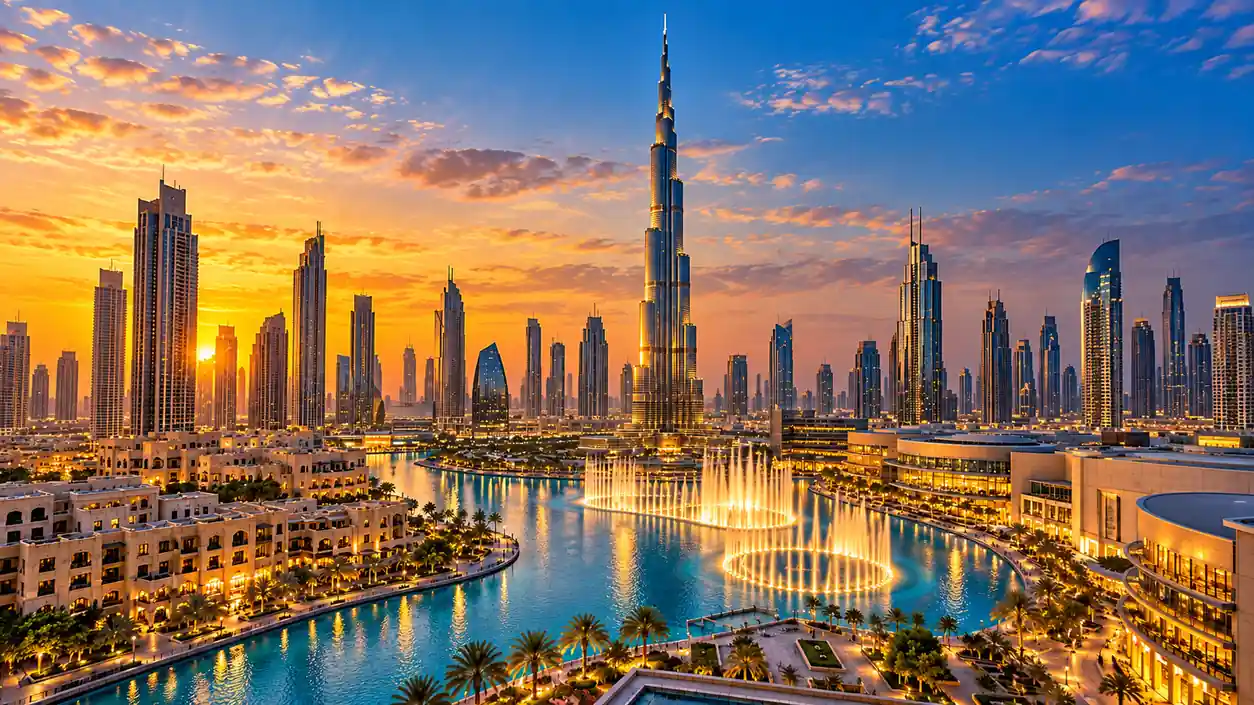
Downtown Dubai is a 500-acre mixed-use district developed by Emaar Properties around the Burj Khalifa, the world’s tallest building, and The Dubai Mall, one of the most visited places on earth. It sits on the inland side of Sheikh Zayed Road (E11), with DIFC to the north-east and Business Bay wrapping around its southern and eastern edges, and it packs high-rise apartments, branded residences, hotels and several of the city’s best-known attractions into a single walkable loop. Downtown Dubai at a Glance Master developer Emaar Properties Size About 500 acres (2 sq. km) Property types Apartments, penthouses, serviced and branded residences Average price About AED 3,000 per sq. ft. (2026) Typical 1-bedroom rent AED 100,000 – 160,000 per year Gross rental yield Around 5% – 6.5% Nearest Metro Burj Khalifa/Dubai Mall (Red Line) Ownership Freehold, open to foreign buyers In this guide About Downtown Dubai Location Property price trends Rent in 2026 Popular projects Getting around Schools and nurseries Healthcare Daily life Things to do Shopping Where to eat Resident profile Things to consider Best time to visit Downtown vs neighbouring areas FAQs About Downtown Dubai Downtown Dubai was conceived in the early 2000s as a brand-new city centre, built on land beside Sheikh Zayed Road that had been open desert and a former military compound. Emaar, which first marketed the project as Downtown Burj Dubai, laid out the district so that its buildings would frame views of the central tower, and construction began in 2004. Emaar has long promoted it as “The Centre of Now”. Development proceeded in three broad phases: Phase one (2004–2008): The first homes arrived with the low-rise Old Town, completed around 2006 in a traditional Arabian style, and early tower clusters such as The Residences and South Ridge. The Dubai Mall opened in November 2008. Phase two (2009–2012): The landmarks took shape. The Dubai Fountain launched on Burj Lake in 2009, and the Burj Khalifa, known as Burj Dubai during construction, opened in January 2010 at 828 metres and 163 floors. Towers along Mohammed Bin Rashid Boulevard filled in around it. Phase three (2013 onward): The Opera District and a newer generation of towers. Dubai Opera opened in 2016 as a 2,000-seat, dhow-shaped venue, joined by residential towers such as Burj Vista, Boulevard Point, Opera Grand, Il Primo and Address Residences Sky View. Investment in the district has not slowed. Emaar’s AED 1.5 billion expansion of The Dubai Mall, announced in 2024, is adding a new precinct called The District with around 279 shops and restaurants. With the master plan now close to fully built out, new residential launches inside Downtown are rare, and that scarcity is one of the factors behind its premium pricing. Downtown Dubai Location Downtown Dubai is bordered by Sheikh Zayed Road (E11) to the north-west, DIFC and Za’abeel to the north-east, and Business Bay to the south and east. Financial Centre Road (D71) gives it a direct link to DIFC, and Al Khail Road (E44) is a short drive away through Business Bay. Across Sheikh Zayed Road lie Al Wasl, City Walk and the Jumeirah coastline, which makes Downtown one of the most central addresses in the city. Destination Approximate Drive Time (Off-Peak) Business Bay 5 minutes DIFC 5–10 minutes Dubai World Trade Centre 10 minutes Jumeirah Public Beach / La Mer 10–15 minutes Dubai International Airport (DXB) 15–20 minutes Dubai Marina / JBR 20–25 minutes Expo City Dubai 30–35 minutes Al Maktoum International Airport (DWC) 35–45 minutes Downtown Dubai Property Price Trends Downtown Dubai is one of the most expensive apartment districts in the city. DLD transaction data compiled by Property Monitor puts the average price at AED 3,011 per square foot for 1 January to 6 June 2026, well above the citywide average of roughly AED 1,658 per square foot. Advertised asking prices tracked by Bayut averaged about AED 3,179 per square foot in the first half of 2026 and moved very little over the period. That stability came through a volatile half-year. Regional tensions between February and April 2026 hit buyer sentiment and pulled Dubai’s second-quarter sales volumes well below the record first quarter, yet prices held firm. Over a longer view, Downtown values climbed by more than 25% across the previous two years, according to one market analysis, growth that has compressed rental yields slightly while keeping resale demand deep. Unit Type Typical Purchase Price (AED) Studio 0.9 – 1.7 million 1 Bedroom 1.7 – 3.0 million 2 Bedroom 3.0 – 5.5 million 3 Bedroom 5.0 – 10.0 million (view and tower dependent) Penthouse 15 million and above With the average one-bedroom asking price in Downtown already around AED 2.4 million, a large share of one-bedroom apartments clear the AED 2 million threshold for the UAE’s ten-year Golden Visa on their own. The threshold is based on the DLD-registered value, not a market estimate, and several properties held by the same owner can be combined to reach it. Our guide to the 2026 UAE visa rule changes covers current eligibility in detail. Fresh supply is limited. Because so little land remains, recent launches have mostly been branded or boutique towers priced close to resale levels, rather than the discounted off-plan entry points found in newer communities. How Much Does It Cost to Rent in Downtown Dubai in 2026? Annual rents in Downtown Dubai swing widely with view, floor and building age. An apartment facing the Burj Khalifa or the fountain can rent for considerably more than a similar-sized unit in the same tower facing the other way. The ranges below reflect typical 2026 market levels. Unit Type Typical Size Annual Rent Range (AED) Studio 400–650 sq. ft. 70,000 – 100,000 1 Bedroom 700–1,000 sq. ft. 100,000 – 160,000 2 Bedroom 1,100–1,700 sq. ft. 160,000 – 280,000 3 Bedroom 1,700–2,800 sq. ft. 250,000 – 450,000 The first half of 2026 tilted slightly in tenants’ favour. Bayut’s H1 2026 rental report put average asking rents at around AED 133,000 for a one-bedroom, AED 223,000 for a two-bedroom
Azizi Florence Sharjah: The Emirate’s Biggest Villa And Townhouse Community
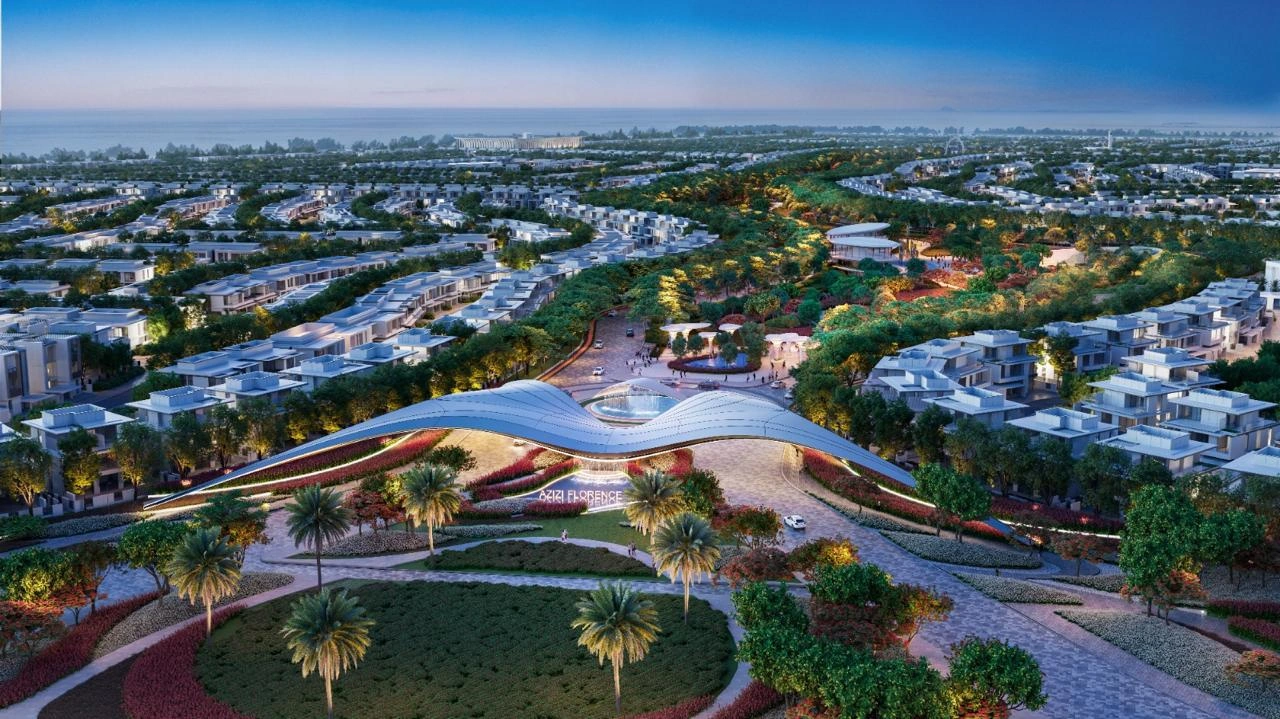
Azizi Florence is a 30 million square foot master community in Um Fanain, Sharjah, by Azizi Developments. It holds 10,702 homes wrapped around a 1.6 million square foot central park. Townhouses open at AED 1.89M, villas at AED 3.35M, and a 30/70 payment plan with handover set for 31 July 2029. If you have watched Sharjah’s property market, you already know the trend has shifted. Prices are climbing, buyers are back, and the emirate has quietly become one of the most talked-about markets in the country. Into all of these, Azizi Developments comes with its first big Sharjah project, Azizi Florence. Azizi Florence Sharjah at a Glance Detail Figure Project name Azizi Florence Location Um Fanain, Sharjah (on Emirates Road, E311) Developer Azizi Developments Total land area 30 million sq. ft. Total homes 10,702 Home mix 6,070 townhouses, 1,132 villas, 3,500 apartments Central park 1.6 million sq. ft. Clusters 6 (named after places in Tuscany) Starting price AED 1.89M (3-bed townhouse) Villa entry price AED 3.35M (4-bed villa) Payment plan 30/70, construction-linked Handover 31 July 2029 Current release Clusters 1 and 2 Amenities 85+ What is Azizi Florence Sharjah? Azizi Florence — Azizi Developments’ first major master community in Sharjah. Azizi Florence is Azizi Developments’ most ambitious master plan so far, and its first major launch into Sharjah. The community covers 30 million square feet in Um Fanain, split into six architecturally distinct residential clusters, with a central park as the organising idea of the whole masterplan. A park first development. Azizi Florence has a 1.6 million square foot green space, ringed by six pocket parks, threaded with 11.5 kilometres of cycle and running track through it. Over a quarter of the master plan stays as open landscape. Most developers squeeze greenery into leftover corners. Florence flipped the order, and you can feel it in the layout. Around the green spine, you get the homes, twelve residents’ clubhouses, schools, healthcare, mosques and a retail high street. School run, gym, clinic, prayer, groceries and dinner are all within the master plan. For Sharjah, the scale is new. Nothing close to 10,702 homes at this specification has come to the emirate before. For Azizi, it became the largest master community in the company’s history. Where is Azizi Florence located? Azizi Florence is in Um Fanain, Sharjah, next to Sharjah Sustainable City, with direct frontage onto Emirates Road (E311). The airport is 10 to 15 minutes away, and Downtown Dubai is roughly 20 to 25 minutes. Destination Drive time Sharjah International Airport 10 to 15 min SAIF Zone 10 to 15 min University City, Sharjah 15 min City Centre Al Zahia 20 min Downtown Dubai 20 to 25 min Dubai International Airport 20 to 30 min Azizi Florence has direct access to the E311. It connects you with Sharjah’s airport and free zone within a quarter of an hour, and Dubai’s core within half an hour. For investment point of view, you buy at Sharjah prices and get Dubai within easy reach. For a family working across the two emirates, or an investor investing in the commuter belt, the location is unmatched. Um Fanain Public Park, Sharjah Sustainable City, the Wasit and Al Riffa health centres, University Hospital Sharjah, Emirates National School, Pamir Private School and the American University of Sharjah are all nearby, with the established Masaar and Aljada communities a short drive along the same road. Properties For Sale in Azizi Florence Townhouses and villas for sale at Azizi Florence. Azizi Florence offers 10,702 homes, among them 6,070 townhouses, 1,132 villas and 3,500 apartments. Five home types have been released so far, across the first clusters, and every single home comes with a private outdoor space. Three and Four Bedroom Townhouses The entry home is the three-bedroom townhouse. It opens at AED 1.89M for 2,224 square feet, with a private garden, covered parking and direct access to the cluster’s pocket park. Pricing is near AED 850 per square foot. In the same budget across Dubai, you get a mid-floor apartment, not a house with its own garden. For a young family, this is the best option. The four-bedroom townhouse steps up to AED 2.26M for 2,660 square feet. You gain a wider frontage, an added ensuite bedroom and a first-floor family room. Corner plots carry extra garden depth on two sides, so pick your unit carefully if outdoor space matters to you. Four, Five and Six Bedroom Villas In villas for sale, Azizi Florence offers three options: Four-bedroom villa: from AED 3.35M, 3,714 sq. ft., with a private garden, pool provision and covered parking for two cars. Five-bedroom villa: from AED 4.20M, 4,636 sq. ft., adding a full extra floor, a double-height entrance hall and a roof terrace above the principal bedroom. Six-bedroom park-facing villa: from AED 4.95M, 4,930 sq. ft., the flagship home in the whole plan. Every bedroom comes en suite. Kitchens are gas-connected. Each home gets a private lift measuring 1.5 by 1.5 metres, and every plot carries 2.5 metres of side clearance. Apartments For apartments in Azizi Florence, buyers get 3500 homes. These are best suited for first-time buyers, and investors want rental yield. Layouts and pricing for the apartment cluster (Azizi Versilia) are released alongside the villa and townhouse phases. Azizi Florence Floor Plan and Starting Prices Azizi Florence floor plans and starting prices. The initial release focuses on Clusters 1 and 2 under an accessible 30/70 payment plan extending through project completion in July 2029. Entry pricing begins at AED 1.89 million ($514,000) for a three-bedroom townhouse measuring 2,224 square feet. Home type Bedrooms Starting area Starting price Price / sq. ft. Townhouse 3 bed 2,224 sq. ft. AED 1.89M AED 850 Townhouse 4 bed 2,660 sq. ft. AED 2.26M AED 850 Villa 4 bed 3,714 sq. ft. AED 3.35M AED 902 Villa 5 bed 4,636 sq. ft. AED 4.20M AED 906 Villa 6 bed park-facing 4,930 sq. ft. AED 4.95M AED 1,004 Azizi Florence Master Plan The Azizi Florence master plan — six
How to Choose the Right Real Estate Agent in Dubai
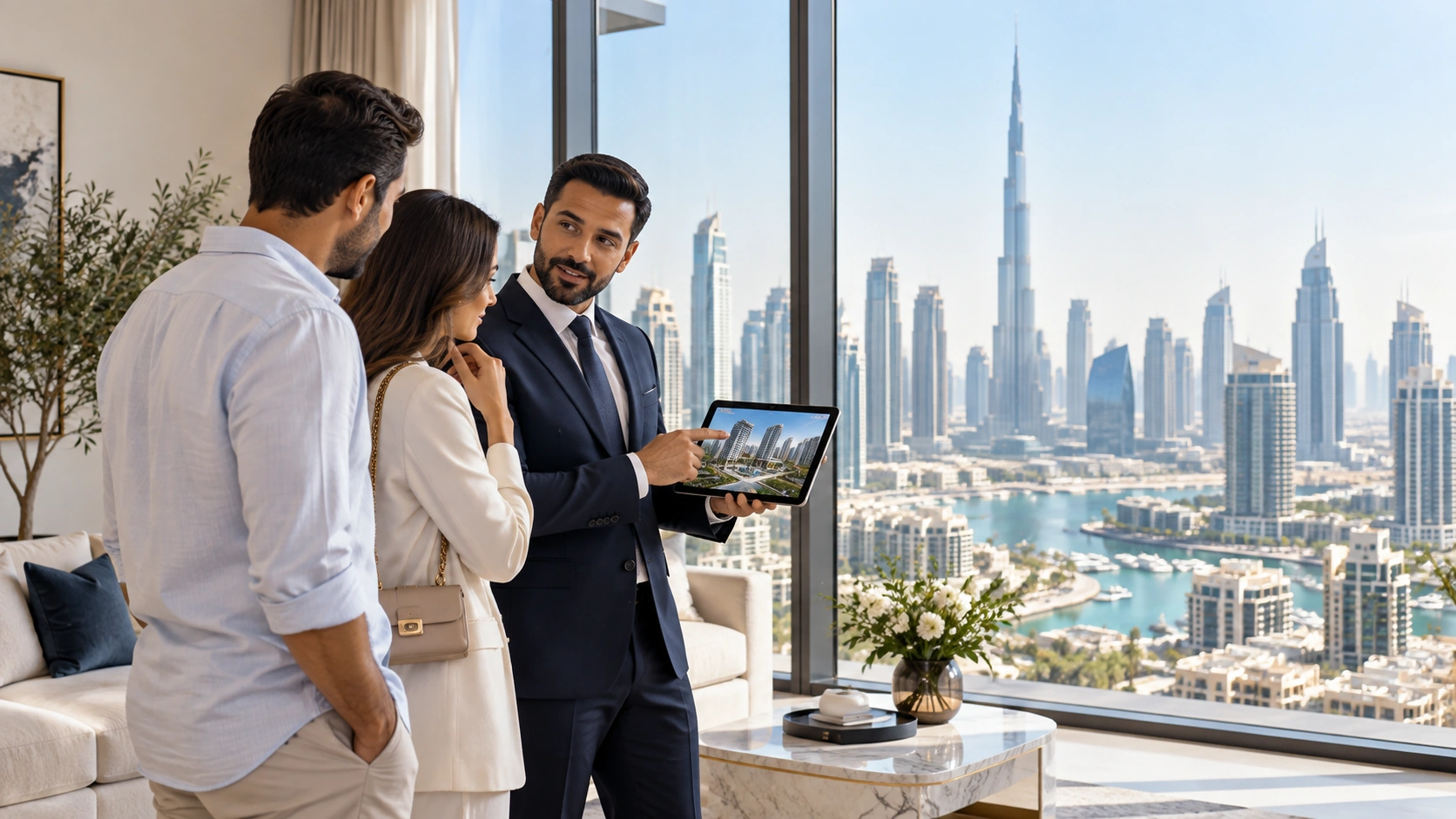
Quick answer Choose a real estate agent in Dubai by verifying their BRN with RERA, confirming they close deals in your target community, and agreeing on the commission in writing before you sign Form F. Buyers usually pay 2% plus VAT on a sale and 5% of annual rent on a lease. Dubai gives property buyers more choice than almost any market in the world. Off-plan launches arrive most months, and secondary listings move within days. Every deal still passes through the Dubai Land Department (DLD), and only a RERA-registered broker in Dubai may legally act for you. Whether you are a first-time buyer, an overseas investor, or a long-term tenant ready to own, your choice of real estate agent in Dubai shapes the price you pay and the risk you carry. Why You Need a Real Estate Broker in Dubai Dubai has more than 60 freehold zones, dozens of active developers, and a resale market moving within days. A licensed broker knows which of those deals are real and which ones expired last month. Benefits of hiring a licensed broker: Legal protection: Your agent works under Law No. 85 of 2006 and the Real Estate Regulatory Agency (RERA) code of conduct, so misconduct can be reported to a regulator. Price accuracy: A broker sources DLD transaction records for the same tower and layout, which gives you a property valuation and market analysis based on closed deals. Fraud prevention: Licensed agents confirm the title deed, the seller’s identity, and any mortgage on the unit before any transfer. Access to stock: Many off-plan launches and quiet resale listings never reach the portals, and brokers hold this inventory first. Price negotiation: An agent who closed 40 deals in your building knows the discount a seller will accept and the one they will refuse. Dispute resolution: If the deal breaks down, your broker manages the DLD process and points you to the Rental Dispute Centre or a conveyancer. Time saved: Viewings, NOC applications, trustee bookings and bank appointments all move faster with one person coordinating them. What Is a RERA Registered Broker in Dubai? A RERA-registered agent reviewing a floor plan with buyers in Dubai. A RERA-registered broker is an agent licensed by the Real Estate Regulatory Agency, the regulatory arm of the Dubai Land Department. To hold this licence, the agent must pass the certified broker training programme, clear a police check, and work for a company with a valid trade licence. RERA then issues a broker registration number, known as a BRN, which appears on every legal document the agent signs. The BRN is the number of records. It ties one person to one brokerage and one licence year. If the agent leaves the firm, the number moves with them, and the old listing becomes invalid. Anyone marketing property in Dubai without a BRN is working outside the law, and you carry the risk if the deal fails. How to Verify a RERA Agent Licence Verification requires about two minutes and should happen before your first viewing. Here is how to verify RERA agent licence details for any broker who contacts you. Ask for the agent’s full name, BRN and company trade licence number Open the Dubai REST app or the DLD website Match the photo, the brokerage name and the expiry date on screen Confirm the company holds an active RERA office registration, not only a trade licence Confirm the same BRN appears on Form A, the listing permit and the sales advertisement Ask which permit number covers the property being advertised When you engage with a RERA-certified agent, you get approved DLD templates, proper Trakheesi permit, and data-backed research. How to Choose the Right Real Estate Agent in Dubai: 8 Steps An agent showing buyers a waterfront villa in Dubai. Most people buy property in Dubai through an agent, and the steps below work for a studio in Jumeirah Village Circle or a signature villa on Palm Jumeirah. The order matters because each step narrows the shortlist before you spend a weekend on viewings. Step 1: Define Your Goal Before You Call Anyone Write down what you want in one line before you hire a real estate agent in Dubai. A holiday home has a different scenario from an ordinary rental. An investor chasing capital appreciation will look at handover dates and payment plans. An end user cares about the school commute, service charges and floor level. Set the budget with all costs included. Add the 4% DLD transfer fee, agency commission, trustee charges and any mortgage arrangement fee. Buyers who plan around the sticker price alone usually lose their first negotiation. Step 2: Match the Agent to Your Area and Asset Type Dubai brokers specialise by district. An agent who lives and works in Dubai Marina will know which towers have lower service charges and which ones face a future construction plot. Match your search this way: Apartments and rental yield: Dubai Marina, Jumeirah Village Circle (JVC), Business Bay and Jumeirah Lake Towers Prime and luxury: Palm Jumeirah, Downtown Dubai, Emirates Hills and Jumeirah Bay Island Family villas: Arabian Ranches, Dubai Hills Estate, Damac Hills and The Springs Early-stage growth: Dubai South, Dubai Islands, Maritime City and Jumeirah Coast All of the above are freehold areas in Dubai, so foreign buyers can own the title outright. A luxury property broker in Dubai also needs a second skill set. Prime deals involve private clients, confidentiality agreements and off-market listings, so ask how many closed transactions above AED 10 million the agent handled in the past year. Step 3: Check the Licence, Then Check the Company Verify the BRN first from the DLD official page. Then look at the brokerage under which the agent works. A firm with an escrow-compliant process, a conveyancing partner and a registered office will protect you better than a solo operator with a phone number. Ask three questions: Is the trade licence current? Does the company hold an ORN, the office registration number issued
Cash vs. Mortgage: Which One is the Best Way to Buy Property in Dubai?
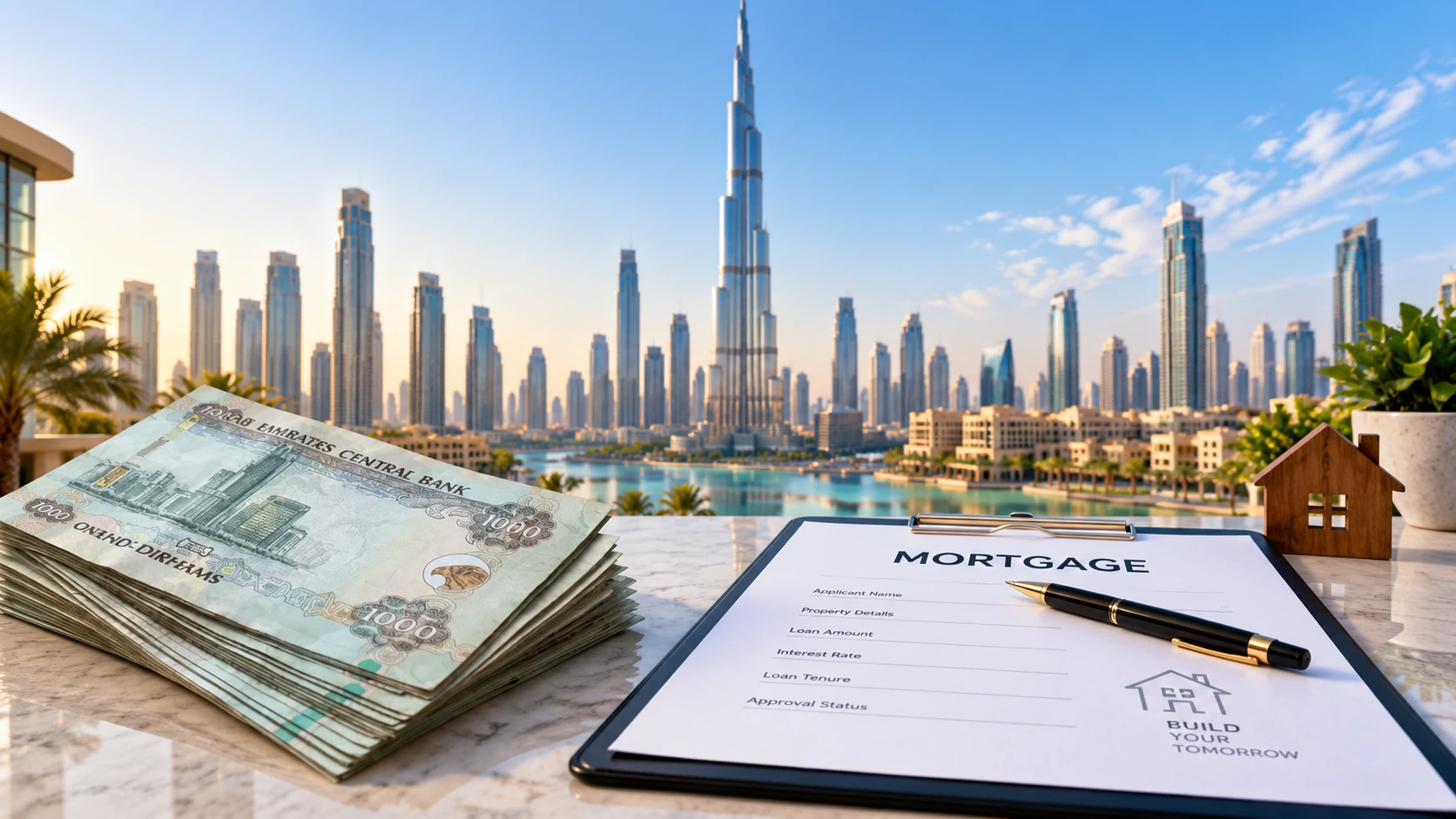
Buying with cash gives you speed, lower paperwork, zero debt, and 3% to 5% price discounts. Financing through a UAE bank lets you hold liquid capital, leverage returns, and purchase multiple properties. Your decision hinges on whether you value zero debt or investment scale. Key Highlights Cash purchases close in 7 to 14 days; bank mortgages require 30 to 60 days. Expat residents need a minimum 20% down payment (80% Loan-to-Value) for properties under AED 5 million. Non-resident foreign investors generally require a 30% to 40% down payment (60% to 70% LTV). Transaction fees add 6% to 7% of property value on cash purchases, and 7% to 8.5% on mortgaged purchases. Both cash buyers and mortgage holders can obtain the 10-Year UAE Golden Visa, provided that at least AED 2 million in real equity is paid. Introduction: Capital Security vs. Financial Leverage Around 60% of all real estate sales across Dubai are settled in cash. Buyers choose this route to secure quick sales, skip bank evaluations, and avoid recurring debt. At the same time, seasoned investors intentionally use bank financing. Even when they hold millions in cash reserves, they borrow from UAE lenders to maintain liquidity in global markets and spread their equity across multiple high-yield residential units. How Does Buying Property with Cash Work in Dubai? Cash buying in Dubai. A cash purchase involves signing a standard unified contract, clearing developer service dues for a No Objection Certificate (NOC), and issuing a UAE Central Bank-regulated manager’s cheque at a Dubai Land Department (DLD) Registration Trustee office. Step-by-Step Cash Purchase Process at the Registration Trustee Office The cash path moves quickly from negotiation to title issuance: Sign Unified Contract Form F (MOU): The buyer and seller sign Form F on the DLD REST app or in paper format, outlining price, completion dates, and a 10% security deposit. Obtain Developer NOC: Both parties meet at the master developer’s office (such as Emaar, Nakheel, or Sobha). Once all building maintenance dues are paid, the developer issues a No Objection Certificate. Draft Manager’s Cheques: The buyer secures official manager’s cheques from their UAE bank account. One cheque goes to the seller for the remaining purchase balance; others cover the 4% DLD fee, broker fees, and administrative charges. Complete Transfer at Trustee Office: Parties meet at an authorized DLD Registration Trustee office. The trustee checks the cheques, validates identity records, registers the transfer, and issues an official digital Title Deed in minutes. Proof of Funds, Source of Wealth, and UAE AML Compliance Rules The UAE enforces strict Anti-Money Laundering (AML) standards under Central Bank and Ministry of Economy guidelines: Real estate brokers, developers, and trustee offices must conduct Know Your Customer (KYC) checks on all buyers. Buyers must show verified bank statements documenting the source of money. Physical cash payments are limited by law; transactions exceeding AED 55,000 in actual cash or crypto assets require immediate reporting to the Financial Intelligence Unit (FIU) through the goAML portal. International buyers must route funds via verified SWIFT transfers into their UAE bank accounts or escrow-backed channels. Pros & Cons of Buying a Property with Cash Advantages (Pros) Disadvantages (Cons) Closes in 7 to 14 days with straightforward paperwork Locks large capital sums in one illiquid asset No monthly debt payments or interest rate risks Removes the ability to multiply returns through leverage Stronger bargaining power for secondary-market discounts Higher opportunity cost compared to diversified investments No bank valuation delays or processing fees Slower portfolio growth when buying one unit at a time How Does Financing Property with a UAE Mortgage Work? An investor analyzing financial charts and mortgage paperwork for a Dubai property investment. UAE mortgage financing allows buyers to secure up to 80% of an asset’s market value through commercial lenders, repaying the loan balance over 25 years through fixed or variable interest rates tied to EIBOR. UAE Central Bank Mortgage Rules, LTV Caps, and Eligibility Criteria The Central Bank of the UAE establishes maximum Loan-to-Value (LTV) limits to prevent speculative lending: Borrower/Property Type Maximum LTV UAE Citizens (First Home < AED 5M) 85% UAE Resident Expats (First Home < AED 5M) 80% Properties Above AED 5M (Residents) 70% Second/Investment Homes (Residents) 60% – 65% Non-Resident Foreign Investors 60% – 75% Repayment Period: Maximum term of 25 years, with age caps of 65 years for salaried employees and 70 years for self-employed individuals. Mortgage Interest Rates: Fixed vs. Variable Rates Tied to EIBOR Banks in Dubai offer two primary loan structures: Fixed-Rate Loans: Dubai property mortgage rates stay locked for 1, 2, 3, or 5 years, typically landing between 3.8% and 4.8%. After the fixed term ends, the loan converts into a variable rate. Variable-Rate Loans: The rate adjusts quarterly based on the Emirates Interbank Offered Rate (3-month or 6-month EIBOR) plus a set bank margin (usually 1.5% to 2.2%). Sharia-Compliant Structures: Islamic lenders offer Murabaha (cost-plus sale) or Ijara (lease-to-own) contracts, giving buyers identical economic outcomes through rent or profit structures instead of interest. Pros & Cons of Buying a Property with a Mortgage Advantages (Pros) Disadvantages (Cons) Leaves cash available for business or other investments Transaction closing takes 30 to 60 days Magnifies capital appreciation through borrowing Interest payments increase your final cost of ownership Tenants can pay down your loan balance via rental returns 0.5% to 1% Bank arrangement fees, valuation costs AED 2500 to AED 3500, and insurance add to closing expenses Enables acquisition of higher-value properties Bank places an official lien on the property Title Deed How Much You Have to Pay For a AED 2M Property in Dubai Buying property in Dubai requires upfront capital that cannot be rolled into a bank loan. Cash buyers cover the total purchase price plus 6% to 7% in fees, while mortgage buyers must provide a down payment plus 7% to 8.5% in cash fees. Hidden Costs to Consider While Buying a Property in Dubai Under UAE Central Bank rules, ancillary transaction expenses cannot be rolled into a mortgage: DLD Transfer Fees:
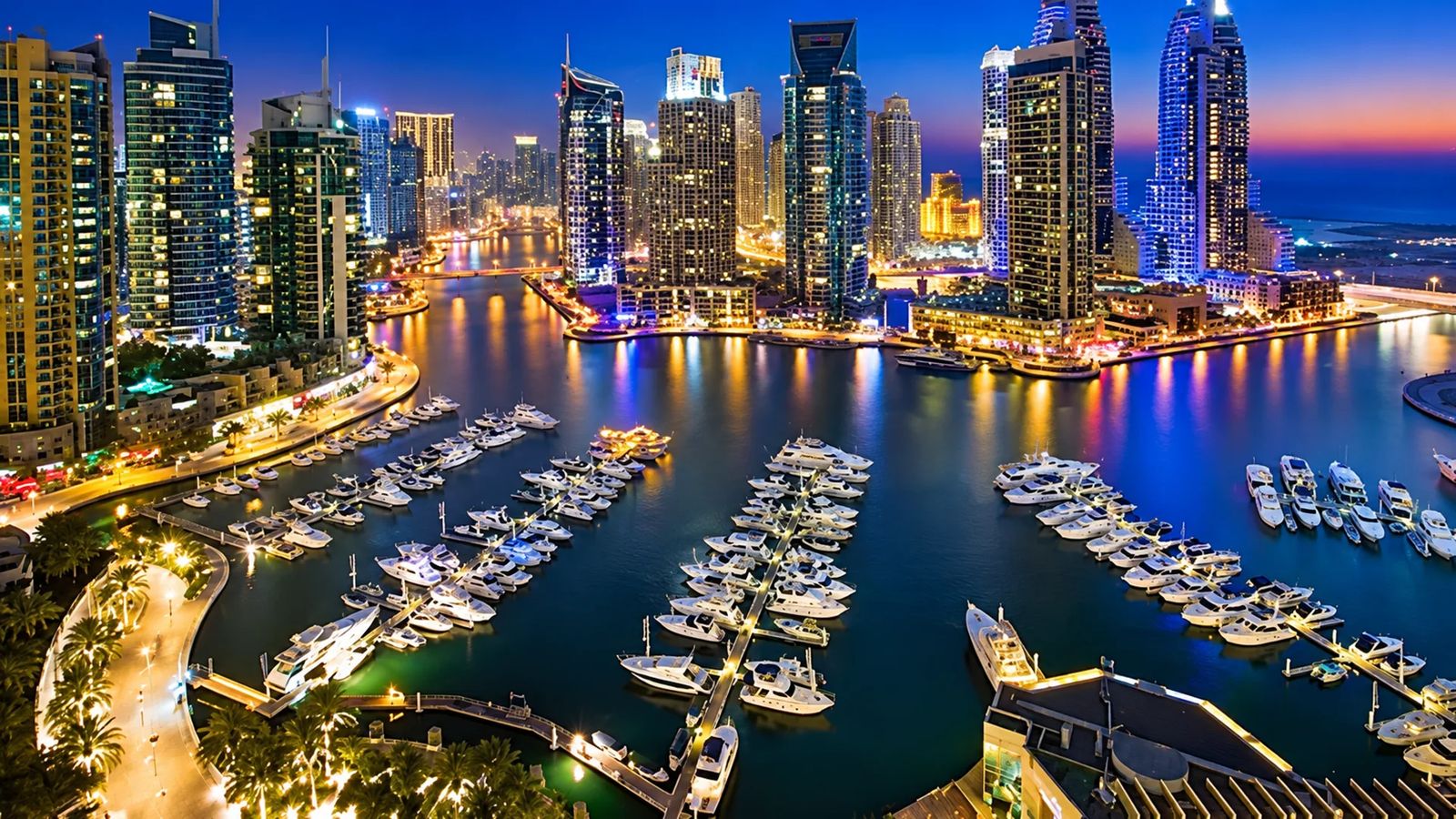
Dubai Marina Area Guide: Property, Prices & Lifestyle
Dubai Marina is a man-made waterfront district built along a 3-kilometre canal on the Arabian Gulf coast, home to more than 200 residential towers and one of Dubai’s largest concentrations of high-rise apartments. It lies between Sheikh Zayed Road and the coastline, bordered by Jumeirah Beach Residence (JBR) to the west and Al Sufouh to the north. About Dubai Marina Dubai Marina was planned in the 1990s as part of Dubai’s push to diversify beyond oil into tourism and world-class urban development. Construction began in the early 2000s, with Marina 1, a cluster of six residential buildings developed by Emaar Properties, becoming the first completed phase in 2003. The project involved excavating a channel from the Gulf and lining it with reclaimed land; now, Dubai Marina is one of the largest man-made marinas in the world. Development proceeded in three broad phases: Phase one (2003–2006): Initial residential towers, including Marina 1 through 5, established the waterfront’s first skyline. Phase two (2006–2012): Supertall towers such as 23 Marina and Princess Tower were added, pushing the district into one of the best waterfront communities in Dubai. Princess Tower, completed in 2012, briefly held the title of the world’s tallest residential building. Phase three (mid-2000s onward): Commercial and recreational infrastructure such as Dubai Marina Mall, Marina Walk and the adjoining JBR beachfront, established the community into a self-contained, live-work-play district. Marina 101, at 425 metres, was completed in 2017 and remains one of the tallest residential structures in the area. Some towers are still developing: Marina 106, originally proposed in 2008, was paused during the 2009 property downturn and is now scheduled for completion around 2027 under a new developer. Dubai Marina Location Dubai Marina location and surrounding districts. Dubai Marina is bordered by Sheikh Zayed Road (E11) to the east, JBR and the Arabian Gulf to the west, Al Sufouh to the north and Jumeirah Islands to the south. It is roughly equidistant between Downtown Dubai and the Expo City / Dubai South corridor. Destination Approximate Drive Time Sheikh Zayed Road (E11) on-ramp 5–6 minutes Dubai Media City / Internet City 10–15 minutes DIFC 15–20 minutes Downtown Dubai / Burj Khalifa 20 minutes Dubai International Airport (DXB) 25–30 minutes Al Maktoum International Airport (DWC) 30–35 minutes Expo City Dubai 25–30 minutes Dubai Marine Property Price Trends The average transaction price across all unit types in Dubai Marina is approximately AED 2,085 per square foot as of 2026, up from around AED 1,850 per square foot in 2020. Price per square foot rose roughly 8.7% during 2025 alone. It reflects constrained new supply against sustained demand. Unit Type Typical Purchase Price (AED) Studio From 478,000 1 Bedroom 1.5 – 1.8 million 2 Bedroom 2.5 – 3.0 million 3 Bedroom 2.5 – 7.0 million (view and tower dependent) Penthouse 10 million and above A two-bedroom apartment in a building such as Marina Gate or JBR-adjacent towers can reach the AED 2 million mark at roughly 1,000 sq. ft. This is relevant to buyers targeting the UAE’s ten-year Golden Visa, which requires a property (or combined properties under one owner) valued at AED 2 million or more, based on the DLD-registered value, not market estimate. How Much Does It Cost to Rent in Dubai Marina in 2026? Dubai Marina skyline and yacht berths at dusk. Annual rents in Dubai Marina vary significantly by tower age, floor and view, but 2026 market data gives a reliable band for budgeting. Unit Type Typical Size Annual Rent Range (AED) Studio 360–610 sq. ft. 65,000 – 110,000 1 Bedroom 700–950 sq. ft. 95,000 – 135,000 2 Bedroom 1,000–1,600 sq. ft. 140,000 – 200,000 3 Bedroom 1,500–3,000 sq. ft. 220,000 – 350,000 Rents in the Marina climbed sharply between 2022 and 2024, in some towers by 30–40%, as post-pandemic demand from high-income expatriates surged. Since mid-2024, the market has largely stabilised. Tenants who signed leases in 2022 or early 2023 are often well below the current market rate, giving landlords grounds under RERA guidelines to propose increases at renewal. Older towers such as the original Marina Diamond cluster fall toward the lower end of each range, while newer or higher-floor units in buildings like Marina Gate and Cayan Tower command the top end. Where to Buy or Rent: Popular Projects in Dubai Marina Building Known For Marina Gate Newer development, sea and marina-facing units, strong rental demand Cayan Tower Distinctive 90-degree twisted design, landmark status Princess Tower Former record-holder for world’s tallest residential tower 23 Marina Among Dubai’s tallest residential buildings; sustained localised damage during the 2026 Iranian strikes on the UAE Marina Promenade Established cluster with direct Marina Walk access Marina Diamond (I–VI) Older, more affordable stock, popular entry point for renters Ocean Heights Range of 1–5 bedroom layouts, family-sized options DAMAC Heights Includes DAMAC Residenze, Fendi Casa-furnished units Getting Around: Metro, Tram and Road Access The Dubai Tram links Dubai Marina to JBR and the Dubai Metro network. Does Dubai Marina have a metro station? Yes. Dubai Marina is served by two Red Line stations, Sobha Realty and DMCC (formerly Jumeirah Lakes Towers), both within walking distance of the eastern edge of the district, closer to JLT than the waterfront itself. Connectivity & Road Access The Dubai Tram connects both metro stations to the Dubai Marina and onward to JBR, running 11 stations between Al Sufouh and Dubai Marina. The tram journey from Jumeirah Lakes Towers (linked to DMCC Metro) to the Dubai Marina Mall tram stop takes about 5 minute by tram, or roughly 10–15 minutes on foot via the pedestrian bridge connecting the two areas. Is Dubai Marina walkable? Yes, it is considered one of Dubai’s more pedestrian-friendly districts. Marina Walk, the promenade tracing the canal’s edge, is used for walking, running and cycling, and connects directly to JBR’s beachfront walkway (The Walk) via tram or footpath. Parking Most residential towers include dedicated resident parking, but public, non-resident parking is limited near the waterfront and Marina Walk, particularly during evenings and weekends when the promenade
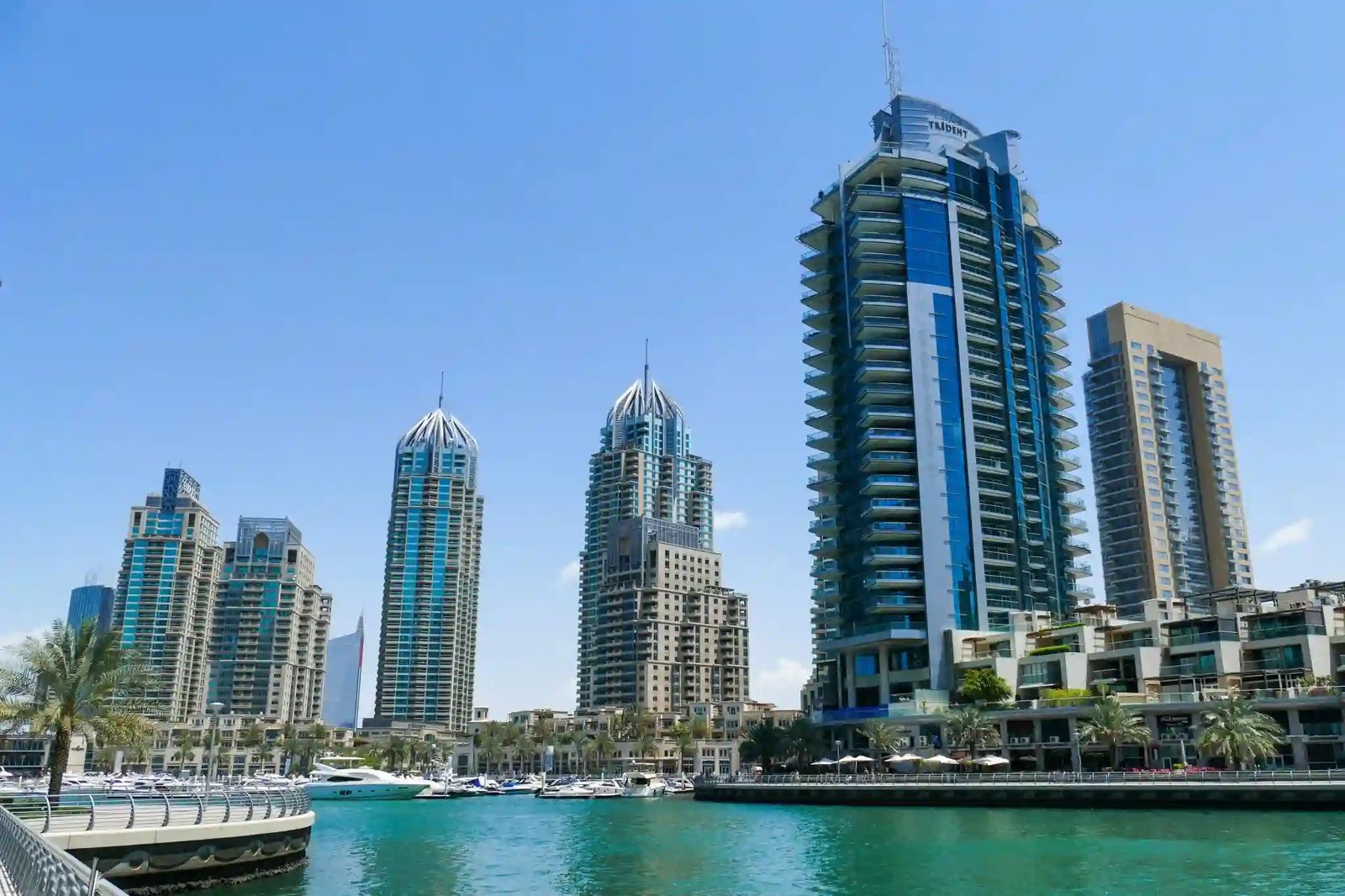
How to Buy Property in Dubai With Zero Down Payment (2026): Rules, Routes & Real Costs
Key Takeaways Zero down payment property in Dubai is not permitted through a bank mortgage, because UAE Central Bank rules require a minimum buyer contribution on every financed purchase Genuine zero-deposit offers exist only through developer payment plans on selected off-plan projects, and remain a small share of the market Since February 2025, banks can no longer finance the 4% DLD fee or the 2% agency commission, adding roughly 6–7% in unavoidable cash to every mortgaged purchase Low-deposit routes such as rent-to-own Dubai schemes, post-handover plans and fractional ownership reduce the entry cost without eliminating it The First Time Home Buyer Dubai registration is free, takes minutes, and unlocks preferential pricing and faster bank approvals on homes up to AED 5 million Can you really buy property in Dubai with zero down payment? It is one of the most searched property questions in the emirate, and the honest answer depends on the condition. As of 2026, a bank does not offer any zero down payment options for mortgage transactions in Dubai but top developers sometimes offer zero down payment options in promotional launches or festive times. In Dubai’s comparative market, developers are now also offering multiple flexible payment plans. The result is smaller booking amounts, longer interest-free schedules, post-handover tails and occasional DLD fee promotions, all of which lower the cash you need on day one. The line between a regulated mortgage and a developer payment plan is what separates a workable purchase from an expensive mistake. This guide explains how zero down payment offers work, who qualifies, which developers run them, and what you still pay when the deposit falls to zero. Zero Down Payment in Dubai: Reality Check Off-plan developments are where genuine zero and low down payment plans exist in Dubai. You cannot buy property in Dubai with zero down payment using a bank mortgage. Central Bank of the UAE (CBUAE) regulations cap lending at 80% of value for expatriates buying a first home under AED 5 million, making a 20% contribution mandatory. Developer payment plans sit outside those regulations, and a small number genuinely start at zero. What the reality check comes down to: Resale and ready homes: A deposit is unavoidable, since these transactions are mortgage-financed or cash-settled. Off-plan from major developers: Booking amounts typically includes 10 to 20% Off-plan on promotional plans: A handful of campaigns waive the booking payment on selected inventory for a limited window. The DLD fee: 4% of the DLD price is still applied . Zero deposit is not zero cost: The same purchase price is simply spread across a longer schedule. A rare listing: You will not find a zero down payment house for sale on the resale market at any price point Pros of a zero down payment plan Cons of a zero down payment plan No large upfront savings needed, so you can enter the market years earlier Inventory is limited to whichever units carry the promotion Interest-free, so you pay the price rather than the price plus finance cost The unit is often priced above the standard list, and the gap is the real cost Capital stays free for other uses during the construction period Campaigns cluster among newer developers, where completion risk is highest Monthly instalments can be matched to what you currently pay in rent The 4% DLD registration fee is still due in cash at booking No mortgage underwriting, DBR test or salary threshold at entry You still need a mortgage or savings for any balance due at handover Suits salaried buyers with income but no lump sum Long schedules extend your commitment into years you cannot forecast How Zero Down Payment Actually Works Developer payment plans sit outside Central Bank mortgage rules. A zero down payment plan works because the developer extends the terms. The developer holds title until handover, collects instalments into a DLD-supervised escrow account, and charges no interest. With no lender advancing capital at booking, CBUAE loan-to-value limits are not engaged. The mortgage side is governed by CBUAE Circular 31/2013, Article 3, which sets the loan-to-value (LTV) ceilings every UAE lender must apply. The minimum down payment in Dubai is as follows. Buyer category Property value Maximum LTV Minimum down payment Expatriate, first home Under AED 5 million 80% 20% Expatriate, first home Over AED 5 million 70% 30% Expatriate, second or investment property Any value 60% 40% UAE national, first home Up to AED 5 million 85% 15% UAE national, first home Over AED 5 million 75% 25% All buyers, off-plan purchase Any value 50% 50% Three further rules shape what you can borrow: Debt burden ratio: Capped at 50% of gross income, counting every existing loan and credit card Income multiple: Financing is limited to seven years of annual income for expats, eight for UAE nationals Tenor and repayment: 25 years maximum, and end-of-service gratuity cannot be used as a repayment source In off-plan investment, Banks will not finance more than 50% of the property value, whatever the buyer category or value, which is why off-plan buyers rely on a developer payment plan through construction. Work your numbers through a Dubai mortgage calculator before viewing anything, so you know where your budget really lands. Who Qualifies for Zero Down Payment Plans? The Dubai Land Department runs the First-Time Home Buyer Programme with the DET. Qualification rests on the developer’s commercial judgement. Developers are not bound by DBR or LTV rules, so they assess one thing: whether you can sustain the instalments across a schedule of four to eight years. Applicant Profile Likelihood of Zero-Deposit Approval Primary Approval Criteria Salaried UAE resident, first home Possible on selected campaigns Steady income, clean credit, participating inventory Expat investor, second property Rare Developers prioritise end-users on promotions Non-resident overseas buyer Occasionally, off-plan only Remote booking supported, fees must clear from abroad UAE national Possible, plus government housing routes National housing scheme eligibility runs in parallel Buyer needing a mortgage at handover Conditional Works only if you can finance the balance
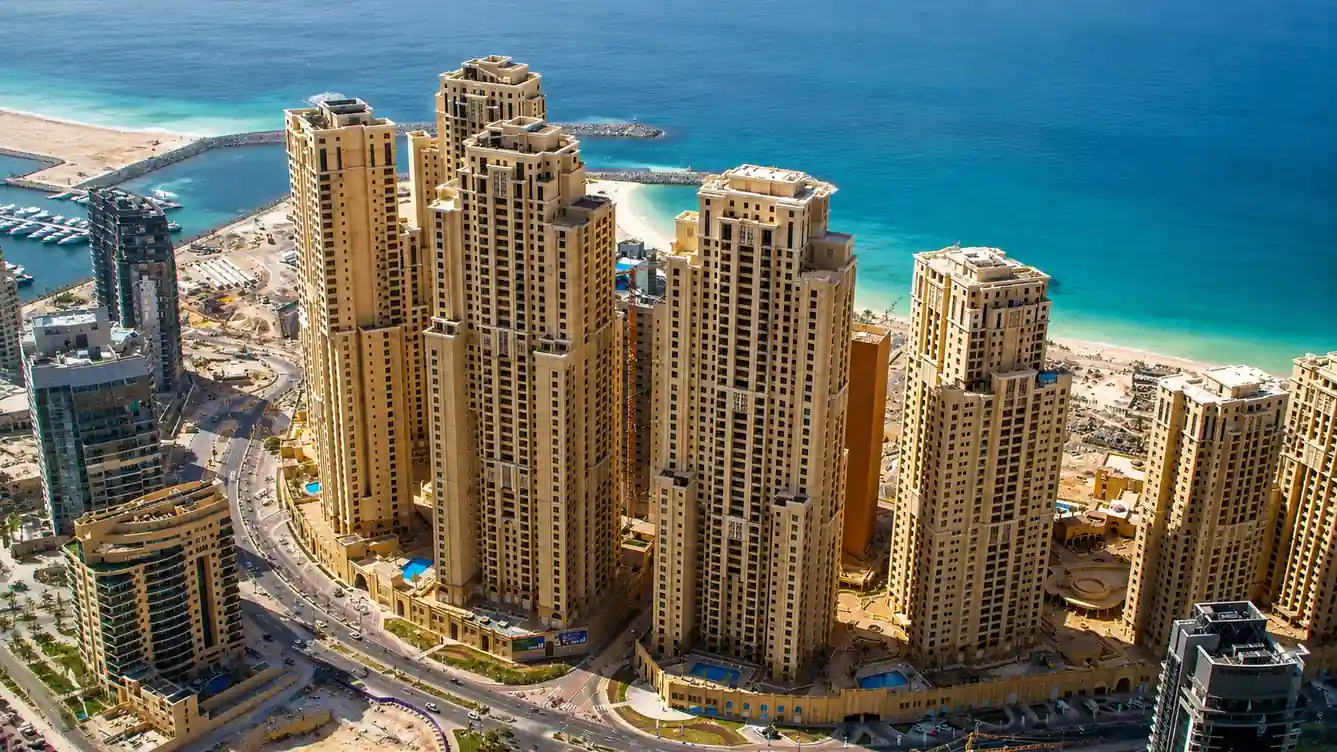
Dubai Short Term Rental Guide 2026
Dubai Short Term Rental Guide 2026: Holiday Home Licence, Airbnb Rules and ROI Dubai short-term rental activity has moved from a loosely policed side market into one of the emirate’s most structured property segments. With tourist arrivals passing 17 million in 2025 and a licensing system run by the Department of Economy and Tourism (DET), holiday homes now offer a credible alternative to annual leases. Whether you are a first-time investor, an existing landlord, or a tenant considering a sublet, the rules apply to you in the same way. This guide explains how the licensing system works in 2026, walks you through the Dubai short-term rental process step by step, and sets out the costs, yields and risks you should model before you commit capital. What Is a Short-Term Rental in Dubai? A short-term rental in Dubai is a fully furnished residential unit rented to guests for less than one year, licensed by the Department of Economy and Tourism as a holiday home. Apartments, villas and townhouses all qualify. The rate typically covers utilities, internet and housekeeping, and the owner may block dates for personal use. The distinction matters legally. A lease of twelve months or more falls under Real Estate Regulatory Agency (RERA) tenancy rules and requires an Ejari registration. Anything shorter sits under the tourism framework instead, which carries its own permit, inspection and fee structure. Guests fall into three broad groups: leisure tourists, business travellers, and residents between homes. Each group behaves differently on price and length of stay, which is why occupancy patterns vary so much between communities. How Dubai Regulates Holiday Homes in 2026 Dubai regulates short-term rentals through a single authority, which makes compliance simpler than in most global markets. Every unit must be registered, inspected and renewed annually before it can be advertised. The Department of Economy and Tourism, previously the Department of Tourism and Commerce Marketing (DTCM), issues the holiday home permit. Enforcement tightened noticeably through 2025, with closer monitoring of listing platforms and removal of unlicensed properties. What the framework covers: Mandatory permit: any residential unit let for stays under one year requires a holiday home licence, with no grace period for new owners. Property classification: units are graded as standard or deluxe based on furnishing quality, amenities and finish, which affects the guest fee applied per night. Annual inspection: DET verifies furnishing standards, safety equipment and occupancy limits before issuing or renewing a permit. Permit display: the DTCM permit number must appear on every listing, and QR verification is now common practice at property level. Portfolio limit: private owners may typically register up to eight units under one licence, with a commercial trade licence required beyond that. Operating without a permit carries financial penalties, reported to start from AED 5,000 for a first offence. Listings are also removed at the platform level, which usually costs more in lost bookings than the fine itself. Dubai Short-Term Rental Process: Step by Step The Dubai short-term rental process runs through the DET holiday homes portal and generally takes 10 to 15 working days from submission to permit. You register an account, upload ownership and identity documents, submit unit details, pay the fee, pass an inspection, and receive your DTCM permit number. Most delays trace back to one document rather than the portal itself. Preparing the paperwork before you start usually saves a week. Step 1: Register on the DET Portal Create an account on the DET online services portal using a valid Emirates ID and email address. Non-resident owners are generally required to apply through a licensed holiday home management company rather than directly. Step 2: Submit Your Documents Upload proof of ownership or tenancy, identification, and the no-objection certificate. Incomplete submissions pause the file rather than reject it, so approvals resume once the missing item is supplied. Step 3: Enter the Property Details Declare unit size, layout, bedroom count and maximum occupancy. These figures set your permitted guest numbers and feed into the classification decision. Step 4: Pay the Licence Fee Fees are payable through the portal and cover a twelve-month term. Apartments and studios sit at a lower tier than villas and townhouses. Step 5: Pass the Inspection DET inspects the unit against hotel-apartment furnishing standards, including linens, towels, kitchenware, a fire extinguisher and a smoke detector. Inspections are typically scheduled within five to seven working days of document approval. Step 6: Receive and Display Your Permit Once approved, the DTCM permit number must appear on every platform listing, in advertising, and inside the property itself. Renewal falls due annually, and late renewal attracts a penalty. What Documents Do You Need to Register? Registration requires documents proving three things: that you own or lawfully occupy the unit, that the building permits holiday home use, and that the property is insured and furnished to standard. Required documentation: Title deed, or an Oqood for a handed-over off-plan unit Passport copy, UAE visa copy and Emirates ID of the owner or authorised operator A registered Ejari contract and landlord no-objection certificate, where the unit is being sublet A no-objection certificate from the developer or building management confirming holiday home use is permitted Comprehensive property insurance covering guest stays and third-party liability Proof of furnishing, usually a photographic set or an inventory list A commercial trade licence where the unit forms part of a professional operation The no-objection certificate is the item that most often stalls an application. Emaar generally permits holiday homes across its communities but routes approval through its owner portal. DAMAC is broadly permissive. Nakheel applies community-specific policies. Verify the position in writing before you buy a unit specifically for short-term letting. How Much Does a Short-Term Rental Cost to Run? Government fees are modest. Furnishing, management and turnover costs are what actually determine your net return, and first-time owners routinely underestimate them. Indicative cost structure in 2026: Cost item Amount (AED) Frequency Holiday home licence, apartment or studio 1,520 Annual Holiday home licence, villa or townhouse 3,570 Annual Furnishing to
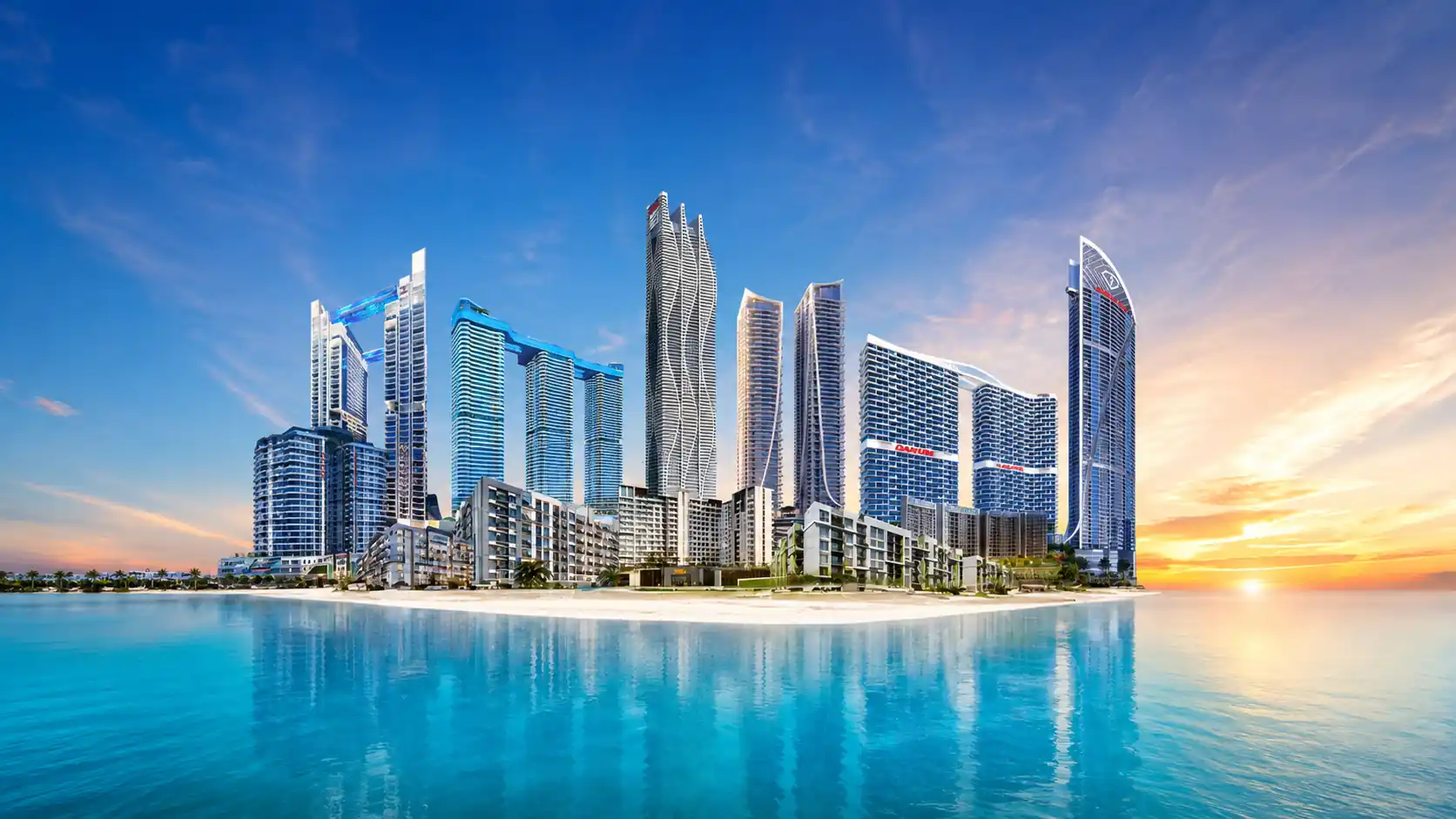
Danube 1% Payment Plan: How It Works, Costs & Eligibility
The Danube 1% payment plan is the structure that made off-plan property in Dubai reachable for salaried employees. Introduced by Danube Properties in 2014, it replaces large milestone payments with a small, predictable monthly instalment. Whether you are a first-time buyer, a salaried resident planning around monthly cash flow, or an investor protecting capital during construction, the plan changes what you need on day one. This guide explains how the Danube 1% payment plan works, walks you through the payment schedule with a worked example, and highlights the costs, eligibility requirements and risks to check before you sign. What is the Danube 1% Payment Plan? The Danube 1% payment plan is a construction-linked payment structure in which the buyer pays a booking amount upfront, then roughly 1% of the property price every month during the construction phase, with the balance settled at handover or spread across post-handover instalments. Rizwan Sajan, The 1% Man of Dubai. Danube Properties is the first developer in the region to launch the model, and founder Rizwan Sajan is widely known in the market as “the 1% Man”. The company reports having delivered more than 15,000 apartments through the plan since 2014. The structure differs from the traditional Dubai schedules. A 50/50 or 70/30 plan asks for large sums at defined construction milestones. The 1% plan converts most of that into a flat monthly figure, which is why it appeals to buyers budgeting against a salary. What the plan typically includes: A booking payment of around 10% to 20% of the property price Monthly instalments of approximately 1% of the total price during construction No interest is charged on the instalments by the developer Fully fitted or furnished delivery on most projects A post-handover component on many, though not all, current launches The structure applied to each release varies, so it is worth checking the current Danube Properties projects in Dubai before shortlisting a unit. How the Danube 1% Payment Plan Works Step-by-Step The sequence is consistent across projects, even where the percentages differ. Read the project-specific schedule before assuming the numbers below apply to your unit. Step 1: Reserve the unit and sign the SPA You select a unit and pay the booking amount, typically 10% of the price on current launches, though some projects have 20% booking amount. This is paid at the time of signing the Sales and Purchase Agreement (SPA). On several recent releases, a further instalment of around 10% falls due within the first two to three months. Step 2: Register with the Dubai Land Department The purchase is registered, and the Oqood interim registration is issued for off-plan units. The Dubai Land Department (DLD) transfer fee of 4% is payable at this stage. Step 3: Pay 1% monthly through construction From this point, you pay approximately 1% of the purchase price each month. In the most common current structure, this runs until 54% of the price has been paid across the construction period. The instalments are typically collected by post-dated cheques or standing instructions. Step 4: Settle the handover payment At handover, you pay the remaining construction-phase balance. On plans carrying a post-handover component, this figure can be as low as 1%. On plans without one, expect a larger balloon payment of 30% or more. Step 5: Continue post-handover instalments, where applicable Where a post-handover element exists, the outstanding balance is typically paid at around 1% per month over 30 to 36 months after you take the keys. You can rent out during this window and offset part of the instalment against rental income. Shahrukhz by Danube Properties 1% payment plan. Here is an example of the Shahrukhz by Danube Properties payment plan. Installment Payment (%) Milestone Down Payment 10% On Booking Date 1st Installment 10% Within 2 months from booking date 2nd to 8th Installment 7% Within 10 months (1% monthly) from booking date 9th Installment 4% Within 11 months from booking date 10th to 20th Installment 11% Within 22 months (1% monthly) from booking date 21st Installment 4% Within 23 months from booking date 22nd to 32nd Installment 11% Within 34 months (1% monthly) from booking date 33rd Installment 3% Within 35 months from booking date 34th to 40th Installment 7% Within 42 months (1% monthly) from booking date 41st Installment 3% On Handover 42nd to 71st Installment 30% Over 30 months (1% monthly) after handover (Post-Handover) Under this payment plan, if you book a property in Shahrukhz by Danube Properties, then you have to pay like this under 1% payment plan. Installment Payment (%) Amount (AED) Milestone Down Payment 10% 190,000 On Booking Date 1st Installment 10% 190,000 Within 2 months from booking 2nd to 8th Installment 7% 133,000 Within 10 months (1% monthly) 9th Installment 4% 76,000 Within 11 months from booking 10th to 20th Installment 11% 209,000 Within 22 months (1% monthly) 21st Installment 4% 76,000 Within 23 months from booking 22nd to 32nd Installment 11% 209,000 Within 34 months (1% monthly) 33rd Installment 3% 57,000 Within 35 months from booking 34th to 40th Installment 7% 133,000 Within 42 months (1% monthly) 41st Installment 3% 57,000 On Handover 42nd to 71st Installment 30% 570,000 Post-Handover (30 months at 1% monthly) Total 100% 1,900,000 To model the numbers against your own budget, including a mortgage scenario for the handover balance, run the figures through a property mortgage calculator. Key Benefits of the 1% Payment Plan for Dubai Property Investors For buyers evaluating Danube Properties’ 1% plan, several advantages stand out: Lower capital at entry A booking of around 10% plus the 4% DLD fee opens a position. A conventional milestone plan would demand two to three times as much. On an AED 1 million unit, the figure is roughly AED 140,000 against AED 300,000 or more. Capital stays liquid during construction: Under the 1% payment plan, you pay monthly, so a large share of your capital remains free for other assets, a second unit, or a buffer. Investors building a portfolio often value this above
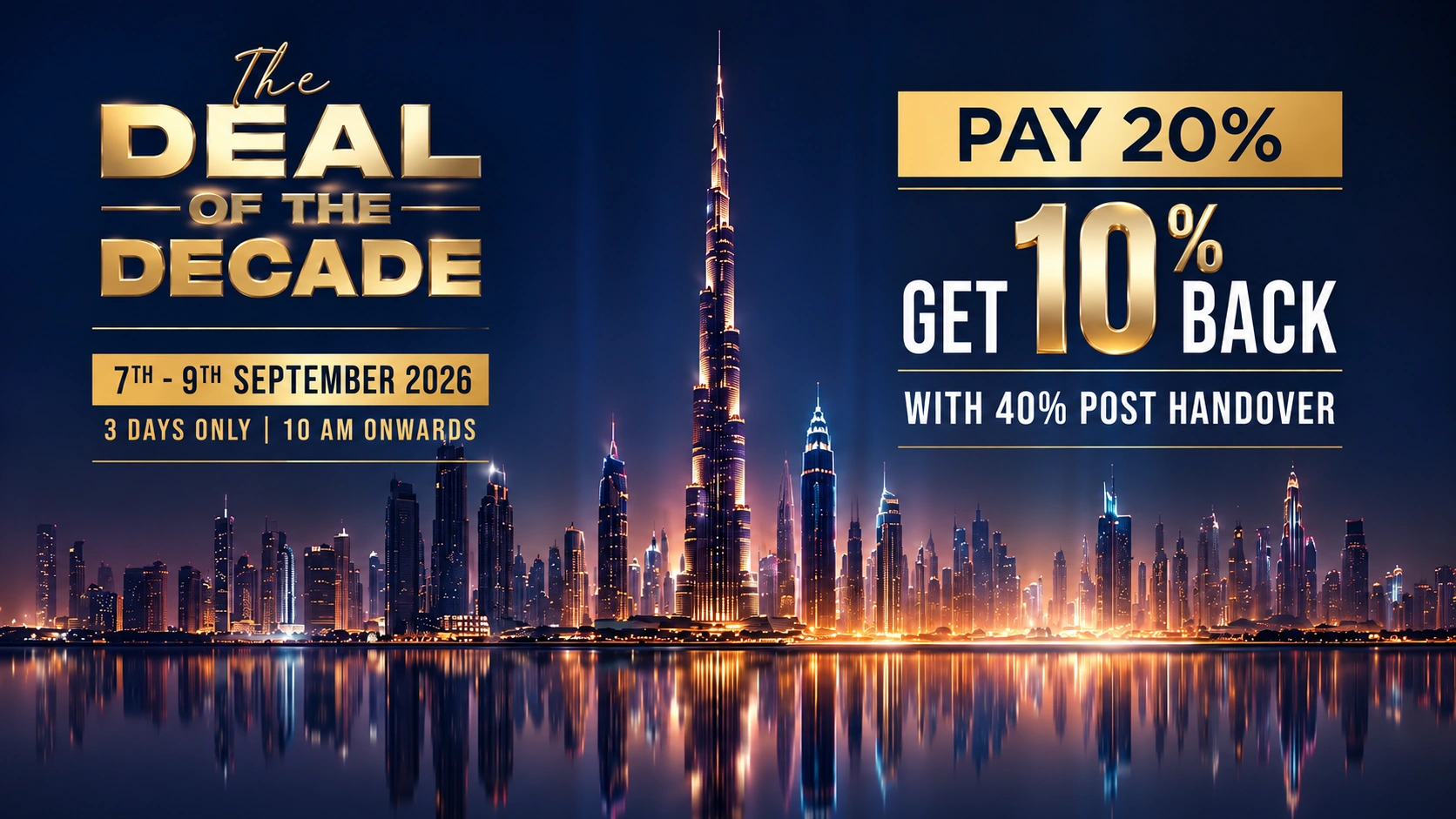
Danube Deal of the Decade (2026): Payment Plan, Rebates & Eligible Projects
The Danube Deal of the Decade is a three days developer offer running across 37 Danube Properties towers in Dubai on 7,8 and 9 September 2026. Buyers pay 20% of the property value plus the 4% Dubai Land Department (DLD) registration fee, and 10% of the property value returns as a credit note. Whether you are a first-time buyer, a yield-focused investor, or an end-user upgrading from a rental, the structure changes what leaves your account upfront. This guide explains how the 10% credit note is applied, compares the 1% and 0.5% monthly tracks, and highlights the projects, fees and conditions worth checking before you commit to a unit. What Is the Danube Deal of the Decade? The Danube Deal of the Decade is a limited-window payment offer from Danube Properties, live on 7,8 and 9 September 2026 across 37 towers in Dubai. Buyers commit 20% of the property value plus the 4% DLD registration fee, and receive a credit note worth 10% of the property value against the outstanding balance. The 10% comes back as a rebate against what you still owe, not as cash in hand. A further 40% of the price is deferred past handover, so only 60% falls due before you hold the keys. According to the developer, participating inventory starts from AED 1.1 million, spread across studios and larger layouts in several communities. The promotion will be available at the Danube Properties office on Sheikh Zayed Road, opposite Times Square, Al Manara, Dubai, on both days. How the 20% Down Payment and 10% Rebate Work Danube Properties making home ownership easy with their Deal of the Decade offer. The 20% is collected in two tranches, and the DLD fee lands alongside the second one. Once both tranches and the fee clear, the monthly phase begins, and the balance falls due after completion. The payment sequence: 10% of the property value within 21 days A further 10% within 60 days 4% DLD registration fee with the second tranche 1% or 0.5% of the property value each month until completion 40% of the price deferred past handover The credit note enters the schedule at different points depending on the track you pick. On the 1% track, it is applied as soon as the 20% and the DLD fee are paid. On the 0.5% track, it is held back until your cumulative payments reach 40% plus the fee. Either way, this reduces your balance and shortens the tail of instalments. Dubai Land Department fees remain payable in full regardless of the rebate. The 1% and 0.5% Tracks Compared Both tracks open with an identical 20% commitment and defer an identical 40% past handover. The difference lies in the monthly figure and in when the rebate reaches your balance. Feature 1% Track 0.5% Track Down payment 20% + 4% DLD 20% + 4% DLD Monthly instalment 1% of property value 0.5% of property value Monthly on AED 1.5 million AED 15,000 AED 7,500 Rebate released After 20% + DLD fee After 40% + DLD fee Deferred to post-handover 40% 40% Figures vary by project, unit and the terms recorded in the signed sales and purchase agreement. The choice generally comes down to cash flow against timing. The 1% track suits buyers who want the 10% working against the balance immediately, while the 0.5% track suits buyers who prefer smaller monthly instalments and can wait for the credit. On an AED 1.5 million apartment, the gap is AED 7,500 a month. The 11:11 Lineup: Eleven Towers on a 20:70 Structure Danube 11:11 lineup applies a simpler 20:70 split, where the 10% credit note follows the 20% down payment and the remaining 70% falls due on completion instead of monthly. Confirmed names inside the lineup include Fashionz 1, Sparklz, Viewz 1, Viewz 2, Oceanz 1, Oceanz 2, Oceanz 3, Oasiz 1, Oasiz 2, Elitz 2, and Elitz 3. The 20:70 shape typically appeals to buyers planning a mortgage at handover or an exit before completion, because very little is paid during construction. Resale and assignment rules differ by project, so confirm them before booking. How the Rebates Stack: Token, Family and Full Payment The 10% credit note is the floor of the offer, not the ceiling. Three further mechanisms can be layered on top, each with its own condition attached. Where the extra percentages come from: Refundable token: A refundable AED 100,000 token adds another 1% of the property value, and applies to every participating project except Greenz. Family purchases: Immediate family buying together, such as a spouse, parent or child, earn an additional 2% to 4% depending on the combined value of the units. Full upfront payment: Paying the full price at once replaces the staged structure entirely with a flat 14% discount. Base credit note: The standard 10% applies to every qualifying unit, released per the track you select. Combined, these can move the total benefit well beyond the headline number, though each layer carries its own paperwork and approval step with the developer. Which Danube Projects Are Included? Danube Deal of the Decade projects. The Danube Deal of the Decade offer runs across 37 Danube towers spread through central and suburban Dubai. A handful of the headline projects show the range of locations and price points involved. Headline projects under the offer: Bayz 101: A tall residential tower in Business Bay, close to the Burj Khalifa, running on the main 1% and 0.5% tracks. Oceanz by Danube: A three-tower waterfront cluster in Dubai Maritime City, included across the 11:11 lineup. Viewz by Danube: Twin towers in JLT joined by a sky bridge, with both buildings in the 11:11 lineup. Fashionz by Danube: A JVT development on the 20:70 structure, with the rebate following the 20%. Sparklz by Danube: An Al Furjan tower on the 20:70 structure, with 70% falling due on completion. Danube units are typically delivered fully furnished and carry a deep amenity list, which is a large part of the appeal for tenants and short-stay
Dubai Real Estate Market Forecast 2027: What to Expect
The Dubai real estate market forecast 2027 hinges on a single tension: a record pipeline of new homes arriving into a market that has spent three years absorbing demand faster than developers could build. The short answer is that most institutional analysts expect selective, moderate growth rather than a crash, with performance splitting sharply by location, asset type, and developer track record. Prices are unlikely to rise uniformly, and they are unlikely to collapse. Instead, the emirate is entering a phase where fundamentals, not momentum, decide which communities hold value. Where the Dubai Market Stands Heading Into 2027 Any credible Dubai property forecast 2027 begins with the 2026 baseline, because that is the year the market shifted from broad expansion to measured selectivity. Transaction Activity and Pricing in 2026 Momentum remained strong through the first half of 2026, even as volumes cooled from the record levels of 2025. Dubai recorded roughly 79,000 residential sales worth approximately AED 221.4 billion in H1 2026, according to DLD data. For context, total DLD transaction value reached about AED 761 billion in 2024, a 20% increase over the prior year, per Betterhomes. Three structural features defined the 2026 baseline: End-user demand replaced speculation. Genuine occupier buying has risen materially since 2021, reducing the market’s reliance on short-term flipping. Villas outperformed apartments. Limited land and a preference for space kept house and townhouse pricing ahead of the apartment segment. Off-plan dominated activity. Off-plan purchases now account for roughly 60% to 65% of all Dubai transactions, reshaping how risk and payment timing are managed. Capital Appreciation and Rental Yields Today Pricing entered 2027 from an elevated but decelerating base. Knight Frank classifies Dubai as an “emerging” market rather than an emerging one, meaning it is regulated, end-user driven, and less prone to boom-bust swings. That maturity shows in the numbers: citywide values kept climbing in early 2026, but at a slower and more location-dependent pace than in 2022 or 2023. The table below summarizes representative 2026 pricing across core communities, drawn from DLD-linked transaction data. Community Avg. price per sq ft (2026) Investor profile Business Bay AED 2,547–2,673 High rental demand, apartment growth leader Dubai Marina AED 2,058 Established waterfront, strong liquidity Dubai Hills Estate AED 1,500–2,000 Family end-users, stable appreciation Jumeirah Village Circle (JVC) AED 1,500–1,600 High yield, highest transaction volume Citywide median AED 1,692–1,850 Blended apartment and villa benchmark Sources: DXB Analytics Rental yields remained a defining attraction. Affordable and mid-market communities such as JVC, Dubai South, and Motor City continued to deliver gross yields between 6% and 8.5%, while prime districts traded lower yields in exchange for stronger capital appreciation potential. The 2027 Supply Question: How Many Units Will Actually Be Handed Over? Supply is the pivot of every Dubai real estate prediction for 2027. The headline pipeline is enormous, but the gap between scheduled and delivered units is the number that actually moves prices. Scheduled Pipeline vs. Actual Completions Cavendish Maxwell anticipates around 146,400 units scheduled for 2027, followed by roughly 120,100 in 2028, as reported by the Global Property Guide. Knight Frank’s total pipeline to 2029 will near 302,880 units, an average of about 60,576 homes per year. However, Dubai has a long record of delivery slippage, where a substantial share of scheduled units defers into later quarters. In 2026, scheduled completions of roughly 77,500 units were widely expected to translate into materially lower actual handovers. Applying the same to 2027 is essential. One supply study cited by Morgan’s Realty forecasts about 70,537 genuinely delivered units in 2027, which would still stand 98% above the five-year average of 35,531 units, marking the highest single-year supply in over a decade. Metric 2026 2027 2028 Scheduled pipeline (units) 77,500 146,400 120,100 Estimated actual delivery (units) 35,000 or lower 70,500 To be confirmed Five-year delivery average 35,531 35,531 35,531 Sources: Morgan’s Realty supply study, Global Property Guide. The practical takeaway is direct. Even discounted for slippage, 2027 represents a decade-high delivery year. That volume will not sink the whole market, but it will concentrate pressure in corridors where many similar projects complete at once. Where the New Supply Is Concentrated Deliveries are not spread evenly. The heaviest 2026–2027 completion clusters sit in Business Bay, Jumeirah Village Circle, Dubai South, Dubai Science Park, and Dubai Hills Estate, which together account for more than one-third of projected near-term handovers. Waterfront and master-planned launches, including Palm Jebel Ali and Dubai Islands, carry meaningful 2027 handover milestones as well. For investors, the mapping is what matters: high-supply corridors face slower rent and price growth, while land-constrained communities are positioned to hold firm. The Dubai Pulse data portal allows buyers to track handover volumes in specific target areas before committing. Dubai Property Forecast 2027: Price and Rent Projections Dubai real estate predictions 2027. With supply framed, the pricing question becomes tractable. The 2027 Dubai property market outlook points to a fragmented market rather than a single trend line. Capital Appreciation Outlook Institutional forecasts for 2026 clustered in a narrow band, and that discipline carries into 2027. ValuStrat projected citywide capital value growth near 10% for 2026, with villas expected to outperform by appreciating close to 17.7%. Knight Frank took a more conservative stance, forecasting prime growth near 3% and mainstream growth near 1%. Across analysts, most institutional views for the near term fall in the 3% to 6% range, with an optimistic ceiling around 8% and a downside scenario of roughly -5%. The risk case is credible but bounded. Fitch Ratings has flagged a potential adjustment of up to 15% in a scenario where supply meaningfully outpaces population growth. That correction is a possibility to plan for, not a base case, and it would likely concentrate in oversupplied, speculative sub-markets rather than land-scarce prime districts. Elias Hannoush, Managing Director at Morgan’s, framed the coming period as a moment of “reckoning” in which data, not sentiment, should guide decisions. Faisal Durrani, Head of Middle East Research at Knight Frank, has argued that Dubai’s established prime districts are evolving into