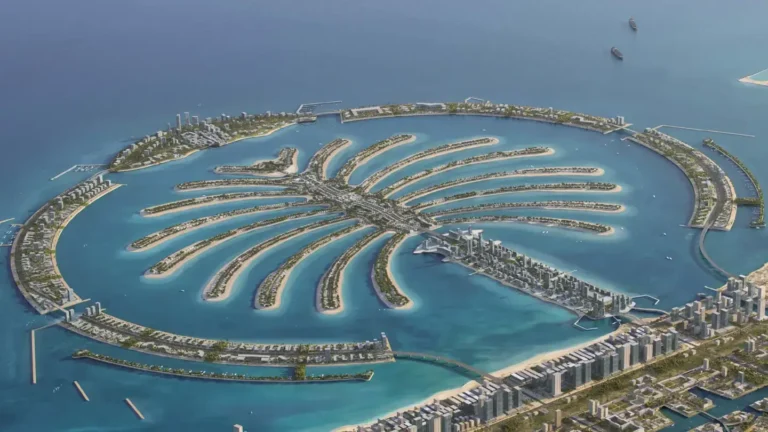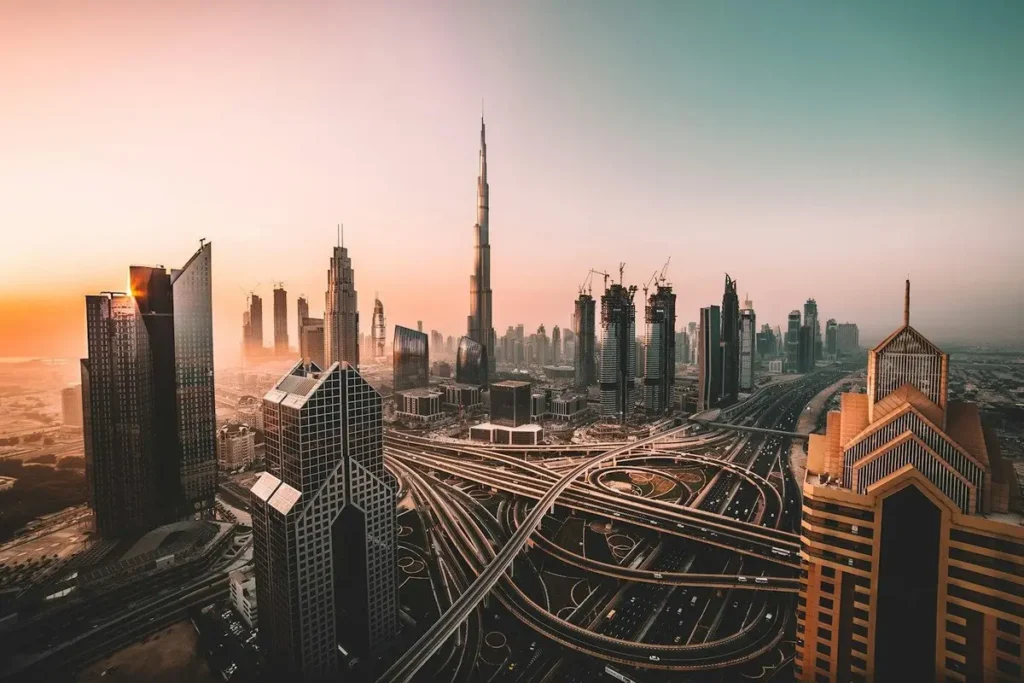
Dubai property prices are sitting 60 to 80% above where they stood in 2021, and rents have climbed right alongside them. This single fact has quietly rewritten the buying vs renting in Dubai conversation for 2026. If you are an expat, a long-term resident, or an investor comparing off-plan and ready property options, the old rule of thumb, "just buy, Dubai never falls," is no longer good enough. We have to judge the folklore with real numbers: transaction costs, break-even timelines, rental yields by area, mortgage math, and the lifestyle trade-offs, in our question "Buying vs renting in Dubai".
Quick numbers: Total buying costs run 6 to 8% of the property price. The typical break-even point vs renting is 3 to 5 years. Average gross rental yield across Dubai runs 6 to 10%.
Dubai's Property Market in 2026: The Context You Need First
Before comparing numbers, it helps to understand why this decision feels harder in 2026 than it did a few years ago. Dubai closed 2025 with record transaction volumes, and property prices in several communities rose sharply throughout the year. At the same time, an estimated wave of new residential handovers is entering the market in 2026, which analysts expect to soften price growth and give buyers slightly more negotiating room in the mid-tier segment.
Rental yields remain historically strong, routinely cited between 6 and 10%, and higher in emerging communities. This is one of the reasons Dubai continues to outperform mature markets like London or Singapore on a pure income basis. Mortgage rates for residents currently lie in the 4.5 to 6.5% range, depending on the lender and loan-to-value ratio, and the UAE's 50% Debt Burden Ratio cap limits how much any buyer can borrow relative to income. None of this makes the decision automatic. It just means the inputs have changed, and any comparison built on 2021 rent-to-price ratios is already out of date.
Key takeaway: Property prices and rents have both risen substantially since 2021, but at different paces in different communities. The right decision is never "buy because Dubai always goes up." It is a function of your timeline, your income stability, and the specific area you are comparing.
The True Cost of Buying Property in Dubai
Buyers often budget only for the sale price and sometimes face difficulties at the trustee's office. On top of the purchase price, expect to pay government and transaction fees that typically total 6 to 8% of the property value.
| Fee | Amount | Notes |
|---|---|---|
| DLD transfer fee | 4% of purchase price | Market convention: paid in full by the buyer |
| DLD admin fee | AED 580 (ready) / AED 40 (off-plan) | Fixed administrative charge |
| Trustee office fee | AED 2,100 or AED 4,200 | Depends on property value (above/below AED 500,000) |
| Title deed issuance | AED 250 to 580 | One-time, on completion of registration |
| Agent commission | 2% + 5% VAT | Standard on resale; often absorbed by developer on off-plan |
| Mortgage registration (if financed) | 0.25% of loan + AED 290 | Only applies if you are taking a mortgage |
| Conveyancing / legal fees | 0.25% to 0.75% | Optional but recommended for resale purchases |
Worked example: On an AED 2,000,000 ready property, expect roughly AED 126,000 to 160,000 in one-time transaction costs before you have paid a single dirham of the price itself. That is the hurdle renting does not have, and it is the reason short-term buyers frequently lose money even in a rising market. Before committing, it is worth reading a full DLD fees breakdown so there are no surprises at the trustee office.
Ongoing ownership costs also matter: service charges (typically AED 12 to 30 per sq ft per year depending on the building and amenities), maintenance, and, if financed, your monthly mortgage instalment. The upside is that a portion of every mortgage payment builds equity, whereas 100% of rent is a sunk cost.
The True Cost of Renting in Dubai
Renting looks simple on the surface: one annual cheque, no maintenance, no DLD fees, but it carries its own line items that first-time renters often miss.
- Security deposit: typically 5% of annual rent for unfurnished units, 10% for furnished.
- Ejari registration: AED 155 (online) to AED 220 (at a trustee centre), mandatory for every tenancy contract.
- Agency commission: usually 5% of the annual rent, paid once at signing.
- DEWA connection and deposit: a refundable deposit plus a small connection fee for utilities.
- Annual rent increases: capped by the RERA rental index, but still a recurring variable your landlord controls, not you.
- No equity build-up: every dirham paid in rent is gone at lease end. There is no asset to show for it.
The trade-off is flexibility: no exposure to market downturns, no responsibility for major repairs or service charges, and the freedom to relocate at the end of a 12-month term without transaction costs eating into your finances.
Buying vs Renting in Dubai: Side-by-Side Comparison
| Factor | Buying | Renting |
|---|---|---|
| Upfront cost | 6 to 8% of property value + down payment (20 to 25% for expats) | 5 to 15% of annual rent (deposit + commission) |
| Monthly cost | Mortgage instalment + service charges | Rent only (utilities separate) |
| Equity building | Yes, builds ownership over time | No, 100% cost, no asset |
| Flexibility to relocate | Low, resale takes time and cost | High, move at lease renewal |
| Exposure to market risk | Full exposure, price can rise or fall | None, landlord bears the risk |
| Maintenance responsibility | Owner (major repairs, service charges) | Landlord (in most standard leases) |
| Golden Visa eligibility | Yes, from AED 2 million in property value | Not applicable |
| Best suited for | 3+ year stays, stable income, long-term Dubai residents | Under 3 years, uncertain plans, early-career expats |
The Break-Even Timeline: When Does Buying Actually Win?
This is the single most useful number in the entire decision. Because buying carries 6 to 8% in one-time costs that renting does not, buying only becomes cheaper than renting after enough time has passed for equity growth and avoided rent increases to outweigh that upfront hit.
Across most current analyses, that crossover point falls between year 3 and year 8, depending on the community:
- High-yield, mid-market areas (for example, JVC, Dubai South, International City): break-even around 3 to 6 years, driven by strong rental yields of 7 to 9%.
- Premium, price-stable areas (for example, Dubai Marina, Downtown Dubai): break-even closer to 7 to 8 years, since yields are lower (5 to 6%) even though capital appreciation has historically been stronger.
Under 3 years, the maths rarely favours buying anywhere in Dubai. The 6 to 8% round-trip transaction cost is simply too large a hurdle to clear in such a short window. Beyond 5 years, ownership usually pulls ahead in most established communities, assuming stable income and no forced sale.
Rule of thumb: If you are confident you will stay in Dubai for 5+ years, buying is very likely to beat renting financially. If your timeline is under 3 years or genuinely uncertain, renting protects you from transaction costs and market timing risk.
Rental Yields and Property Prices by Area (2026)
Yield and appreciation do not move together. High-yield areas tend to have lower capital growth, and vice versa. Here is how some of Dubai's most-searched communities compare:
| Community | Gross Rental Yield | Price Trend | Best For |
|---|---|---|---|
| Jumeirah Village Circle (JVC) | 8% | Steady growth | High-yield investors, first-time buyers |
| Dubai Marina | 7% | Stable, premium | Lifestyle buyers, short-term rental income |
| Downtown Dubai | 7% | Premium appreciation | Prestige, long-term capital growth |
| Business Bay | 7% | Central, growing | Professionals, mixed-use lifestyle |
| Dubai South | 8% | Rising with airport expansion | Long-term growth investors |
| Town Square | 8% | Fast-emerging | Yield-focused, family-friendly |
| International City | 9% | Affordable entry point | Budget investors seeking yield |
If yield and long-term capital growth are your priority, off-plan launches in emerging corridors are worth comparing directly against ready resale stock in established areas. The trade-off between price per sqft today and rental depth once handed over is the crux of that decision.
Pros and Cons of Buying vs Renting in Dubai
Buying in Dubai
- Builds equity instead of paying rent with nothing to show for it
- Fixed mortgage cost shields you from annual rent hikes
- Unlocks UAE Golden Visa eligibility from AED 2 million
- Full control: renovate, sublet, or hold as a rental asset
- Zero property tax, zero capital gains tax on resale
- Large upfront cost (6 to 8% in fees) and lower liquidity if you need to exit fast
Renting in Dubai
- Minimal upfront cost, no DLD fees, no down payment
- Full flexibility to relocate at lease renewal
- No exposure to market downturns or price corrections
- Maintenance and service charges are the landlord's responsibility
- Rent increases are capped by RERA but still recur annually
- No equity, no asset, no Golden Visa pathway through rent alone
Who Should Buy vs Who Should Rent?
The honest answer depends less on the market and more on your own situation. Use this as a quick self-check.
Buying likely makes sense if you:
- Plan to stay in Dubai for 5 years or longer
- Have stable, verifiable income that comfortably supports a mortgage under the 50% Debt Burden Ratio cap
- Want to work toward Golden Visa eligibility through property ownership
- Treating the purchase as a long-term investment or rental income asset, not just a home
Renting likely makes sense if you:
- On a short-term contract or still deciding whether Dubai is a long-term base
- Want to preserve capital for other investments (stocks, business, a future down payment)
- Value the freedom to change neighbourhoods or downsize/upsize on short notice
- Would need financing that pushes close to the DBR limit, leaving little financial buffer
Off-Plan vs Ready Property: Does It Change the Answer?
The buy vs rent decision does not end once you decide to buy. What you buy changes the maths again. Off-plan purchases typically require a smaller upfront outlay (often 10 to 20% down with the balance spread across construction milestones), which lowers the initial capital hurdle and can bring your break-even point forward. Ready property, by contrast, produces rental income immediately, which suits buyers who want the equity-building clock to start on day one.
Developer selection matters more than most buyers expect here. A well-capitalised developer with a strong delivery track record materially reduces the main risk in an off-plan purchase, which is construction delay. If you are weighing an off-plan purchase with Damac, a waterfront community by Nakheel, an Aldar masterplan, an Azizi apartment, an Alef Group project in Sharjah, or a branded residence from DarGlobal, it is worth comparing payment plans and delivery timelines side by side before locking in a unit against a rental you could otherwise keep paying month to month.
The Golden Visa Angle: A Factor Renting Can't Match
For many long-term residents, the buy vs rent decision is not purely financial. It is also about residency security. Owning property worth AED 2 million or more (a single unit or a combined portfolio) makes you eligible for the UAE's 10-year renewable Golden Visa, covering you, your spouse, and dependents. This is available even for off-plan purchases, provided payments meet the required threshold and the developer confirms it. Renting offers no equivalent pathway. If residency stability is part of your decision, not just monthly cost, this is a factor worth weighing on the buy side of the ledger. It is a large part of why many investors now approach a purchase as a combined property and Golden Visa move rather than two separate decisions.
Common Mistakes to Avoid
- Comparing the monthly rent to the monthly mortgage only. Ignoring the 6 to 8% upfront transaction cost skews the comparison heavily in favour of buying when it should not be.
- Buying with an uncertain timeline. If there is a real chance you will leave Dubai within 2 to 3 years, transaction costs alone can wipe out any price appreciation.
- Ignoring service charges. A high-amenity tower with AED 25 to 30 per sqft in annual service charges can materially change your real cost of ownership.
- Overleveraging near the 50% DBR cap. This leaves no financial cushion if income changes or rates move.
- Choosing a developer on price alone. For off-plan, delivery track record protects your capital more than a slightly lower price per square foot.
- Underestimating exit liquidity. Some communities resell quickly; others sit on the market for months. Check historical resale velocity before assuming you can exit on your timeline.
Final Verdict: Which Is Right for You?
There is no universal answer to buying vs renting in Dubai, and anyone who gives you one without asking about your timeline is skipping the only variable that actually matters.
- If you can commit to Dubai for five years or more, have a stable income that is comfortably under the 50% Debt Burden Ratio cap, and want to build equity while working toward Golden Visa eligibility, buying is very likely to outperform renting on a long enough horizon, especially in higher-yield communities like JVC or Dubai South.
- If your stay is uncertain, your timeline is under three years, or you would rather keep capital liquid for other opportunities, renting remains the financially sound choice. It protects you from transaction costs, market timing risk, and the illiquidity that comes with owning a single, large asset.
The smartest move is not picking a side before you have run your own numbers. Use the break-even framework in this guide, be honest about how long you will actually stay, and compare your specific community's rental yield against its price trend before signing anything.
Whichever path fits your situation, understanding the real AED numbers, not the folklore, is what turns a guess into a decision you will not regret in three years' time.
Ready to compare specific projects? Explore live off-plan inventory across Dubai, Abu Dhabi, Sharjah and Ras Al Khaimah on the First Stone Real Estate off-plan property hub, or speak with our advisor to map your specific timeline against current payment plans.
Frequently Asked Questions
Is it cheaper to buy or rent in Dubai in 2026?
It depends almost entirely on how long you plan to stay. On a pure monthly cash-flow basis, owning is often around AED 1,000 cheaper per month than renting an equivalent unit once financed. However, buying carries 6 to 8% in one-time transaction costs that renting does not. Once you factor those in, buying typically only becomes cheaper than renting after 3 to 8 years, depending on the community and its rental yield.
How many years of rent equals buying a house in Dubai?
Most current market analyses put this between 6 and 8 years for the total rent paid to match a comparable purchase's all-in cost, though the true financial break-even point, where ownership becomes the cheaper option going forward, usually arrives sooner, often 3 to 5 years in high-yield areas like JVC, and closer to 7 to 8 years in premium, lower-yield areas like Dubai Marina.
What is the minimum down payment to buy a property in Dubai as an expat?
For properties under AED 5 million, expats typically need a minimum 20% down payment for a mortgage (15% for UAE nationals). For properties above AED 5 million, this rises to 30% for expats and 25% for nationals. Cash buyers are not subject to these mortgage-specific down payment rules but still pay the same 4% DLD transfer fee and associated closing costs.
Do renters in Dubai get any tax benefits compared to buyers?
Dubai has no income tax, so there is no rent deduction benefit. Renters do not pay DLD fees, service charges, or maintenance costs, which keeps their fixed costs lower and more predictable, but they also do not build equity or benefit from tax-free capital appreciation the way an owner does on resale.
Can I get a UAE Golden Visa by renting instead of buying property?
No. The property-based Golden Visa route specifically requires property ownership worth AED 2 million or more. Renting does not qualify under this pathway, though other Golden Visa routes exist based on income, specialised skills, or business ownership, independent of real estate.
Is off-plan property a safer or riskier way to enter the Dubai market compared to renting first?
Off-plan property is regulated through RERA-mandated escrow accounts, meaning developer payments are held against verified construction progress. This significantly reduces, but does not eliminate, risk. The main variables are construction delay and the developer's track record, which is why choosing an established, well-capitalised developer matters more in an off-plan purchase than in a ready resale. Renting first while researching developers and communities is a reasonable way to de-risk a later purchase decision.
What happens to my investment if Dubai property prices fall after I buy?
You carry the market risk that a renter does not. If prices fall, your equity position weakens on paper, though this typically only becomes a realised loss if you are forced to sell during the downturn. This is precisely why timeline matters: buyers who can hold for 5+ years are far better positioned to ride out a correction than buyers who might need to exit within a year or two.
Are service charges included when I rent, or only when I buy?
Service charges are an ownership cost. They are paid by the landlord or owner, not the tenant, in the vast majority of standard Dubai tenancy contracts. As a renter, your fixed cost is your rent plus utilities. As an owner, your fixed cost includes the mortgage (if any) plus annual service charges, which can range from roughly AED 12 to AED 30+ per square foot depending on the building's amenities.