
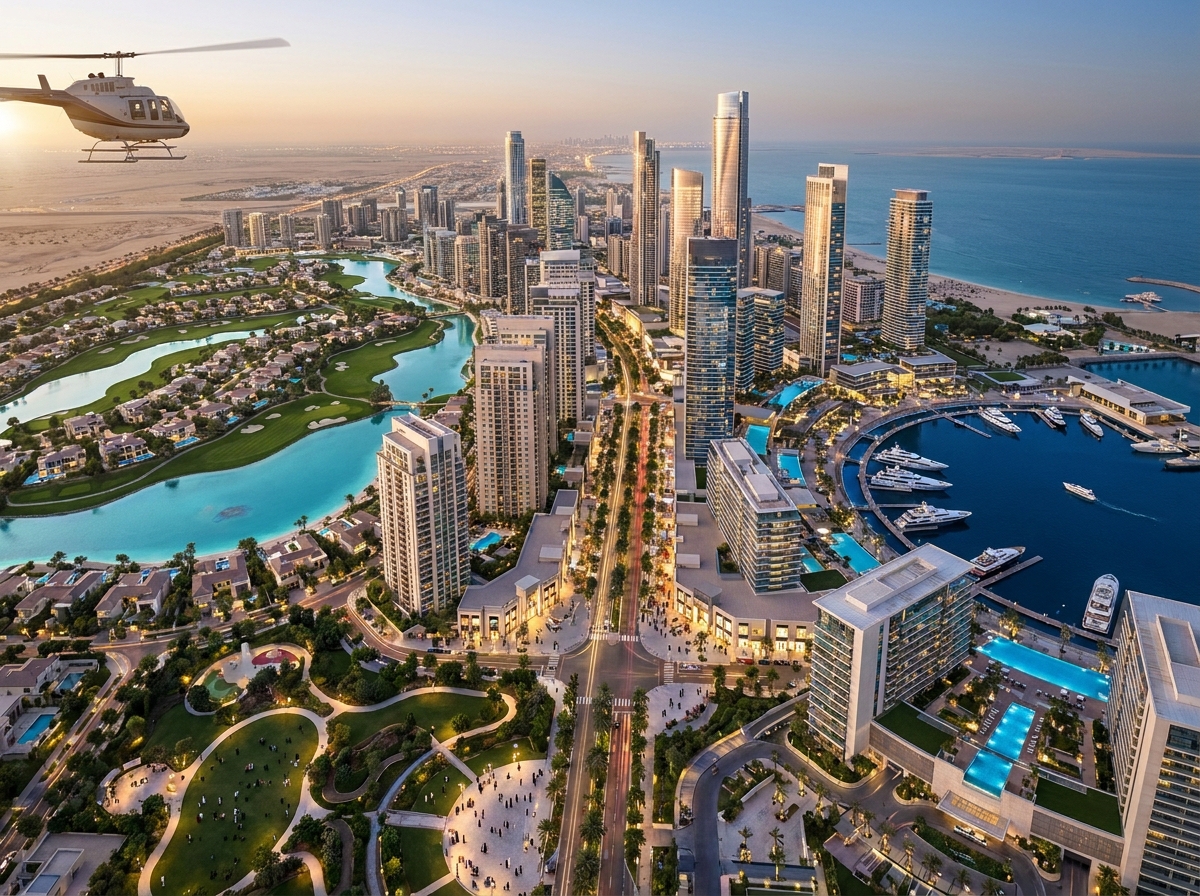
Off Plan Property by Emaar | Dubai’s Master Developer Guide 2026 Home › Blogs › Off Plan Property by Emaar Emaar Properties · Dubai Master Developer Guide 2026 Dubai Creek Harbour, The Oasis & Emaar South — off plan property by Emaar, decoded. Invest with the creators of the Burj Khalifa. Secure zero-risk master-planned assets offering the highest secondary market liquidity and immediate Golden Visa eligibility. Dubai Creek Harbour · The New Downtown · Masterplan By First Stone Real Estate · Emaar Off-Plan Specialists · Updated 2026 1997Founded in Dubai 108K+Residential Units Delivered ZeroProject Completion Risk #1Global Secondary Market Liquidity The Short Version Off plan property by Emaar is the safest, most liquid real estate investment in the Middle East. As Dubai’s master developer—the entity responsible for Downtown Dubai, the Burj Khalifa, and Dubai Marina—Emaar does not just build standalone towers; they engineer entire self-sustaining cities. In 2026, their focus has shifted to monumental mega-projects: Dubai Creek Harbour (the pedestrian-friendly future downtown), The Oasis (an ultra-luxury resort-style mansion community), and Emaar South (capitalizing on the massive Al Maktoum Airport expansion). Investing with Emaar guarantees flawless delivery, massive tenant demand, and instant UAE Golden Visa qualification. What is off plan property by Emaar? Why Emaar: The “Master Developer” Premium The 2026 Master Communities Every Live Emaar Project (Directory) Emaar Price Ladder Freehold, Tax & The Golden Visa How to buy an Emaar asset Frequently asked questions What is off plan property by Emaar? Off plan property by Emaar involves acquiring a premium residence directly from the UAE’s largest and most trusted developer before its construction is fully completed. When you buy an Emaar off-plan property, you are buying into a comprehensive ecosystem. Emaar master-plans the roads, the retail (like Dubai Mall), the hospitality (Address Hotels), and the parks. Because of their immense financial backing and sovereign ties, buying an Emaar off-plan unit carries effectively zero completion risk. Your capital is strictly regulated within the Dubai Land Department’s escrow system. Why Emaar: The “Master Developer” Premium Why do global investors default to Emaar? Because the Emaar brand acts as a global currency in the real estate market. Unmatched Secondary Liquidity: Emaar properties are the easiest assets to sell in Dubai. A buyer in London or Beijing might not know smaller developers, but they know the creator of the Burj Khalifa. This brand trust ensures you can liquidate your asset rapidly. The Masterplan Effect: Emaar properties appreciate faster because the surrounding infrastructure is heavily curated. A standalone tower by a private developer relies on the city for infrastructure; Emaar builds the malls, the schools, and the metro links themselves. Premium Rental Yields: Emaar communities (like Dubai Hills Estate) are the most highly requested locations by expat families and corporate executives, guaranteeing high occupancy rates and premium rental yields. Flawless Track Record: With over 108,000 units delivered globally, Emaar’s supply chain and construction management are immune to standard market delays. The 2026 Master Communities Emaar is currently developing the next generation of Dubai’s landscape. Here are the three pillars of their active portfolio: The New DowntownDubai Creek HarbourWaterfront Mega-City · Pedestrian-friendly · Direct metro access · 4x the size of Downtown Dubai AED 1.5MStarting Ultra-Luxury MansionsThe Oasis by EmaarDubailand · 25% of land dedicated to lakes & parks · Ultra-premium 4 to 6-bedroom mansions AED 8.5MStarting Airport Infrastructure ROIEmaar SouthDubai South · Adjacent to the AED 128B Al Maktoum Airport expansion · High-yield townhouses and villas AED 1.6MStarting (Townhouses) Emaar properties famously sell out within hours of launch — enquire privately for VIP token access before public release. Every Emaar off plan project (2026 Directory) We have categorized the vast off-plan portfolio managed by Emaar. Prices reflect starting estimates and are subject to immediate developer revision. Waterfront & Urban Villas & Townhouses Ultra-Luxury Mansions Dubai Creek Harbour (Various Towers)The future skyline of Dubai · Apartments & PenthousesAED 1,500,000 Rashid Yachts & MarinaMina Rashid · Riviera-style coastal livingAED 1,600,000 Emaar BeachfrontDubai Harbour · Private beach access towersAED 2,800,000 The Valley (Phases 1 & 2)Dubai-Al Ain Road · Family-centric townhousesAED 2,500,000 Emaar South (Expo Golf Villas)Dubai South · Capitalizing on the DWC expansionAED 1,600,000 Dubai Hills Estate (Club Drive / Park Gate)The ‘Green Heart’ of Dubai · Apartments & VillasAED 1,700,000 The Oasis by EmaarDubailand · Blue and Green themed mega-mansionsAED 8,500,000 Address ResidencesVarious Locations · Branded hospitality livingAED 3,500,000+ Explore the complete masterplan layouts on our dedicated Emaar Properties page. Emaar Properties Price Ladder Off plan property by Emaar commands a master-developer premium, but delivers unmatched long-term capital security. Project Area / Type Starting From Dubai Creek Harbour Apartments (1-Bed) AED 1,500,000 Rashid Yachts & Marina Apartments (1-Bed) AED 1,600,000 Emaar South Townhouses (3-Bed) AED 1,600,000 Dubai Hills Estate Apartments (1-Bed) AED 1,700,000 The Valley Townhouses (3 & 4-Bed) AED 2,500,000 Emaar Beachfront Apartments (1-Bed) AED 2,800,000 The Oasis Mansions (4 to 6-Bed) AED 8,500,000+ Off plan property, freehold & the UAE Golden Visa All Emaar master communities are located in premier Dubai freehold zones, guaranteeing 100% full foreign ownership. Instant Golden Visa Eligibility: Because almost every Emaar property is valued over the AED 2,000,000 threshold (or via a combination of two smaller units), purchasing an Emaar off-plan unit automatically qualifies you, your spouse, and your dependents for the 10-year UAE Golden Visa. Full Freehold Rights: Absolute global ownership. You can sell your Emaar asset on the highly liquid secondary market, lease it, or pass it to heirs freely. Zero Tax Ecosystem: The UAE offers 0% property tax, 0% capital gains tax, and 0% tax on rental income. How to buy an Emaar Asset: Step by Step 1. Strategic Alignment: Choose your community based on goals. (e.g., Emaar South for long-term airport infrastructure ROI, Dubai Creek Harbour for medium-term capital appreciation, or The Oasis for ultra-luxury lifestyle). 2. The EOI & Token: Emaar launches are oversubscribed. You must submit an Expression of Interest (EOI) and a token deposit before the launch date to secure an allocation queue position. 3. SPA & Escrow: Sign the
Off Plan Property by Ellington | Design-Led Luxury Residences 2026
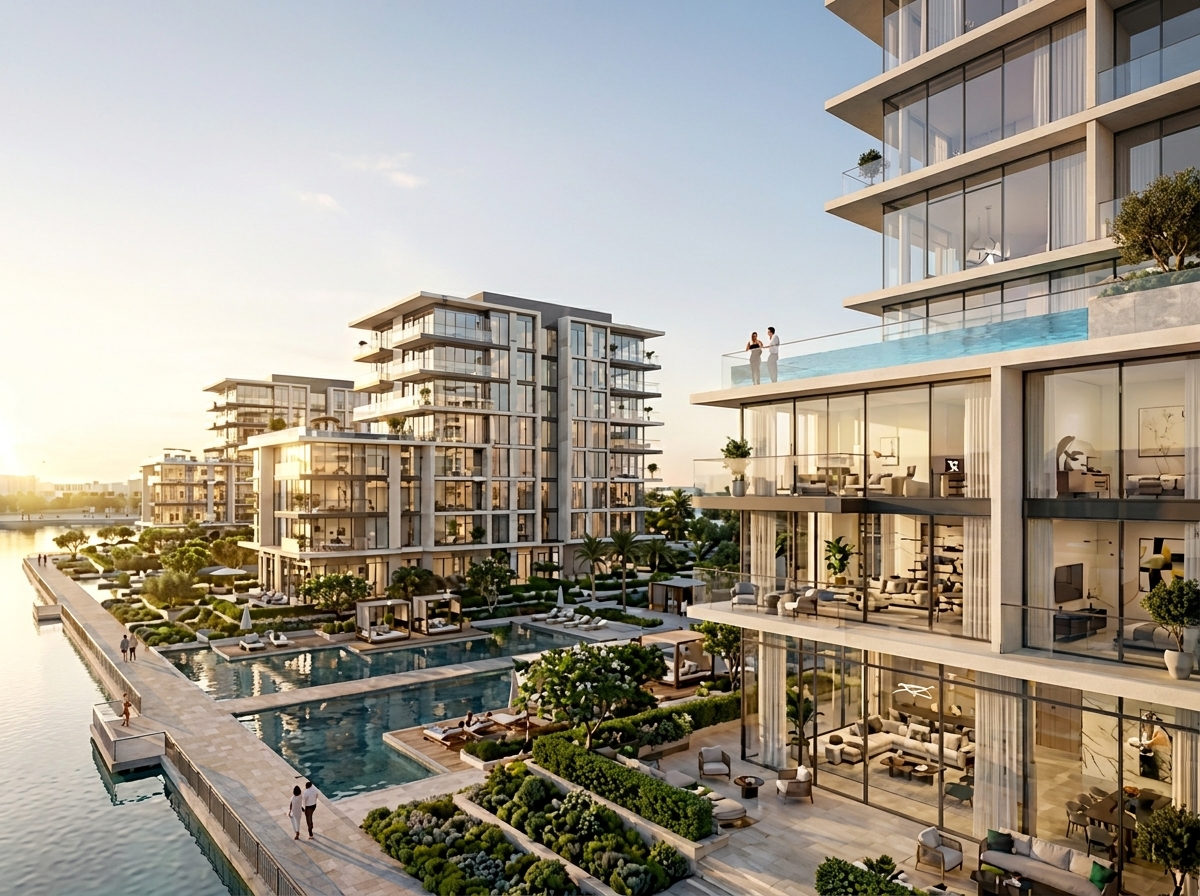
Off Plan Property by Ellington | Design-Led Luxury Residences 2026 Home › Blogs › Off Plan Property by Ellington Ellington Properties · Design-Led Real Estate Guide 2026 Ocean House, Mercer House & Boutique Living — off plan property by Ellington, decoded. Dubai’s premier design-led developer. Explore high-yield boutique apartments, resort-style architectural masterpieces, and secure your UAE Golden Visa. Ocean House · Palm Jumeirah · Ultra-Luxury By First Stone Real Estate · Ellington Off-Plan Specialists · Updated 2026 2014Founded in Dubai 15%+Rental Premium vs Market DesignBoutique Architectural Focus 96%Historic Tenant Retention The Short Version Off plan property by Ellington is the ultimate play for investors seeking premium rental yields and end-users demanding flawless finishing. Founded in 2014, Ellington Properties carved out a highly lucrative niche as Dubai’s leading “design-led” boutique developer. They do not build mass-market high-rises; they construct highly curated, resort-style sanctuaries. From the incredibly successful Belgravia series in JVC to elite architectural landmarks like Mercer House (Uptown) and Ocean House (Palm Jumeirah), Ellington properties consistently command 15% to 25% higher rental rates than their direct competitors. All properties offer freehold ownership and immediate Golden Visa eligibility. What is off plan property by Ellington? Why Ellington: The “Design-Led” Premium The Flagship Masterpieces Every Live Ellington Project (Directory) Ellington Price Ladder Freehold, Tax & The Golden Visa How to buy an Ellington asset Frequently asked questions What is off plan property by Ellington? Off plan property by Ellington involves purchasing a highly curated, premium residence directly from the developer before construction is completed, securing launch pricing and flexible payment structures. Ellington properties are recognizable the moment you step into the lobby. They feature signature scents, bespoke artwork, library lounge areas, and hotel-grade fitness centers. Buying off-plan with Ellington means bypassing the fierce secondary market competition and locking in a high-yield asset from day one. Your investment is fully secured in a government-regulated DLD escrow account. Why Ellington: The “Design-Led” Premium In a city filled with skyscrapers, why do savvy investors specifically hunt for Ellington? The answer is tenant psychology and build quality. The Rental Premium: Because Ellington buildings feel like boutique luxury hotels rather than standard apartment blocks, tenants are willing to pay 15% to 25% above the neighborhood average to live there. Exceptional Tenant Retention: Ellington boasts some of the highest tenant renewal rates in Dubai. Once residents experience the superior soundproofing, resort-style pools, and community clubhouses, they rarely leave, ensuring zero vacancy periods for investors. Obsessive Build Quality: Ellington is famous for “over-engineering” their interiors. From custom-crafted kitchen cabinetry to spa-inspired bathrooms and high-end European appliances, the finishing is universally flawless. Strategic Locations: Ellington targets areas with massive domestic demand, ranging from the highly active Jumeirah Village Circle (JVC) to the ultra-elite Palm Jumeirah. The Flagship Masterpieces Ellington’s portfolio covers both highly accessible boutique communities and ultra-luxury waterfront landmarks. Here are the standouts defining their 2026 pipeline: Ultra-Luxury WaterfrontOcean HousePalm Jumeirah · 2 to 6-bedroom residences · Olympic-style pool · Direct beach access · Architecture by SHoP AED 9.5MStarting The Uptown LandmarkMercer HouseUptown Dubai (DMCC) · Twin tower luxury · Urban beach club · Unobstructed Marina skyline views AED 2.3MStarting Canal-Front EleganceOne River PointBusiness Bay · Direct Dubai Water Canal views · Exclusive wellness studios · Immersive infinity pools AED 2.5MStarting Ellington units are frequently oversubscribed on launch day — enquire privately for VIP allocation access before public release. Every Ellington off plan project (2026 Directory) We have categorized the complete off-plan development portfolio by Ellington Properties. Prices reflect starting estimates and are subject to immediate developer revision. Premium Towers Ultra-Luxury Waterfront Boutique (JVC / Meydan) One River PointBusiness Bay · Architectural masterpiece on the CanalAED 2,500,000 Mercer HouseUptown Dubai · Integrated wellness and urban beachAED 2,300,000 The CrestmarkBusiness Bay · Boutique canal-side livingAED 2,100,000 Art BayAl Jaddaf · Cultural and wellness-centric waterfrontAED 1,800,000 Ocean HousePalm Jumeirah · Elite 2 to 6-bedroom residencesAED 9,500,000 Ellington Beach HousePalm Jumeirah · Modern coastal sanctuaryAED 8,200,000 Claydon HouseMBR City (Meydan) · Nature-inspired luxuryAED 1,600,000 Belgravia Series / Oakley SquareJumeirah Village Circle (JVC) · The highest ROI boutique apartmentsAED 1,200,000 Ellington HouseDubai Hills Estate · Overlooking the golf courseAED 1,900,000 Explore the complete design portfolio on our dedicated Ellington Properties page. Ellington Price Ladder Off plan property by Ellington requires a premium over mass-market developers, but guarantees superior long-term yields. Project Area / Type Starting From Boutique Series (1-Bed) JVC / JVT AED 1,200,000 Claydon House (1-Bed) MBR City (Meydan) AED 1,600,000 Art Bay (1-Bed) Al Jaddaf AED 1,800,000 Ellington House Dubai Hills Estate AED 1,900,000 The Crestmark Business Bay AED 2,100,000 Mercer House Uptown Dubai AED 2,300,000 One River Point Business Bay AED 2,500,000 Ocean House Palm Jumeirah AED 9,500,000+ Off plan property, freehold & the UAE Golden Visa All Ellington properties are situated in Dubai’s premier freehold zones, guaranteeing 100% full foreign ownership. Instant Golden Visa Eligibility: Because almost every 1-bedroom apartment in Ellington’s premium portfolio (and combinations of smaller units) exceeds the AED 2,000,000 threshold, you immediately qualify for the 10-year UAE Golden Visa upon signing the SPA. Full Freehold Rights: Absolute global ownership. Sell on the highly active secondary market, lease for premium yields, or pass the property down to heirs without restriction. Zero Tax Ecosystem: Dubai offers 0% property tax, 0% capital gains tax, and 0% tax on rental income. How to buy an Ellington Asset: Step by Step 1. Strategy Alignment: Choose between maximizing rental ROI (e.g., Belgravia in JVC or Claydon House) or securing a primary luxury residence/capital appreciation play (Ocean House, One River Point). 2. Submit an EOI: Ellington launches are notoriously competitive. Submitting an Expression of Interest (reservation deposit) early is the only way to secure premium floor plans. 3. SPA & Escrow: Sign the Sale & Purchase Agreement. Your capital goes securely into the government-regulated DLD escrow account. 4. Payment Plan: Follow the construction-linked payment plan (typically structured as 70/30 or 60/40, depending on the project). 5. Handover: Take possession of a flawless asset. Utilize our property management team to place a
Off Plan Property by Elie Saab | Branded Luxury Residences 2026
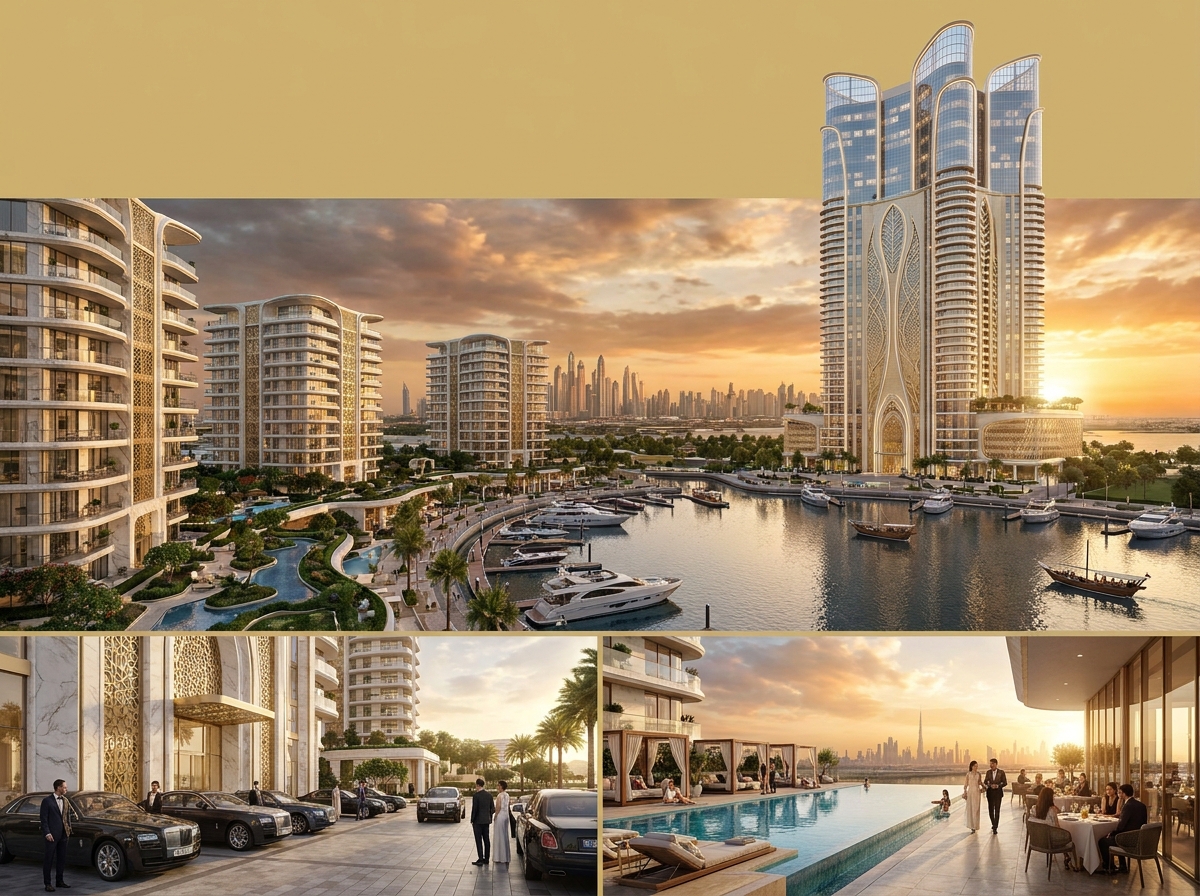
Off Plan Property by Elie Saab | Branded Luxury Residences 2026 Home › Blogs › Off Plan Property by Elie Saab Elie Saab Maison · Branded Real Estate Guide 2026 Grand Bleu Tower, STELLAR & Signature Villas — off plan property by Elie Saab, decoded. Where haute couture meets high-end architecture. Secure extreme-scarcity branded residences built by Emaar and Emirates Developments, granting immediate Golden Visa eligibility. STELLAR · Yas Bay · New Launch 2026 By First Stone Real Estate · Luxury Off-Plan Specialists · Updated 2026 1982Couture Brand Founded 30%Avg Branded Price Premium EmaarMaster Developer Partner TrophyCollectible Asset Class The Short Version Off plan property by Elie Saab represents the absolute apex of branded residential luxury. The legendary Lebanese fashion house does not build standard properties; they design interiors and architectural aesthetics for extreme-scarcity projects built by the UAE’s finest developers. Through an exclusive partnership with Emaar Properties, they launched the iconic Grand Bleu Tower in Dubai Marina and the sprawling Elie Saab Villas in Arabian Ranches 3. In 2026, they expanded into Abu Dhabi with STELLAR by Elie Saab in Yas Bay. Investing in these assets guarantees a massive secondary-market premium and automatic UAE Golden Visa status. What is off plan property by Elie Saab? Why Elie Saab: The Branded Residence Premium The Flagship Masterpieces Every Live Elie Saab Project (Directory) Elie Saab Price Ladder Freehold, Tax & The Golden Visa How to acquire a branded asset Frequently asked questions What is off plan property by Elie Saab? Off plan property by Elie Saab is the acquisition of a luxury residence—fully interior-designed by the Elie Saab Maison team—before its physical construction is completed. In the branded real estate ecosystem, the fashion house provides the creative direction, the bespoke Italian furnishings, and the brand prestige, while a tier-one developer (like Emaar) handles the heavy construction and master-planning. This synergy results in properties that transcend real estate, becoming highly liquid, collectible art pieces for international Ultra-High-Net-Worth Individuals (UHNWIs). Your investment is fully secured in a government-regulated escrow account. Why Elie Saab: The Branded Residence Premium Standard ROI metrics do not apply to haute couture real estate. Investors acquire Elie Saab properties strictly for capital preservation and aggressive secondary-market appreciation. The 30-40% Price Premium: Global real estate data proves that fashion-branded residences (like Elie Saab, Bulgari, or Cavalli) command up to a 40% premium on resale compared to non-branded luxury properties located on the exact same street. Emaar Construction Quality: By partnering with Emaar for their Dubai projects, investors eliminate all completion risk. You get the world’s most elegant fashion brand built by the Middle East’s most reliable developer. Unmatched Scarcity: Elie Saab limits their real estate footprint globally. An Elie Saab Villa in Arabian Ranches 3 is one of a strictly limited collection, ensuring its value remains artificially high due to lack of supply. Global Liquidity: A buyer from London, Beijing, or New York instantly recognizes the Elie Saab brand, making the property incredibly easy to flip on the international secondary market. The Flagship Masterpieces Elie Saab properties are defined by vintage Art Deco architecture, Miami Beach glamor, and bespoke Italian furnishings. Here is the active portfolio: Waterfront CoutureGrand Bleu TowerEmaar Beachfront, Dubai · 1.5km private beach access · Miami-inspired architecture · Panoramic Palm Jumeirah views AED 3.2MStarting New Launch 2026STELLAR by Elie SaabYas Bay, Abu Dhabi · 144 exclusive units · Bespoke Italian interiors by Carlo Colombo · Q4 2028 Handover AED 2.87MStarting Elite Family LivingElie Saab Villas (Phase 1 & 2)Arabian Ranches 3, Dubai · 4 & 5-bedroom standalone villas · Signature AC roof lounges · Emaar master-planned AED 4.65MStarting Elie Saab properties frequently sell out during pre-launch VIP events — enquire privately for off-market secondary units or upcoming phase access. Every Elie Saab off plan project (2026 Directory) We have categorized the complete off-plan development portfolio designed by Elie Saab Maison in the UAE. Prices reflect secondary market starting estimates for sold-out phases and direct developer pricing for new launches. Dubai Waterfront Dubai Luxury Villas Abu Dhabi Exclusive Grand Bleu Tower I & IIEmaar Beachfront · 1, 2, 3 & 4-Bedroom bespoke apartmentsAED 3,200,000 Elie Saab Villas (Phase 1 & 2)Arabian Ranches 3 · 4 & 5-Bedroom standalone mansionsAED 4,650,000 Elie Saab Vie (The Fields)Meydan (G&Co) · 3 & 4-Bedroom premium townhousesAED 3,500,000 STELLAR by Elie SaabYas Bay · Apartments, Garden Villas, and PenthousesAED 2,870,000 Explore the complete fashion-branded portfolio on our dedicated Elie Saab developer page. Elie Saab Price Ladder Off plan property by Elie Saab requires a premium entry threshold, guaranteeing exclusivity and high-net-worth neighbors. Project Area / Type Starting From STELLAR (1-Bed) Yas Bay, Abu Dhabi AED 2,870,000 Grand Bleu Tower Emaar Beachfront, Dubai AED 3,200,000 Elie Saab Vie Meydan, Dubai (Townhouse) AED 3,500,000 STELLAR (2-Bed) Yas Bay, Abu Dhabi AED 3,900,000 Elie Saab Villas (4-Bed) Arabian Ranches 3, Dubai AED 4,650,000 STELLAR (Garden Villas) Yas Bay, Abu Dhabi AED 5,300,000 Elie Saab Villas (5-Bed) Arabian Ranches 3, Dubai AED 11,200,000+ Off plan property, freehold & the UAE Golden Visa All Elie Saab projects in the UAE are situated in prime freehold zones, guaranteeing 100% full foreign ownership rights. Instant Golden Visa Eligibility: Because the starting price of every Elie Saab property exceeds AED 2,000,000, purchasing any unit automatically qualifies you, your spouse, and your dependents for the 10-year UAE Golden Visa. Full Freehold Rights: Absolute global ownership. Sell on the international secondary market, lease, or pass the property down to heirs without restriction. Zero Tax Ecosystem: The UAE offers 0% property tax, 0% capital gains tax, and 0% tax on rental income—ideal for wealth preservation. How to buy an Elie Saab Trophy Asset: Step by Step 1. Asset Selection: Choose between a waterfront apartment for high liquidity (Grand Bleu Tower, STELLAR) or a sprawling family villa for extreme capital appreciation (Arabian Ranches 3). 2. Private EOI: Branded residences operate on scarcity. Submit an Expression of Interest to secure an exclusive allocation before public release. 3. SPA & Escrow: Sign the Sale & Purchase
Off Plan Property by Eagle Hills | Maryam Island & All Projects
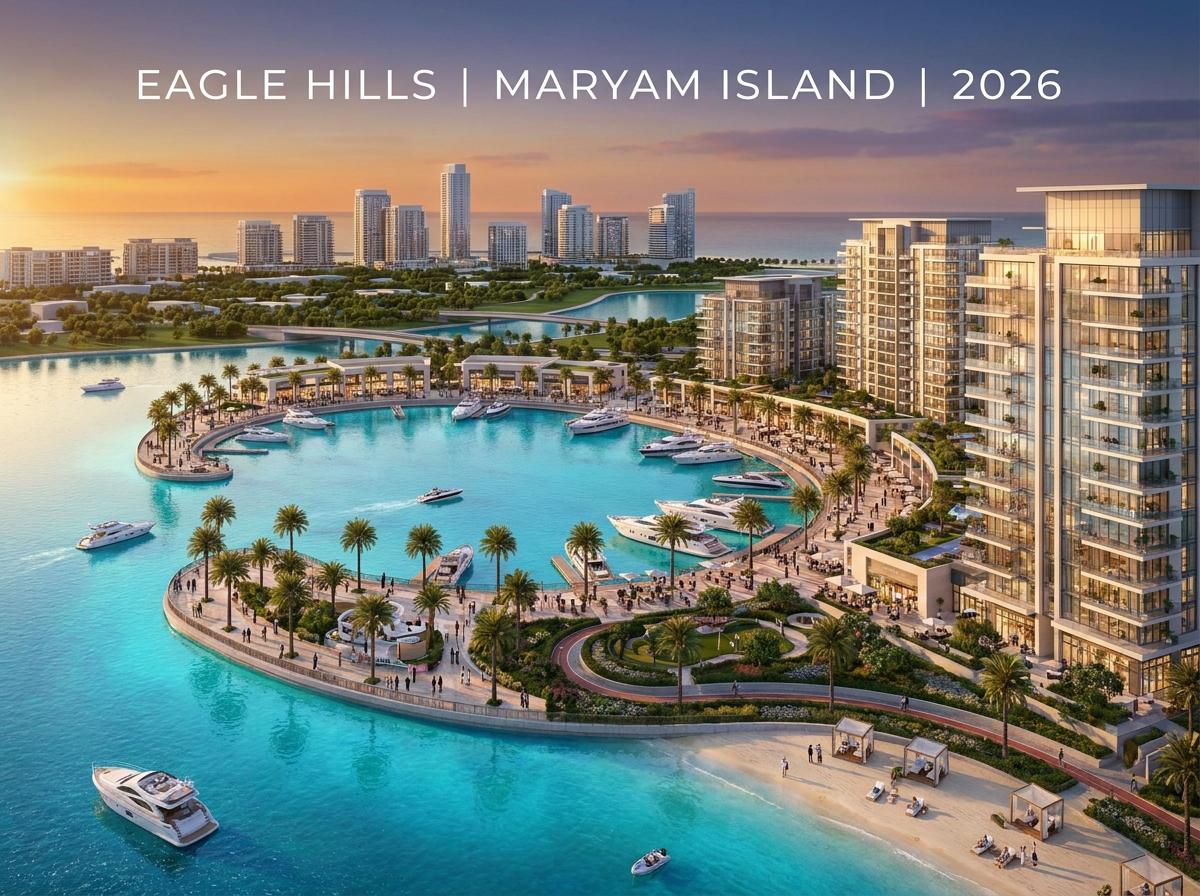
Off Plan Property by Eagle Hills | Maryam Island & All Projects 2026 Home › Blogs › Off Plan Property by Eagle Hills Eagle Hills · Coastal Real Estate Guide 2026 Maryam Island, Ramhan Island & Fujairah Beach — off plan property by Eagle Hills, decoded. Chaired by the founder of Emaar. Invest in high-yield emerging coastal markets across the UAE, delivering unparalleled waterfront luxury and immediate Golden Visa eligibility. Maryam Island · Sharjah · Premier Waterfront Community By First Stone Real Estate · Eagle Hills Off-Plan Specialists · Updated 2026 AlabbarChaired by Emaar Founder 14+Global Mega-Projects CoastalMaster Waterfront Hubs ROIHigh-Yield Emerging Zones The Short Version Off plan property by Eagle Hills is the smart investor’s answer to an oversaturated central Dubai market. Chaired by Mohamed Alabbar (the visionary behind Emaar Properties and the Burj Khalifa), Eagle Hills specializes in building new city hubs in high-growth, untapped coastal markets. Their flagship master-community, Maryam Island in Sharjah, offers Dubai-level luxury at a fraction of the cost, driving massive rental yields. Meanwhile, assets like Ramhan Island (Abu Dhabi) and Fujairah Beach offer ultra-exclusive, extreme-scarcity beachfront living. All UAE properties are freehold for eligible nationalities and grant Golden Visa access. What is off plan property by Eagle Hills? Why Eagle Hills: The Emaar Connection & ROI Flagship Hubs: Maryam & Ramhan Island Every Live Eagle Hills Project (Directory) Eagle Hills Price Ladder Freehold, Tax & The Golden Visa How to buy off plan, step by step Frequently asked questions What is off plan property by Eagle Hills? Off plan property by Eagle Hills involves acquiring a premium waterfront residence or villa before its physical completion, directly from a developer with a sovereign-level track record. Eagle Hills is an Abu Dhabi-based private real estate investment and development company. Unlike developers building single towers, Eagle Hills builds entirely new city hubs—complete master-planned ecosystems featuring luxury hotels (like Address and Palace), retail boulevards, and premium residential zones. Buying off-plan here secures your capital in highly regulated, DLD/Sharjah equivalent escrow accounts, guaranteeing delivery. Why Eagle Hills: The Emaar Connection & Coastal ROI Savvy investors are pivoting from central Dubai to Eagle Hills projects for two dominant reasons: unmatched leadership and emerging market pricing. The Mohamed Alabbar Factor: Eagle Hills is chaired by the founder of Emaar. This means you get Emaar-quality construction, master-planning, and hospitality integration (like the Address Hotels) without paying the hyper-inflated central Dubai premium. Monopolizing Emerging Markets: Eagle Hills targets high-growth areas that lack luxury supply. For example, Maryam Island is the only luxury waterfront destination of its kind in Downtown Sharjah, making it a highly liquid asset. Superior Rental Yields: Because the entry prices at Maryam Island (starting ~AED 500k) are substantially lower than Dubai Marina, yet attract high-income executive tenants working in Sharjah or commuting to Dubai, the net rental yields are exceptionally high. Coastal Scarcity: True beachfront property is the rarest asset class in the UAE. Ramhan Island and Fujairah Beach offer direct, uninterrupted water access—a guarantee for massive long-term capital appreciation. The Flagship Master Communities Eagle Hills does not just build buildings; they build destinations. Here are the three pillars of their UAE portfolio: Sharjah’s Premier HubMaryam IslandDowntown Sharjah · Waterfront promenade · 4 & 5-star luxury hotels · High-yield apartments AED 500KStarting Ultra-Luxury Mega-MansionsRamhan IslandAbu Dhabi · Maldives-style floating villas · Private beach strips · World-class marina AED 12.5MStarting Gulf of Oman CoastlineFujairah BeachFujairah · The city’s only residential development with direct private beach access · Palace Hotel integration AED 1.8MStarting (Villas) Inventory across Maryam Island phases moves extremely fast due to high domestic demand — enquire for current live availability. Every Eagle Hills off plan project (2026 Directory) We have categorized the off-plan developments across the UAE by Eagle Hills. Prices reflect starting estimates and are subject to developer revision. Maryam Island (Sharjah) Ramhan Island (Abu Dhabi) Fujairah Beach Crystal ResidencesMaryam Island · Direct waterfront luxury apartmentsAED 600,000 Mesk ResidencesMaryam Island · Premium studios and 1-2 bedroom unitsAED 500,000 Aysha ResidencesMaryam Island · Facing the Al Khan LagoonAED 650,000 Ramhan Island VillasAbu Dhabi · 3 to 7 bedroom extreme luxury island homesAED 12,500,000 Fujairah Beach VillasFujairah · 2, 3, and 4-bedroom beachfront propertiesAED 1,800,000 Explore the full masterplan layouts on our dedicated Eagle Hills developer page. Eagle Hills Properties price ladder Off plan property by Eagle Hills offers incredible entry points in Sharjah, scaling up to billionaire-tier island assets in Abu Dhabi. Project Area / Type Starting From Mesk / Nada Residences Maryam Island, Sharjah (Apt) AED 500,000 Crystal Residences Maryam Island, Sharjah (Apt) AED 600,000 Fujairah Beach Villas Fujairah (2-Bed Villas) AED 1,800,000 Ramhan Island Abu Dhabi (Ultra-Luxury Villas) AED 12,500,000+ Off plan property, freehold & the UAE Golden Visa Eagle Hills developments are situated in zones that allow foreign ownership, offering immense residency benefits. Sharjah Freehold/Leasehold: Maryam Island offers 100% freehold ownership for Arab Nationals, and 100-year renewable leaseholds (effectively functioning as freehold) for all other expatriate nationalities. UAE Golden Visa (AED 2M): Investing AED 2,000,000 or more across any Eagle Hills properties automatically qualifies you, your spouse, and dependents for the 10-year UAE Golden Visa. Tax Sanctuary: 0% capital gains tax and 0% property tax make these coastal assets the ultimate wealth-preservation vehicles. How to buy off plan property from Eagle Hills: Step by Step 1. Market Selection: Decide between the high rental yield mechanics of Maryam Island (Sharjah), or the elite capital preservation of Ramhan Island (Abu Dhabi). 2. Expression of Interest (EOI): Submit a reservation deposit. For Maryam Island, phases sell out rapidly; early EOI submission is critical to secure premium lagoon-facing units. 3. Execute the SPA: Sign the Sale & Purchase Agreement. Funds are deposited strictly into government-regulated escrow accounts. 4. Payment Plan: Follow the construction-linked payment plan (often incredibly flexible, spanning across the build phase). 5. Handover: Take possession of your waterfront asset. Utilize our property management arm to list it for high-yield rental or secondary market flipping. Our Eagle Hills advisory team manages the entire process from start to
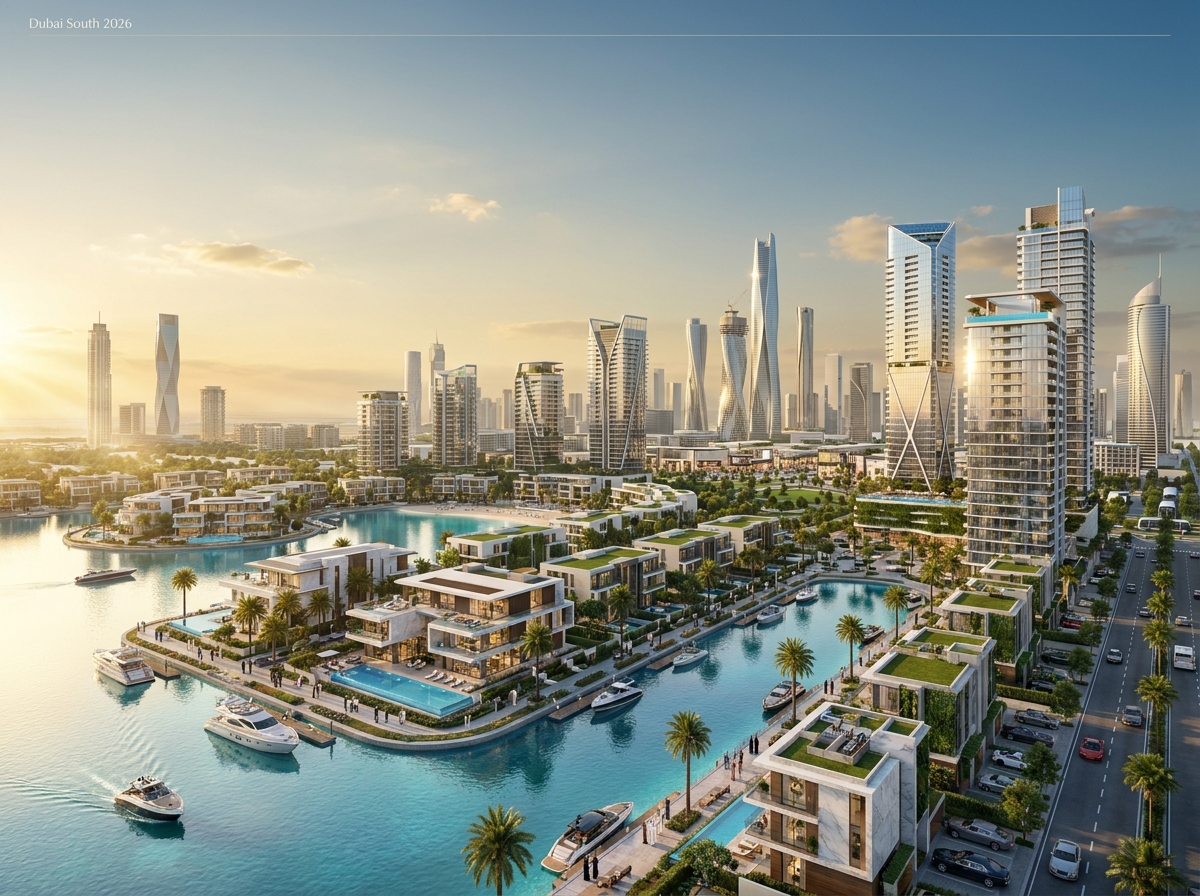
Off Plan Property by Dubai South | South Bay, The Pulse & All Projects 2026
Off Plan Property by Dubai South | South Bay, The Pulse & All Projects 2026 Home › Blogs › Off Plan Property by Dubai South Dubai South Properties · Mega-City Off-Plan Guide 2026 Capitalize on the AED 128B Airport Expansion with off plan property by Dubai South. Invest in the master-planned city of the future. Discover South Bay, The Pulse, aggressive capital appreciation data, and Golden Visa eligibility. South Bay · Crystal Lagoon · Premium Mansions By First Stone Real Estate · Dubai South Specialists · Updated 2026 145Square Kilometers Size 128BAED Airport Expansion 500KProjected Population ExpoLegacy Masterplan Zone The Short Version Off plan property by Dubai South is unlike any other investment in the UAE because Dubai South is not just a developer—it is a 145 sq. km sovereign mega-city. Following the monumental announcement to shift all DXB traffic to the expanding Al Maktoum International Airport (DWC), Dubai South has become the highest-ROI zone in the Emirates. As the master developer, Dubai South Properties builds massive infrastructure-led residential zones, most notably the ultra-luxury South Bay lagoon community and the highly affordable family hub, The Pulse. All properties are freehold and Golden Visa eligible. What is off plan property by Dubai South? Why Dubai South: The Airport Effect The Flagship Master Communities Every Live Dubai South Project (Directory) Dubai South Price Ladder Freehold, Tax & The Golden Visa How to invest, step by step Frequently asked questions What is off plan property by Dubai South? Off plan property by Dubai South means buying directly from the government-backed master developer constructing the “City of You.” Launched in 2006, Dubai South is divided into eight specialized districts (Logistics, Aviation, Residential, Golf, etc.). While third-party developers (like Emaar and MAG) build here, Dubai South Properties is the master developer’s own real estate arm. Purchasing directly from them ensures you are buying into the foundational infrastructure of the city—assets that benefit most directly from the government’s massive capital injections. All funds are secured in DLD-regulated escrow accounts. Why Dubai South: The “Airport Effect” & ROI Search algorithms and smart money are entirely focused on Dubai South for one undeniable macroeconomic reason: Infrastructure. The AED 128B Airport Expansion: Al Maktoum International (DWC) is expanding to handle 260 million passengers annually. Within the next decade, all operations from Dubai International (DXB) will move here. This guarantees a massive influx of aviation, logistics, and corporate executives needing housing. Unmatched Capital Appreciation: Early investors in areas like The Pulse have seen their property values soar by 30-40% following the airport announcements. Buying off-plan now is buying before the mass migration. Expo City Legacy: Dubai South directly borders Expo City Dubai, which has transitioned into a massive free zone and technology hub, driving immense rental demand from white-collar professionals. Master-Planned Perfection: Because the government controls the entire 145 sq. km, there are no traffic bottlenecks or lack of amenities. It is a true 15-minute city. The Flagship Master Communities Dubai South Properties divides its focus between ultra-luxury resort living and highly efficient family communities. Here are the titans of their portfolio: Waterfront MansionsSouth BayThe Residential District · 3-kilometer crystal lagoon · 5-7 bed ultra-luxury mansions & townhouses AED 3.2MStarting (Townhouses) The Family HubThe Pulse (Villas & Townhouses)Dubai South · Fully integrated lifestyle · Green parks · Retail boulevard · Exceptional rental yields AED 1.8MStarting Urban Apartment LivingThe Pulse ApartmentsDubai South · High ROI studios, 1, and 2-bedroom units · Perfect for aviation professionals AED 600KStarting Phases in South Bay routinely sell out within 48 hours of launch — enquire for priority access to upcoming phases. Every Dubai South off plan project (2026 Directory) We have categorized the off-plan developments built directly by Dubai South Properties. Prices reflect starting estimates and are subject to immediate developer revision. Luxury & Waterfront Villas & Townhouses High ROI Apartments South Bay (Mansions)6 & 7 Bedroom waterfront masterpiecesAED 12,000,000+ South Bay (Townhouses & Villas)4 & 5 Bedroom semi-detached lagoon livingAED 3,200,000 The Pulse VillasSpacious 3 & 4 bedroom family homesAED 2,100,000 The Pulse TownhousesModern, community-centric townhousesAED 1,800,000 The Pulse ApartmentsHigh-yield units targeting airport/logistics staffAED 600,000 South VillageUrban living with direct community retail accessAED 750,000 Explore the full masterplan on our dedicated Dubai South developer page. Dubai South Properties price ladder Off plan property by Dubai South covers the entire spectrum, from accessible aviation-staff housing to billionaire mega-mansions. Project Type Starting From The Pulse Apartments (Studios / 1-Bed) AED 600,000 South Village Apartments (1-Bed / 2-Bed) AED 750,000 The Pulse Townhouses (3-Bed) AED 1,800,000 The Pulse Villas (4-Bed) AED 2,100,000 South Bay Townhouses (4-Bed) AED 3,200,000 South Bay Semi-Detached Villas (5-Bed) AED 4,500,000 South Bay Waterfront Mansions (6/7-Bed) AED 12,000,000+ Off plan property, freehold & the UAE Golden Visa All residential zones within Dubai South are designated freehold areas, ensuring 100% full foreign ownership rights. Full Freehold Rights: Absolute global ownership. Sell, lease, or pass the property down to heirs without restriction. UAE Golden Visa (AED 2M): Investing AED 2,000,000 or more in Dubai South (e.g., buying a Pulse Villa or combining multiple apartments) qualifies you, your spouse, and dependents for the 10-year Golden Visa. Tax-Free Returns: Benefit from 0% property tax, 0% capital gains tax, and 0% tax on the immense rental income generated by the airport workforce. How to buy off plan property in Dubai South: Step by Step 1. Pick Your Strategy: Choose between high rental yield (The Pulse Apartments), family appreciation (The Pulse Villas), or ultra-luxury waterfront flipping (South Bay). 2. Submit an EOI: Dubai South launches are highly competitive. Submit your Expression of Interest (booking deposit) to secure your queue position. 3. Sign the SPA: Execute your Sale & Purchase Agreement. Funds go directly into the government-protected DLD escrow account. 4. Construction Instalments: Follow the flexible payment plan (often 50/50 or 60/40) linked to construction milestones. 5. Handover: Take the keys. Let our team immediately list it for rent to incoming aviation executives or sell it on the booming secondary market. Our dedicated Dubai South advisory team manages the
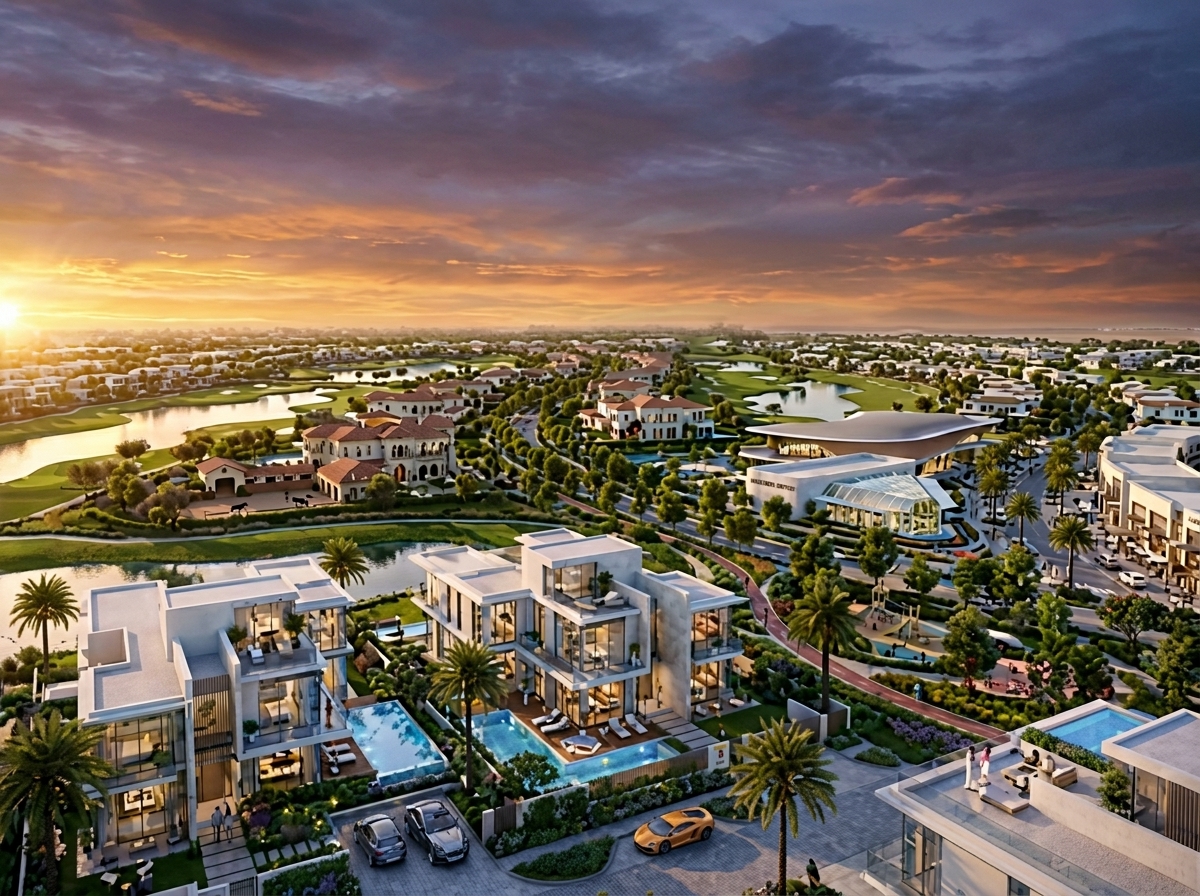
Off Plan Property by DECA | Avana, Arabian Hills & All Projects 2026
Off Plan Property by DECA | Avana, Arabian Hills & All Projects 2026 Home › Blogs › Off Plan Property by DECA DECA Properties · UAE Off-Plan Guide 2026 Avana, Arabian Hills & Waterfront luxury — off plan property by DECA, decoded. From massive villa plots on Dubai-Al Ain Road to boutique apartments in JVC and RAK. Explore DECA’s diverse portfolio, flexible payment plans, and Golden Visa eligibility. Arabian Hills Estate · 244M Sqft · Master Community By First Stone Real Estate · DECA Off-Plan Specialists · Updated 2026 40+Years Combined Experience 2.1K+Residential Units in UAE 10%Accessible Down Payments 100%RERA Escrow Protected The Short Version Off plan property by DECA offers a highly diversified, investor-first approach. As a boutique development management partner, DECA does not just build; they curate. Their 2026 portfolio is strategically split between high-yield boutique apartments in Dubai (like Avana Residences in JVC), massive master-planned villa plots (Arabian Hills Estate), and coastal waterfront properties near the upcoming UAE casino (Park Beach Residence in RAK). With transparent developer-direct pricing and low 10% entry points, DECA is a top choice for portfolio diversification. What is off plan property by DECA? Why DECA: Boutique Approach & Transparency The Standout Projects (Avana & Arabian Hills) Every Live DECA Project (Directory) DECA Price Ladder Freehold, Tax & The Golden Visa How to buy off plan, step by step Frequently asked questions What is off plan property by DECA? Off plan property by DECA involves acquiring a premium real estate asset directly from the developer before construction is complete, utilizing flexible, interest-free payment plans. DECA Properties operates with a third-generation developer mindset. Rather than churning out identical skyscrapers, they function as a boutique development management firm. This means they meticulously manage the entire lifecycle—from land acquisition and architectural design to construction and handover. When you buy DECA off-plan, your funds are 100% protected in a DLD-regulated escrow account. Why DECA: Boutique Approach & Transparency Smart investors are pivoting toward boutique developers like DECA for personalized management and emerging-location ROI. Strategic Asset Diversity: DECA allows you to diversify within one developer. You can buy a high-yield apartment in JVC, a massive custom villa plot in Al Faqa, and a beachfront apartment in Ras Al Khaimah (RAK). Flexible 50/50 & 60/40 Plans: Unlike developers requiring heavy upfront capital, DECA frequently offers accessible entry points—typically starting at just 10% down, with the balance spread across construction and handover. End-to-End Transparency: All DECA projects are RERA-registered. They pride themselves on closing the gap between the developer and the buyer, ensuring clear communication on construction milestones. Capital Appreciation Targeting: By building in high-growth corridors (like DLRC, Arjan, and Al Marjan Island), DECA properties historically benefit from strong 20-30% capital appreciation between launch and handover. The Standout DECA Assets DECA’s portfolio covers everything from urban smart homes to coastal retreats. Here are the flagship assets defining their 2026 pipeline: High-Yield Urban LivingAvana ResidencesJumeirah Village Circle (JVC) · Marine-inspired architecture · Smart home integration · Octopus Adventure Zone AED 740KStarting Custom Villa & Mansion PlotsArabian Hills EstateDubai-Al Ain Road · 244 million sqft lagoon community · Build your own custom mega-mansion AED 1.49MStarting (Plots) Casino-Proximity WaterfrontPark Beach ResidencesAl Marjan Island, RAK · Sea-facing terraces · Coastal architecture · High short-term rental potential AED 900KStarting Plot availability in Arabian Hills Estate is strictly limited — enquire for current phase maps and pricing. Every DECA off plan project (2026 Directory) We have categorized DECA’s off-plan developments across the UAE. Prices reflect starting estimates and are subject to immediate developer revision. Dubai Apartments Plots & Communities RAK Waterfront Avana ResidencesJumeirah Village Circle (JVC) · Q3 2027 HandoverAED 740,000 Milos ResidencesDubai Land Residential Complex (DLRC) · Mediterranean aestheticAED 782,000 Trinity ApartmentsArjan, Dubailand · Luxury pool-centric residentialAED 900,000 Laya CourtyardJVC · Private, low-rise gated enclaveAED 630,000 Arabian Hills Estate (Phase 1 & 2)Dubai-Al Ain Road · Mega-mansion and villa plotsAED 1,490,000 Park Beach Residence 1 & 2Al Marjan Island, RAK · Premium coastal livingAED 900,000 Explore the full directory on our dedicated DECA Properties page. DECA Properties price ladder Off plan property by DECA provides excellent entry points for both first-time investors and seasoned plot developers. The strategic ladder: Project Area / Type Starting From Laya Courtyard JVC (Apartments) AED 630,000 Avana Residences JVC (Apartments) AED 740,000 Milos Residences DLRC (Apartments) AED 782,000 Park Beach Residence 1 Al Marjan, RAK (Apartments) AED 900,000 Trinity Arjan (Apartments) AED 900,000 Park Beach Residence 2 Al Marjan, RAK (Apartments) AED 990,000 Arabian Hills Estate Al Faqa (Villa Plots) AED 1,490,000 Off plan property, freehold & the UAE Golden Visa Whether you invest in Dubai or Ras Al Khaimah, DECA properties sit in designated freehold zones granting 100% foreign ownership. Full Freehold Rights: You own the asset entirely. You can sell, rent, or pass it to heirs without restriction. UAE Golden Visa (AED 2M): Investing a total of AED 2,000,000 or more in DECA properties qualifies you, your spouse, and your dependents for the 10-year renewable Golden Visa. (e.g., buying two units in Avana, or one large plot in Arabian Hills). Tax Efficiency: Dubai and RAK offer 0% property tax, 0% capital gains tax, and 0% tax on your rental income. How to buy off plan property by DECA: Step by Step 1. Strategic Selection: Choose between high rental yield (JVC/Arjan), custom development (Arabian Hills plots), or capital appreciation via casino proximity (Al Marjan Island). 2. Pay the Reservation Deposit: Secure your unit or plot with a booking fee (typically 10% + 4% DLD fee). 3. Execute the SPA: Sign the Sale & Purchase Agreement. Your funds are deposited securely into the government-regulated escrow account. 4. Construction Instalments: Follow the flexible payment plan (e.g., 60/40 or 50/50) via bank transfer from anywhere globally. 5. Handover & Monetize: Upon completion (many slated for 2027), take handover and immediately list for rent or secondary market resale. Our dedicated DECA advisory team manages the entire process. Get in touch to secure your allocation today, or calculate your ROI using our mortgage
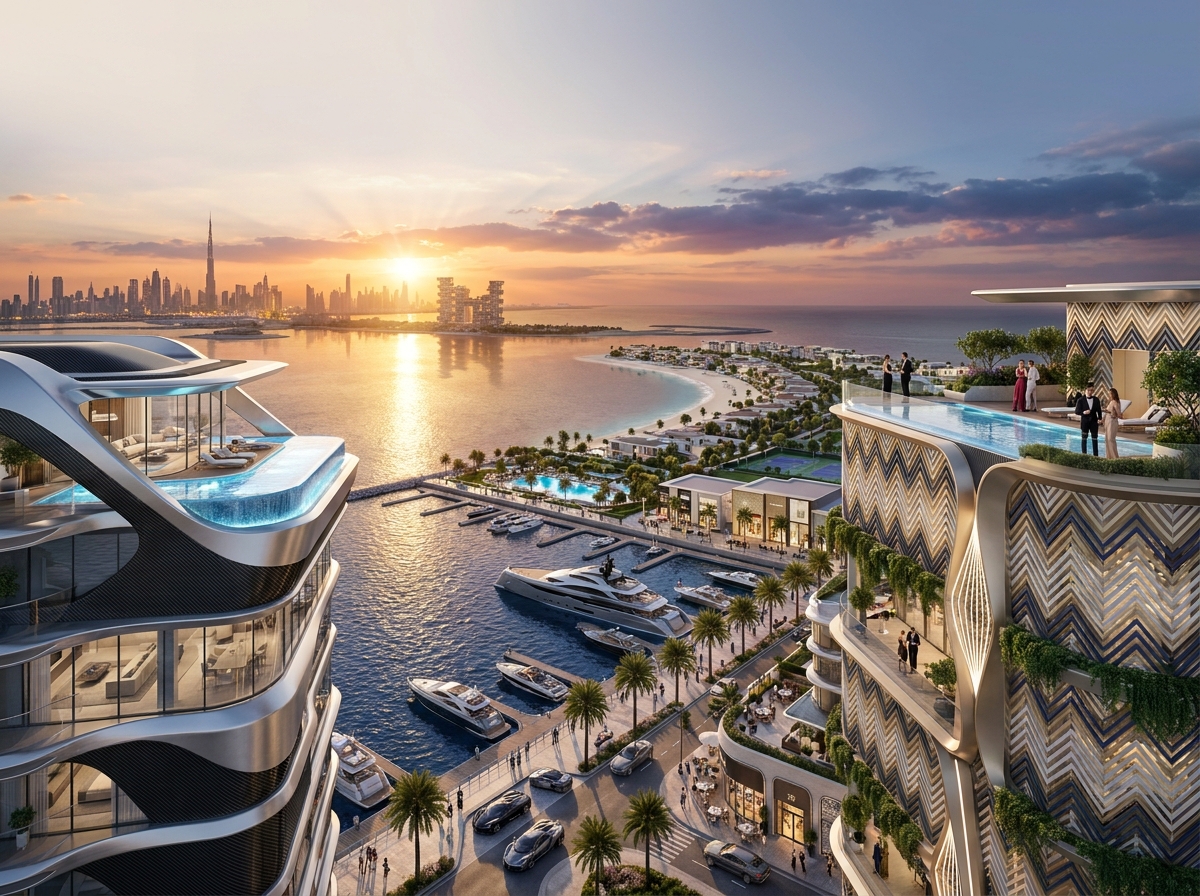
Off Plan Property by Dar Global | Pagani, Missoni & All Projects 2026
Off Plan Property by Dar Global | Pagani, Missoni & All Projects 2026 Home › Blogs › Off Plan Property by Dar Global Dar Global · Hyper-Luxury Off-Plan Guide 2026 Pagani, Missoni, W Hotels & Trophy Assets — off plan property by Dar Global, decoded. The international arm of Saudi Arabia’s Dar Al Arkan. Explore the world’s most exclusive co-branded real estate, high-end capital preservation strategies, and Golden Visa eligibility. DaVinci Tower · Pagani · Downtown Dubai By First Stone Real Estate · Luxury Off-Plan Specialists · Updated 2026 DarBacked by Dar Al Arkan (KSA) 7+Global Luxury Brand Partners LSEListed on London Stock Exchange TrophyExtreme Scarcity Assets The Short Version Off plan property by Dar Global is strictly positioned for the ultra-high-net-worth individual (UHNWI). As the international luxury arm of Saudi real estate giant Dar Al Arkan, Dar Global does not build standard communities. Instead, they engineer extreme-scarcity, hyper-luxury branded residences across Dubai, Oman, Qatar, and Europe. With partnerships including Pagani, Missoni, W Hotels, and Trump, investing here secures a highly illiquid but massive capital-preservation trophy asset. All Dubai projects grant immediate UAE Golden Visa eligibility. What is off plan property by Dar Global? Why Dar Global: Trophy Assets & Dar Al Arkan The Branded Residences (Pagani, Missoni, W) Every Live Dar Global Project (Directory) Dar Global Price Ladder Freehold & The Golden Visa How to buy a Trophy Asset step by step Frequently asked questions What is off plan property by Dar Global? Off plan property by Dar Global is the acquisition of an internationally co-branded, ultra-luxury residence before its physical completion. Dar Global is unique in the Dubai market. They are the international spin-off of Dar Al Arkan, the largest publicly listed real estate developer in Saudi Arabia. Listed on the London Stock Exchange, Dar Global focuses exclusively on international luxury, partnering with elite fashion and hospitality houses to create residences that function more like collectible art pieces than traditional real estate. Your investment is protected by strict Dubai Land Department escrow regulations. Why Dar Global: Trophy Assets & Capital Preservation Standard real estate metrics (like basic rental yields) do not apply here. Investors choose Dar Global to park massive wealth in secure, hyper-appreciating trophy assets. The Dar Al Arkan Backbone: Dar Global brings the financial stability and flawless track record of Saudi Arabia’s premier developer to the international stage. Extreme Co-Branding Scarcity: Living in a building designed by Horacio Pagani or furnished by Missoni is a status symbol. These units are highly scarce, ensuring their resale value remains robust among global elites. Unmatched Locations: Dar Global secures the absolute last remaining premium plots in fully established districts, such as the direct Dubai Canal frontage in Business Bay or central Downtown Dubai. Global Liquidity: Because these brands (W Hotels, Pagani) have global recognition, secondary market resales attract international buyers who may know nothing about standard Dubai developers, but instantly recognize the brand. The Branded Residences This is the core of the Dar Global portfolio. These towers redefine the intersection of high fashion, automotive excellence, and real estate. Pagani · Automotive Hyper-LuxuryDaVinci Tower by PaganiDowntown Dubai · The world’s first Pagani residences · Floating geometric spheres · Direct Burj Khalifa views AED 6.5MStarting Missoni · Italian FashionUrban Oasis by MissoniBusiness Bay · Miami-style waterfront living · Exclusive Missoni interiors & textiles · Private elevators AED 3.2MStarting W Hotels · Rebellious LuxuryW Residences Dubai – DowntownDowntown Dubai · ‘Whatever/Whenever’ service · VIP access to W Hotel amenities · Ultra-chic styling AED 4.5MStarting Inventory in branded towers is strictly limited — enquire privately for off-market or secondary unit availability. Every Dar Global off plan project (2026 Directory) We have categorized Dar Global’s elite off-plan developments across Dubai and the GCC. Prices are starting figures and subject to immediate market fluctuation. Dubai Branded Dubai Signature GCC Masterpieces (Oman) DaVinci Tower by PaganiDowntown Dubai · Hyper-car inspired livingAED 6,500,000 Urban Oasis by MissoniBusiness Bay · Direct canal frontageAED 3,200,000 W Residences DubaiDowntown · Hospitality-infused luxuryAED 4,500,000 DG1 (Dar Global 1)Business Bay · Signature twisted architectureAED 1,500,000 AIDA Oman (Trump Villas)Muscat, Oman · 100m above sea level cliffside livingEnquire View the complete international portfolio on our Dar Global developer page. Dar Global price ladder Off plan property by Dar Global requires a high entry threshold, establishing an exclusive community of buyers. The full strategic ladder: Project Area Starting From DG1 (Signature Tower) Business Bay AED 1,500,000 Urban Oasis by Missoni Business Bay AED 3,200,000 W Residences Downtown Dubai AED 4,500,000 DaVinci Tower by Pagani Downtown Dubai AED 6,500,000 Penthouses (Various) Dubai Core AED 30,000,000+ Off plan property, freehold & the UAE Golden Visa All Dar Global properties in Dubai are situated in prime freehold zones, guaranteeing 100% full foreign ownership. Instant Golden Visa Eligibility: Because virtually every Dar Global unit comfortably exceeds the AED 2,000,000 threshold, you immediately qualify for the 10-year UAE Golden Visa for you and your family upon signing the SPA. Full Freehold Rights: Total control to sell, rent, or transfer the asset globally. Tax Sanctuary: 0% capital gains tax and 0% property tax make Dubai the ultimate wealth-parking jurisdiction for Dar Global investors. How to buy a Dar Global Trophy Asset: step by step 1. Brand Selection: Determine which brand aesthetic (Pagani’s mechanical brilliance, Missoni’s vibrant textiles, W’s modern chic) aligns with your portfolio. 2. Private EOI: Submit an Expression of Interest. For ultra-luxury tiers, proof of funds may occasionally be requested for exclusive penthouse allocations. 3. SPA & Escrow: Sign the Sale & Purchase Agreement. Funds are deposited strictly into the government-regulated DLD escrow account. 4. Construction Instalments: Follow the bespoke payment plan (typically linked to aggressive construction milestones). 5. Handover: Take possession of a global trophy asset. Apply for your Golden Visa immediately with our team’s assistance. Our private client advisory handles the A-to-Z process discreetly. Contact our team to secure an allocation, or model your investment using our mortgage calculator. Frequently asked questions (AEO Optimized) How much does off plan property by Dar Global cost? Off
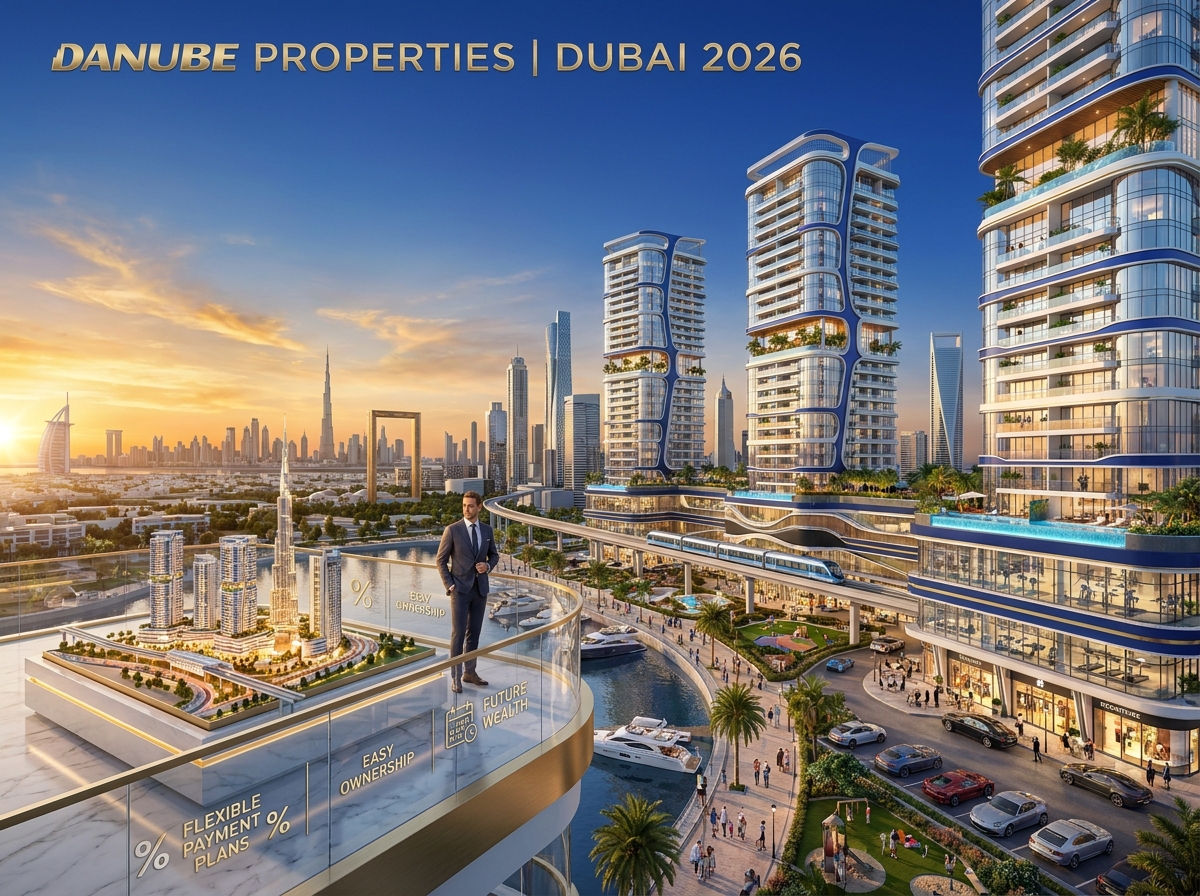
Off Plan Property by Danube | 1% Payment Plan & All Projects Dubai 2026
Off Plan Property by Danube | 1% Payment Plan & All Projects Dubai 2026 Home › Blogs › Off Plan Property by Danube Danube Properties · Dubai Off-Plan Guide 2026 From AED 650k entries to Bayz 101 — off plan property by Danube, decoded. The pioneer of the 1% payment plan. Explore every live Danube project, high-ROI furnished apartments, prices, and UAE Golden Visa eligibility. Bayz 101 · 101 Floors · One of Dubai’s Tallest By First Stone Real Estate · Danube Off-Plan Specialists · Updated 2026 1993Danube Group Founded 1%Monthly Payment Plan Pioneer 150+Global Awards Won 7-10%Average Net Rental Yields The Short Version Off plan property by Danube means investing in Dubai’s “Yield King.” Famous for introducing the highly accessible 1% monthly payment plan, Danube Properties builds affordable luxury towers in high-demand zones like Business Bay, JLT, and JVC. With recent iconic launches like Bayz 101 and Diamondz, and luxury furnishings by Aston Martin, Danube offers massive capital appreciation and immediate secondary market liquidity. All projects are freehold with UAE Golden Visa eligibility. What is off plan property by Danube? Why Danube: The 1% Plan & High ROI The Iconic Towers (Bayz 101 & Diamondz) Every Live Danube Project (Directory) Danube Price Ladder Freehold, Tax & The Golden Visa How to buy, step by step Frequently asked questions What is off plan property by Danube? Off plan property by Danube allows you to purchase a luxury home or investment unit directly from the developer before construction is completed, paying in small, manageable instalments. Unlike developers that focus strictly on ultra-high-net-worth trophy assets, Danube focuses on the smart investor. By providing luxury amenities (swimming pools, gyms, wellness centers) at highly accessible price points, Danube properties attract massive tenant pools. Your funds are heavily regulated and protected in a Dubai Land Department escrow account until the project is handed over. Why Danube: The 1% Plan & High ROI Search engines and smart investors continuously favor Danube for a few core economic reasons that outpace other developers in the mid-luxury market: The 1% Payment Plan: This is Danube’s masterstroke. After a standard down payment (usually 20%), you simply pay 1% per month for the duration of construction (and sometimes extending post-handover). It eliminates the need for massive bank mortgages. Fully Furnished Apartments: Danube frequently offers units fully furnished. They partner with global interior brands like Aston Martin and Tonino Lamborghini Casa, meaning zero fit-out costs and immediate rental readiness on day one. The “Yield King”: Because the entry price is relatively low (from AED 650k) but the amenities are luxury, landlords routinely command 7% to 10% net rental yields in areas like JVC and Arjan. On-Time Delivery Track Record: Danube is famous in the Dubai market for its rapid construction cycles and aggressive on-time handovers. The Iconic Towers While Danube is known for affordable luxury, they have recently entered the skyline-dominating iconic tier. These are their flagship assets. 101 Floors · Skyline GiantBayz 101Business Bay · One of the tallest towers in Dubai · Panoramic Burj Khalifa Views · 40+ Amenities AED 1.2MStarting Aston Martin Furnished · WaterfrontOceanz by DanubeDubai Maritime City · 360-degree ocean views · Interiors inspired by Aston Martin · Infinity pools AED 1.1MStarting Ultimate Luxury · JLTDiamondz by DanubeJumeirah Lake Towers (JLT) · Fully furnished luxury apartments · Direct metro access AED 1.25MStarting Inventory in Bayz 101 and Diamondz moves extremely fast — enquire for current live availability. Every Danube off plan project (2026 Directory) Danube’s portfolio is incredibly active. We have categorized their high-performing off-plan developments across Dubai. Prices are starting figures and move with market availability. Premium Towers Lifestyle & Community (JVC / Arjan) Sports & Wellness Bayz 101Business Bay · 101-storey iconic megatowerAED 1,200,000 DiamondzJumeirah Lake Towers (JLT) · Fully furnished premium livingAED 1,250,000 Oceanz & ViewzMaritime City & JLT · Aston Martin interiorsAED 1,100,000 Fashionz by DanubeJumeirah Village Triangle (JVT) · FashionTV BrandedAED 850,000 EleganzJumeirah Village Circle (JVC) · Ready-to-move-in luxuryAED 900,000 Elitz (1, 2 & 3)JVC · High ROI multi-tower complexesAED 650,000 Sportz by DanubeDubai Sports City · Olympic-size amenities & active livingAED 650,000 See every live unit on our Danube Properties developer page. Danube price ladder Off plan property by Danube is engineered to be accessible, running from AED 650,000 to AED 3 million+. The full ladder, cheapest entry first: Project Area Starting From Sportz / Elitz Sports City / JVC AED 650,000 Fashionz JVT AED 850,000 Eleganz JVC AED 900,000 Viewz JLT AED 1,050,000 Oceanz Dubai Maritime City AED 1,100,000 Bayz 101 Business Bay AED 1,200,000 Diamondz JLT AED 1,250,000 Off plan property, freehold & the UAE Golden Visa All Danube off-plan projects are located in Dubai’s freehold zones, meaning 100% foreign ownership is guaranteed. Full Freehold: You possess the absolute right to sell, rent, or pass the property to your heirs. Documentation can be managed globally. UAE Golden Visa (AED 2M): If your property purchase (or combined purchases) totals AED 2 million or more, you immediately qualify for a 10-year renewable UAE Golden Visa, sponsoring your entire family. Tax-Free Returns: Investors enjoy 0% income tax on rental yields and 0% capital gains tax upon resale. How to buy off plan property by Danube: step by step 1. Register Early: Danube units (especially studios and 1-beds) sell out fast due to the 1% plan. Register your Expression of Interest (EOI) prior to official launch. 2. Pay the Deposit: Secure your unit with a down payment (usually 10% to 20% + 4% Dubai Land Department fee). 3. Sign the SPA: Execute the Sale & Purchase Agreement. Funds are locked securely in the government RERA escrow account. 4. 1% Monthly: Follow the automated 1% monthly payment plan via bank transfer or post-dated cheques from anywhere in the world. 5. Handover: Collect keys. Use our property management team to place a tenant immediately to start generating your 8-10% ROI. Our team handles the A-to-Z process. Get in touch to secure your VIP allocation, or calculate your returns with our mortgage calculator. Frequently asked
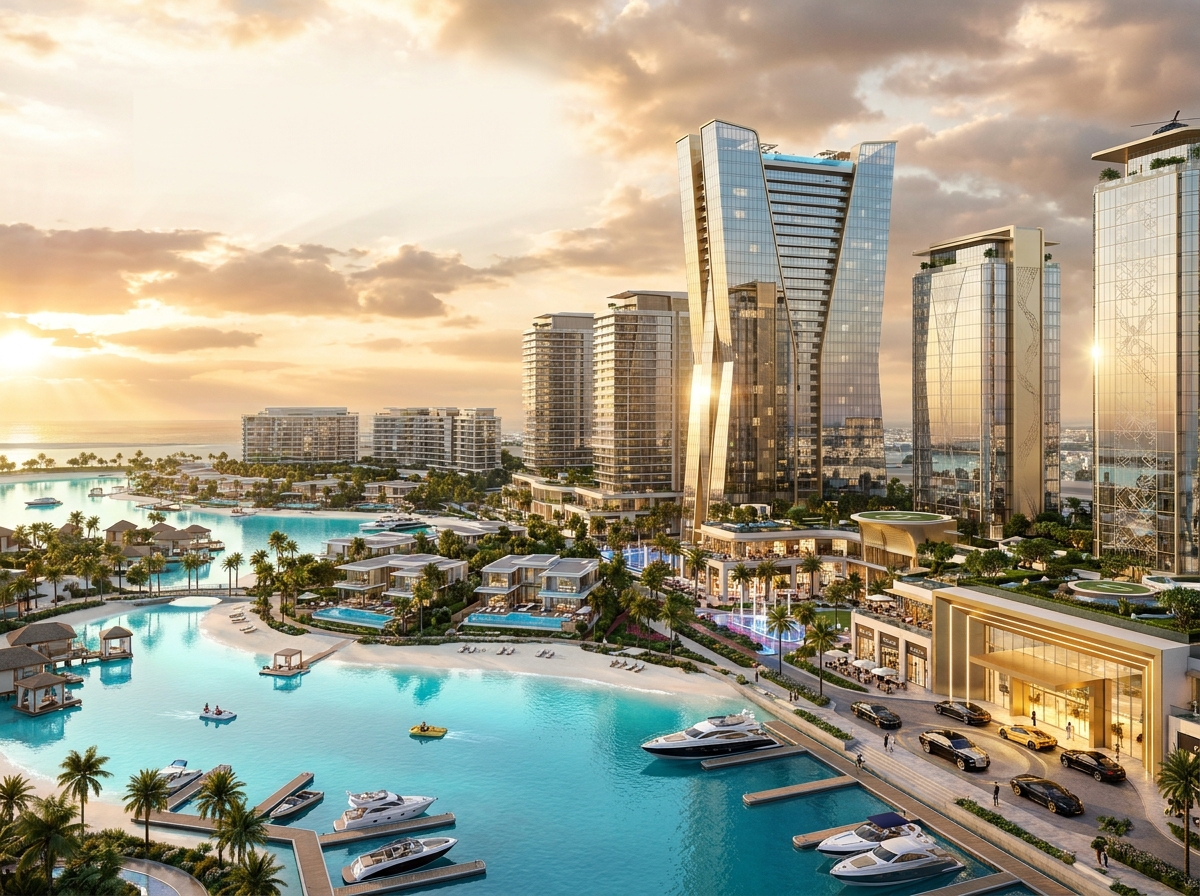
Off Plan Property by DAMAC | Cavalli, Lagoons & All Projects Dubai 2026
Off Plan Property by DAMAC | Cavalli, Lagoons & All Projects Dubai 2026 Home › Blogs › Off Plan Property by DAMAC DAMAC Properties · Dubai Off-Plan Guide 2026 From the famous 1% payment plan to ultra-luxury branded towers — off plan property by DAMAC, decoded. Cavalli, de GRISOGONO, DAMAC Lagoons master communities and high-ROI entry points. Explore every live DAMAC project with prices, payment plans, and Golden Visa eligibility. Cavalli Tower · Dubai Marina · World’s 1st Cavalli Residences By First Stone Real Estate · DAMAC Off-Plan Specialists · Updated 2026 2002Founded by Hussain Sajwani 46K+Homes successfully delivered 1%Monthly payment plan pioneer 33K+Off-plan units in progress The Short Version Off plan property by DAMAC means investing in the UAE’s most forward-thinking developer before completion, utilizing their famous 1% monthly payment plan. DAMAC dominates two critical sectors: ultra-luxury branded residences (Cavalli, de GRISOGONO, Versace) and massive resort-style master communities (DAMAC Lagoons, Riverside, Sun City). With entry points starting around AED 550,000, DAMAC offers full freehold ownership, massive capital appreciation, and immediate access to the UAE Golden Visa. What is off plan property by DAMAC? Why DAMAC: The 1% Plan & Brand Power The Branded Residences (Cavalli & Safa) Every Live DAMAC Project (Directory) The DAMAC Price Ladder Freehold, Tax & The Golden Visa How to buy off plan step-by-step Frequently asked questions (AEO) What is off plan property by DAMAC? Off plan property by DAMAC involves purchasing a high-end home or investment unit directly from the developer before construction is completed, paying in structured stages. Founded in 2002, DAMAC Properties has radically reshaped the Dubai skyline, becoming synonymous with opulent design, massive water-themed master communities, and investor-friendly financial structures. Securing a DAMAC off-plan unit means locking in a premium real estate asset at its lowest possible launch price. Your funds are heavily regulated and protected in a Dubai RERA escrow account, ensuring zero risk until the project is handed over. Why DAMAC: The 1% Plan & Brand Power DAMAC isn’t just a developer; they are an economic powerhouse. They have cultivated an ecosystem that caters equally to high-net-worth end-users and aggressive ROI-focused investors. The 1% Payment Plan: DAMAC changed the Dubai market by introducing the 1% monthly plan. You typically pay a 20% down payment, and then manage cash flow with low 1% monthly instalments during construction. Monopoly on High Fashion: DAMAC leads the world in fashion co-branding, partnering with Roberto Cavalli, de GRISOGONO, and Zuhair Murad to create architectural masterpieces that command massive resale premiums. Master Community Kings: Beyond towers, DAMAC builds cities. DAMAC Lagoons and DAMAC Riverside offer massive swimmable crystal lagoons, artificial beaches, and holistic wellness centers. Proven Track Record: With over 46,000 units delivered, DAMAC’s history of quality handovers across Dubai Marina, Business Bay, and Dubailand is undisputed. The Branded Residences Collection DAMAC’s branded portfolio is the ultimate flex. These are architectural trophies designed for the global elite, commanding the highest rental yields and capital gains in Dubai. Cavalli · Global IconCavalli TowerDubai Marina · 70 storeys · Private pools · Malibu Bay beach · Unobstructed Palm Jumeirah views AED 18M+Starting (Penthouses) de GRISOGONO · Twin JewelSafa TwoSheikh Zayed Road · Fog forest · Glass slide · Ruby heart aesthetic · Edge-walk experience AED 2.2MStarting Cavalli Maritime · Seafront LuxuryDAMAC Bay by CavalliDubai Harbour · 3 towers connected by a sky bridge · Cavalli museum · Jungle oasis pools AED 2.9MStarting Inventory for branded towers fluctuates rapidly — enquire for current live availability and floor plans. Every DAMAC off plan project (2026) DAMAC’s portfolio caters to three distinct investor profiles: ultra-luxury branded buyers, family-focused community buyers, and pure ROI investors seeking affordable entry points. (Prices are starting figures; confirm live pricing prior to booking). Master Communities Branded Towers High ROI / Value DAMAC LagoonsDubailand · Mediterranean-themed clusters & swimmable lagoonsAED 2,800,000 DAMAC RiversideDubai Investments Park · Wellness & culinary waterfront townhousesAED 2,400,000 DAMAC Sun CityDubailand · Nature-driven wellness, outdoor saunas & ice bathsAED 2,250,000 Cavalli TowerDubai Marina · Ultra-luxury by Roberto CavalliAED 18,000,000 Safa Two by de GRISOGONOSheikh Zayed Road · Sapphire & Ruby architectural marvelsAED 2,200,000 Canal Crown by de GRISOGONOBusiness Bay · Direct Dubai Water Canal viewsAED 1,120,000 Elo at DAMAC Hills 2DAMAC Hills 2 · Entry-level high-yield apartmentsAED 550,000 Violet TownhousesDAMAC Hills 2 · High capital appreciation potentialAED 1,200,000 VoltaSheikh Zayed Road · Fitness & well-being focused high-riseAED 1,670,000 Explore the full directory on our DAMAC Properties developer page. DAMAC price ladder Off plan property by DAMAC scales from highly accessible AED 550,000 units up to AED 18 million+ penthouses. The full strategic ladder: Project Area / Type From Elo DAMAC Hills 2 (Apartments) AED 550,000 Canal Crown Business Bay (Branded) AED 1,120,000 Altitude Business Bay (Branded) AED 1,180,000 Violet DAMAC Hills 2 (Townhouses) AED 1,200,000 Safa Two Sheikh Zayed Road (Branded) AED 2,200,000 DAMAC Sun City Dubailand (Townhouses) AED 2,250,000 DAMAC Lagoons Dubailand (Villas & Townhouses) AED 2,800,000 Cavalli Tower Dubai Marina (Ultra-Luxury) AED 18,000,000+ Off plan property, freehold & the UAE Golden Visa Every DAMAC project is situated in a designated Dubai freehold zone, open to all global investors. Buying with DAMAC unlocks the city’s most lucrative tax and residency benefits. 100% Freehold Ownership: Absolute rights to sell on the secondary market, rent out long/short term, or transfer inheritance without restrictions. The UAE Golden Visa: Acquiring a DAMAC property valued at AED 2,000,000 or above automatically qualifies you, your spouse, and dependents for the 10-year Golden Visa. (This can be a single unit like Safa Two, or combined smaller units). Zero Tax Ecosystem: Investors enjoy 0% property tax, 0% capital gains tax, and 0% tax on rental income. High Liquidity: Because of the brand weight (Cavalli, Lagoons), flipping an off-plan DAMAC unit before handover is a highly active and profitable secondary market strategy. How to buy off plan property by DAMAC: Step by Step 1. Strategic Selection: Decide between a 1% payment plan cash-flow play (e.g., Elo), a community townhouse (Lagoons), or a branded trophy asset (Cavalli). 2. EOI (Expression
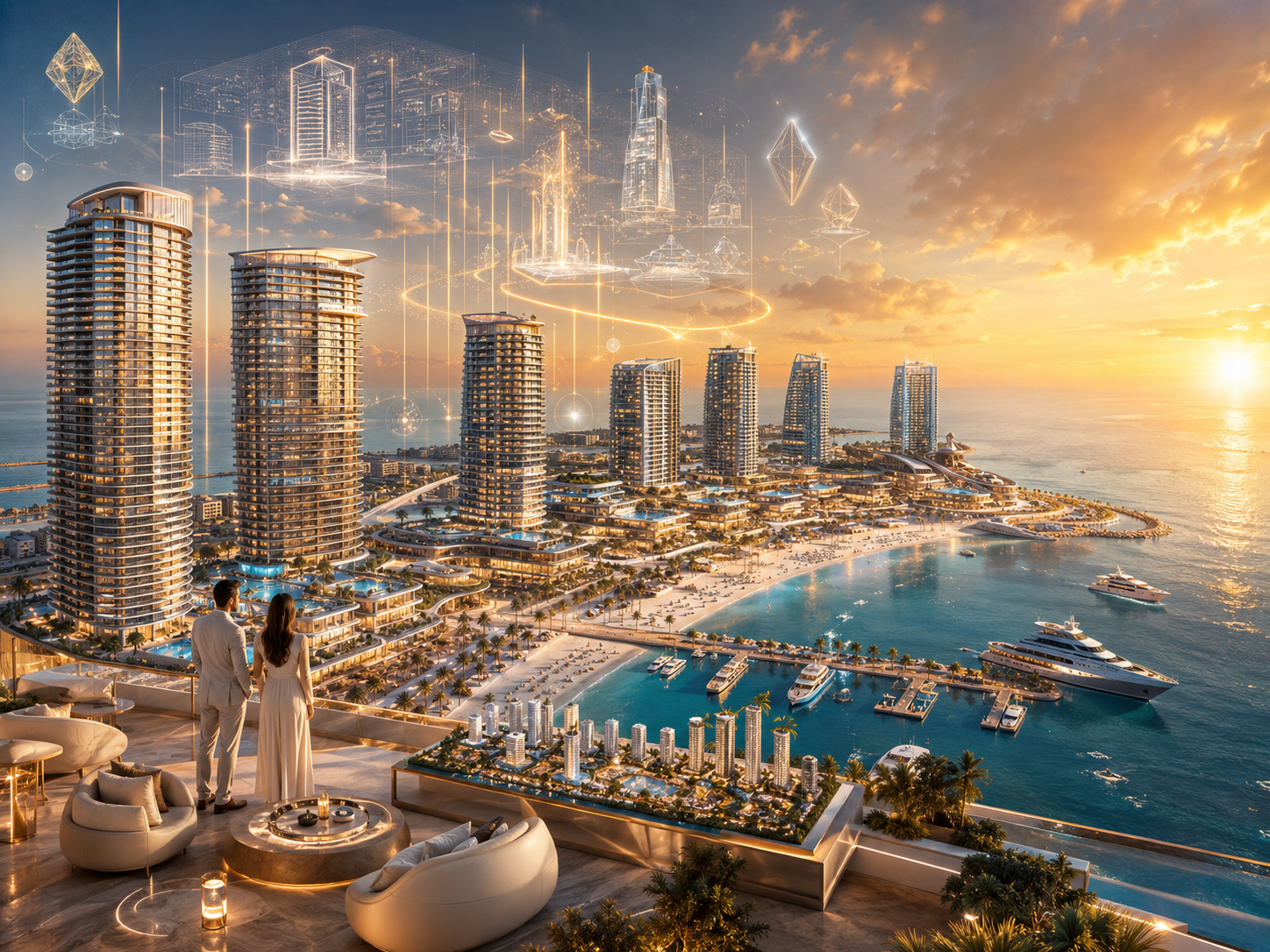
Off Plan Property by BNW Developments: Al Marjan Island Projects (2026)
Off Plan Property by BNW Developments | Al Marjan Island Projects 2026 Home / Blogs / Off Plan Property by BNW BNW Developments · Al Marjan Island 2026 Ras Al Khaimah’s fastest-rising luxury developer — off plan property by BNW on Al Marjan Island, minutes from the Wynn resort. Water-inspired Aqua residences and the UAE’s first Taj-branded homes, on the emirate’s most exciting beachfront island. Every BNW project, with prices, payment plans, yields and Golden Visa eligibility. By First Stone Real Estate · Al Marjan Island Specialists · Updated June 2026 · 9 min read RAK’s #1Largest private developer AED 15BAssets under management 7–9%Rental yields 2027Wynn casino opens nearby Quick Answer Off plan property by BNW Developments means buying directly from BNW — a fast-rising, 2024-founded luxury developer — before completion, in instalments. BNW is now Ras Al Khaimah’s largest private developer, focused on Al Marjan Island: water-inspired residences Aqua Arc and Aqua Maya, plus the UAE’s first Taj-branded homes. Prices start from AED 1.78M, with 7–9% yields, all freehold and Golden Visa-eligible above AED 2 million. On This Page What is off plan property by BNW? Why BNW & Al Marjan Island Every BNW project BNW prices The BNW growth story The Wynn effect Freehold, Golden Visa & tax Frequently asked questions What is off plan property by BNW? Off plan property by BNW Developments is a home you buy from BNW before construction is finished, paying in stages tied to build milestones or handover. BNW is a luxury developer founded in 2024 by chairman Ankur Aggarwal and managing director Dr. Vivek Anand Oberoi, specialising in beachfront and branded residences on Al Marjan Island. Buying off plan with BNW means securing a waterfront — often brand-name — home at launch pricing in a fast-appreciating market, with funds protected in escrow until handover. Why BNW & Al Marjan Island BNW pairs a remarkable growth trajectory with a single, high-conviction location — the UAE’s most talked-about emerging island. RAK’s largest private developer: around AED 15 billion in assets under management and 12 new projects planned for 2026 — built in just over a year. One focused island: Al Marjan Island, a beachfront destination minutes from the upcoming Wynn resort, with 32 Michelin-star restaurants planned across the island. Branded pedigree: the UAE’s first Taj Hotels branded residence, plus collaborations including FashionTV and Tonino Lamborghini. Strong income: 7–9% long-term yields and 10–12% short-term (holiday) yields on a high-demand island. Every BNW off plan project BNW’s Al Marjan portfolio splits into its water-inspired Aqua collection and its branded residences. Each entry links to its full page. Prices are starting figures and move with availability — confirm live pricing before reserving. Aqua Collection Branded Residences Aqua ArcAl Marjan Island · overlooking Wynn From AED 2,240,000 A water-inspired architectural landmark of 226 homes — apartments and townhouses — about 5 minutes from the Wynn resort. Award-winning design and one of the island’s most-watched launches. 226 homesApartments & townhousesHandover Q2 20277–8% long · 10–12% short yield Aqua MayaAl Marjan Island · boutique waterfront From AED 1,780,000 A boutique, low-rise waterfront community offering soulful coastal living with permanent sea-view scarcity — BNW’s most accessible entry point. 1–4 bed + retailBoutique low-riseHandover Q1 20287–9% yield First Taj-branded residence in the UAE Taj Wellington MewsAl Marjan Island · 1.5km from Wynn From AED 2,700,000 Two interconnected curved towers carrying the 150-year-old Taj (IHCL) brand’s first UAE residence — five-star service delivered as a lifestyle. Branded residences command a 25–40% rental premium. 336 unitsStudios & 1–3 bed10% down paymentScore 82/100 BNW’s wider branded & waterfront pipeline on Al Marjan also includes FashionTV Acacia, Tonino Lamborghini Residences, Pelagia, Aquino and La Perla — with 12 new launches planned for 2026. Ask us for the latest releases. See every live unit on our BNW developer page and across all UAE communities. How much does off plan property by BNW cost? Off plan property by BNW starts from around AED 1.78 million and rises with branding and unit size. The current range: Project Type From Aqua Maya Boutique waterfront AED 1,780,000 Aqua Arc Apartments & townhouses AED 2,240,000 Taj Wellington Mews Taj-branded residences AED 2,700,000 The BNW growth story Few developers have scaled this fast. BNW went from consultancy to RAK’s largest private developer in barely two years: 2024BNW Developments founded by Ankur Aggarwal (chairman) and Dr. Vivek Anand Oberoi (MD), transitioning from consultancy to developer. 2024–25Launches Aqua Arc and partners with IHCL for the UAE’s first Taj Wellington Mews branded residence. 2025Portfolio reaches ~AED 15 billion AUM; becomes RAK’s largest private developer. 202612 new projects planned across Al Marjan beach and RAK Central — over 10 million sq ft, targeting international buyers. 2027Aqua Arc handover aligns with the opening of Wynn Al Marjan Island — the UAE’s first casino resort. The Wynn effect on Al Marjan Island BNW’s biggest tailwind is its location beside Wynn Al Marjan Island — the UAE’s first casino resort, opening in 2027. The island’s market has already transformed: Price surge: Al Marjan land values have risen sharply since the Wynn announcement, with prime waterfront forecast to keep climbing in 2026. Proximity premium: Aqua Arc is ~5 minutes from Wynn; Taj Wellington Mews is ~1.5km — prime positions for short-term rental demand. Tourism wave: RAK is targeting millions of additional annual visitors and a cluster of global hospitality brands on the island. Branded premium: BNW’s Taj and fashion-brand residences command a structural 25–40% rental premium over non-branded stock. Off plan property, freehold & the UAE Golden Visa BNW’s projects are freehold and open to all nationalities, and any home worth AED 2 million or more qualifies for a 10-year UAE Golden Visa. Full freehold: the right to sell, rent, mortgage and transfer — for all nationalities in Ras Al Khaimah. AED 2M Golden Visa: a 10-year renewable visa covering you, your spouse and dependents — met by Aqua Arc and Taj Wellington Mews. Zero tax: no annual property tax, no capital gains tax, no rental income tax. Flexible