Dubai has become one of the most searched property markets in the world. It has also become one of the most misunderstood. Between tax-free headlines, Golden Visa buzz, and off-plan payment plans, first-time buyers are often left with more questions than answers
To give you complete clarity, our property specialists have compiled and answered the 20 most asked questions about Dubai real estate in this definitive Dubai property investment guide.
Legal Ownership & Eligibility for Foreign Buyers
1. Can foreigners and non-residents buy property in Dubai?
Yes. Foreigners and non-residents can buy full freehold property in Dubai. No UAE residency, local sponsor, or trade license is required. Owners hold complete legal rights to sell, lease, or pass the property to their heirs.
Foreign ownership rights are governed by Law No. 7 of 2006. Under this landmark legislation, non-UAE nationals can acquire property across designated freehold areas.
These areas include Dubai's most desirable master communities, such as:
- Downtown Dubai and Business Bay
- Dubai Marina, Jumeirah Beach Residence (JBR), and Dubai Islands
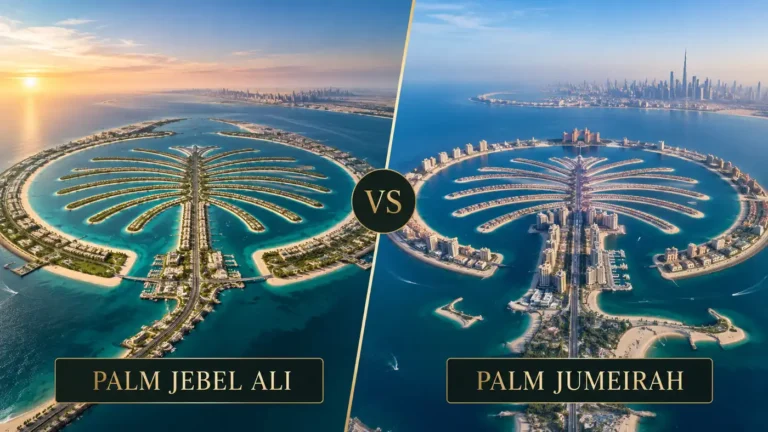
- Palm Jumeirah and Emaar Beachfront
- Dubai Hills Estate, The Valley, and Emaar South
- Jumeirah Village Circle (JVC) and Arjan
If you are foreigners buying property in Dubai, you only need a valid international passport to complete a transaction.
2. What is the difference between freehold and leasehold property in Dubai?
Freehold ownership is permanent and includes the land itself. Leasehold grants the right to use a property for a fixed term, usually up to 99 years, while the land stays with the original owner. Foreign buyers are limited to freehold in most designated zones.
| Feature | Freehold Property | Leasehold Property |
|---|---|---|
| Duration | Permanent | Fixed term, often 30 to 99 years |
| Land ownership | Buyer owns the land | Land stays with the master landlord |
| Right to resell | Full freedom to sell or gift | Subject to lease terms and landlord approval |
| Golden Visa eligibility | Fully eligible | Usually not eligible |
| Common areas | Dubai Marina, Downtown, Palm Jumeirah | Deira, Bur Dubai, older sub-communities |
3. Is buying property in Dubai safe for international investors?
Yes. Dubai's property market runs under strict oversight from the Dubai Land Department and the Real Estate Regulatory Agency, known as RERA. Escrow rules, digital title records, and licensed agents all work together to protect buyers.
- Every broker and agent must hold a valid RERA license
- Off-plan buyer funds are deposited in project-specific escrow accounts, released only against verified construction progress
- Title deeds and Oqood registrations are managed digitally through the Dubai REST app
- Disputes can be raised through dedicated real estate courts and settlement centers
- Two decades of steady transaction growth support the market's stability
4. What is RERA, and how does it protect property buyers?
RERA is the regulatory arm of the Dubai Land Department. It sets industry rules, licenses real estate professionals, audits developer escrow accounts, and protects buyers, sellers, and tenants.
- Auditing Project Construction: RERA engineers physically inspect development sites before authorizing developer payment releases.
- Regulating Rental Increases: The official RERA Smart Rental Calculator prevents landlords from imposing arbitrary rent hikes.
- Managing the Dubai REST App: RERA maintains the government's official application, where buyers can track off-plan project progress, verify developer escrow accounts, and authenticate title deeds in real time.
Visas, Mortgages, and Tax Regulations
5. Is real estate in Dubai really 100% tax-free?
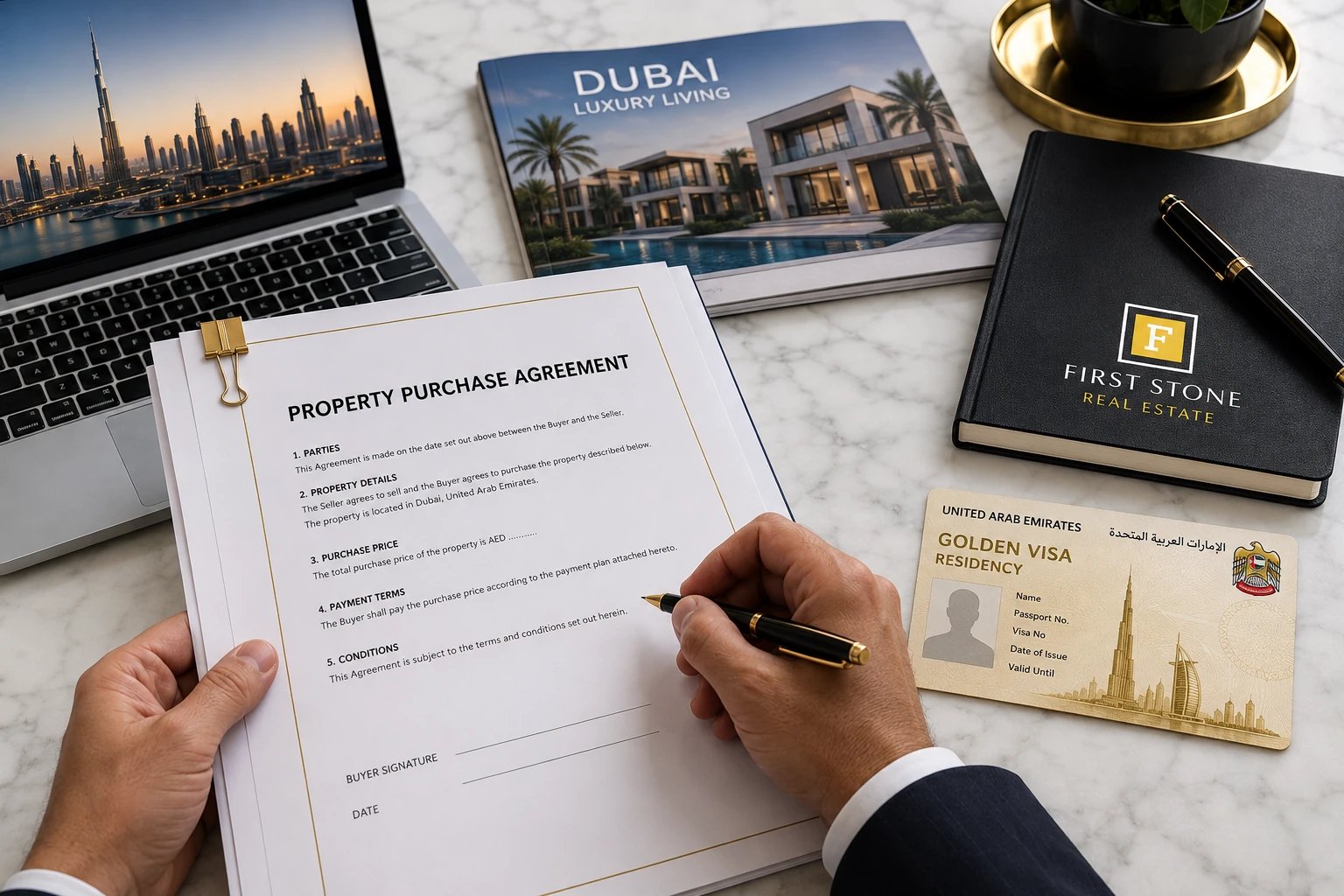
Largely, yes. Dubai charges 0% annual property tax, 0% capital gains tax, and 0% personal income tax on rental earnings. Buyers instead pay a one time 4% transfer fee to the Dubai Land Department at purchase, and a 5% VAT applies only to commercial property.
- Residential resale profits and rental income are not taxed
- Commercial units carry 5% VAT, residential units do not
- A municipal housing fee, roughly 5% of annual rent, is billed to tenants through the DEWA utility account, not to owners
- 9% Federal corporate tax applies to business profits, not to personal property income
- The one-time DLD fee effectively stands in for the recurring taxes charged in many other markets
6. How much property investment is needed for a 10-year UAE Golden Visa?
A minimum registered property value of AED 2,000,000, close to 545,000 US dollars, qualifies an investor for the 10-year Golden Visa. A newer AED 750,000 threshold, introduced in 2026, opens a shorter 2-year residency route.
Key details regarding the Dubai Golden Visa property investment track include:
- Combined Property Value: You can combine multiple properties (e.g., two apartments worth AED 1,000,000 each) to meet the AED 2,000,000 threshold.
- Mortgaged Properties: You can obtain a Golden Visa on a mortgaged home, provided the total purchase price meets or exceeds AED 2,000,000 and bank confirmation is submitted.
- Family Sponsorship: The 10-year visa allows you to sponsor your spouse, children of any age, and domestic staff without needing a local employment sponsor.
- No Stay Requirement: Unlike standard residency permits, you do not need to enter the UAE every 6 months to maintain your Golden Visa validity.
7. Can non-residents and foreigners get a mortgage in Dubai?
Yes, international buyers and non-resident investors can secure a property mortgage from UAE banks to purchase ready real estate in Dubai. Non-residents typically qualify for financing of up to 50% of the property value, with repayment tenors spanning up to 25 years.
To apply for a non-resident mortgage in the UAE, banks generally require:
- Valid passport copies and proof of foreign residency.
- Six months of certified personal and business bank statements.
- Proof of income (salary certificates, audited company financials, or tax returns from your country of origin).
- Credit bureau reports from your home country.
Interest rates can be fixed for an initial period (usually 1 to 5 years) before converting to a variable rate pegged to the UAE EIBOR (Emirates Interbank Offered Rate).
8. What is the minimum down payment required for Dubai property?
UAE residents typically pay 20% down on a first ready property under AED 5 million. Non-residents typically pay 50%. Off-plan buyers often start with a 10 to 20% booking installment.
| Buyer Type | Property | Typical Down Payment |
|---|---|---|
| UAE resident | Ready home under AED 5 million | 20% |
| UAE resident | Ready home over AED 5 million | 30% |
| Non-resident or foreigner | Ready home | 50% |
| Any buyer | Off plan property | 10% to 20% booking fee |
When financing a ready home, remember to account for additional upfront purchase costs in addition to your cash down payment.
Hidden Fees, Buying Steps, and Timelines
9. What are the total extra costs when buying property in Dubai?
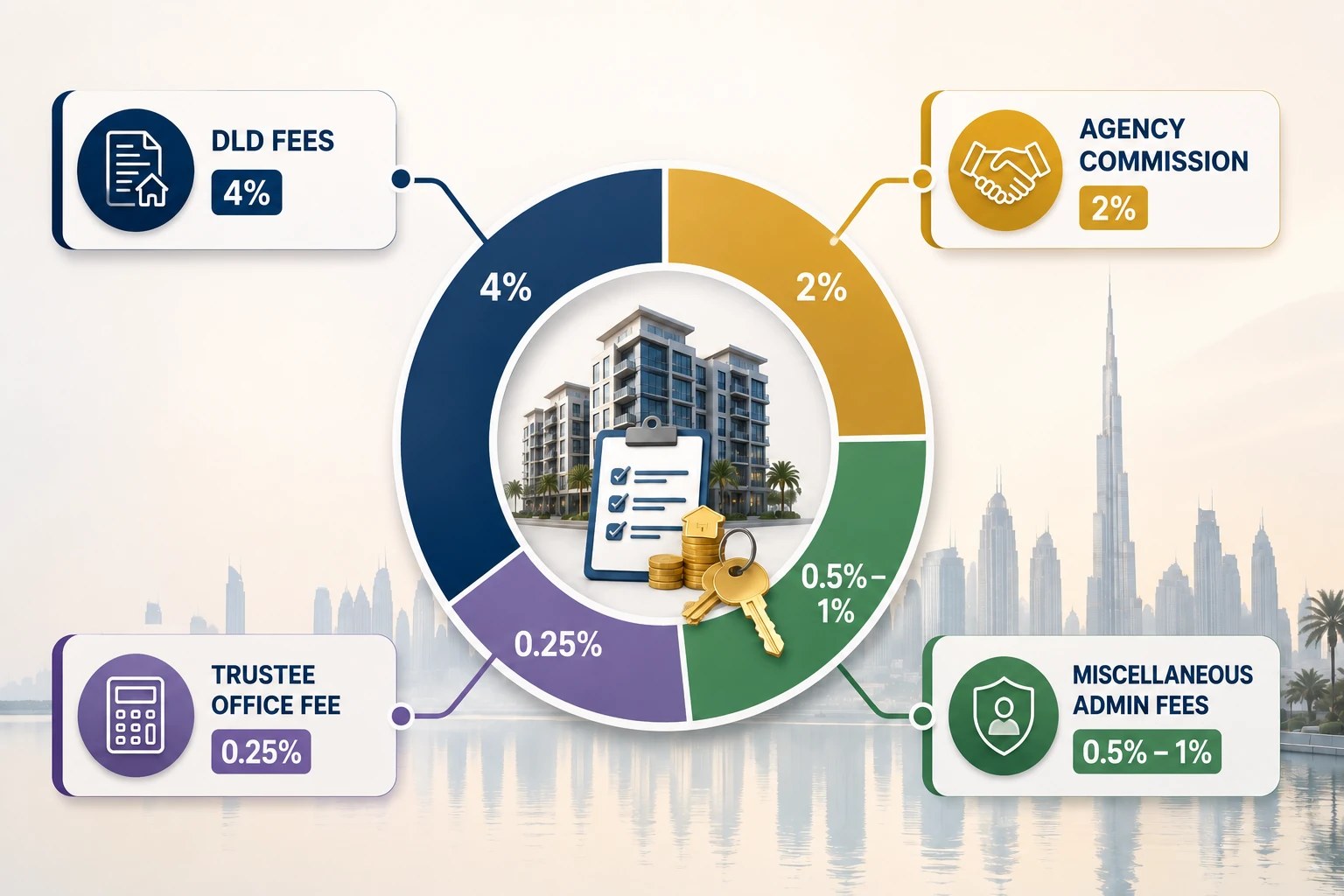
On top of the agreed property purchase price, buyers should budget an additional 6% to 8% to cover closing costs, government registration fees, and professional service charges.
To avoid surprises, here is the complete breakdown of the total costs of buying property in Dubai:
- Dubai Land Department (DLD) Transfer Fee: 4% of the property price + AED 580 administrative fee.
- Property Registration Trustee Fee: AED 4,000 (+ 5% VAT) for properties valued above AED 500,000 (or AED 2,000 for properties below AED 500,000).
- Real Estate Brokerage Fee: Standard 2% of the purchase price (+ 5% VAT) for ready properties. (0% for primary off-plan properties).
- Developer No Objection Certificate (NOC): AED 500 to AED 5,000 (+ VAT), payable to the developer for ready property resales.
- Mortgage Registration Fee (if applicable): 0.25% of the total loan amount + AED 290 administrative fee.
- Property Valuation Fee (if mortgaging): Approximately AED 2,500 to AED 3,500 (+ VAT).
10. How much is the Dubai Land Department fee, and who pays it?
The DLD transfer fee is 4% of the purchase price. By market convention, the buyer pays the full 4% DLD fee, although during select off-plan promotional campaigns, developers may offer partial or full DLD fee waivers (e.g., 50% or 100% covered) as an incentive.
The DLD transfer fee is a mandatory statutory levy that must be settled to issue the official ownership deed. For uncompleted projects under construction, this fee is paid at the time of initial contract signing to secure your Oqood registration.
11. What is the step-by-step process of buying property in Dubai?
The ready property buying process involves four straightforward stages: signing a memorandum of understanding (Form F), applying for a developer NOC, settling finance, and transferring the title deed at a DLD Trustee office.
Step 1: Sign the Unified Form F (MOU)
Once the price is negotiated, the buyer and seller sign Form F (MOU), which outlines all terms, financial timelines, and conditions of the transaction. The buyer provides a 10% security deposit cheque made out in the seller's name, held securely by the registered escrow broker.
Step 2: Obtain the Developer NOC
The seller applies for a No Objection Certificate (NOC) from the master developer (e.g., Emaar, Sobha, Nakheel). The developer issues this certificate after confirming that all historical service charges have been paid in full.
Step 3: Complete Transfer at the Registration Trustee
Both parties meet at an official DLD Registration Trustee office. The buyer brings manager's cheques for the remaining balance, the 4% DLD fee, and trustee administration charges.
Step 4: Issuance of the Title Deed
The trustee processes the digital transfer, releases payment to the seller, and immediately generates the official Title Deed in the buyer's name.
12. How long does the entire property buying process take?
A cash purchase of a ready property usually closes in 2 to 4 weeks. A mortgaged purchase usually takes 6 to 8 weeks. Off plan bookings can often be secured within a day or two.
- Cash deals move fastest, limited mainly by how quickly the developer issues the NOC
- Mortgage deals add time for bank valuation, approval, and offer letters
- Off plan Oqood registration is often completed the same day as booking
- Overseas buyers should allow extra time for document notarization and courier delivery
Off-Plan Investment, Escrow Security, and Handover
13. Is it better to buy off-plan or ready property in Dubai?
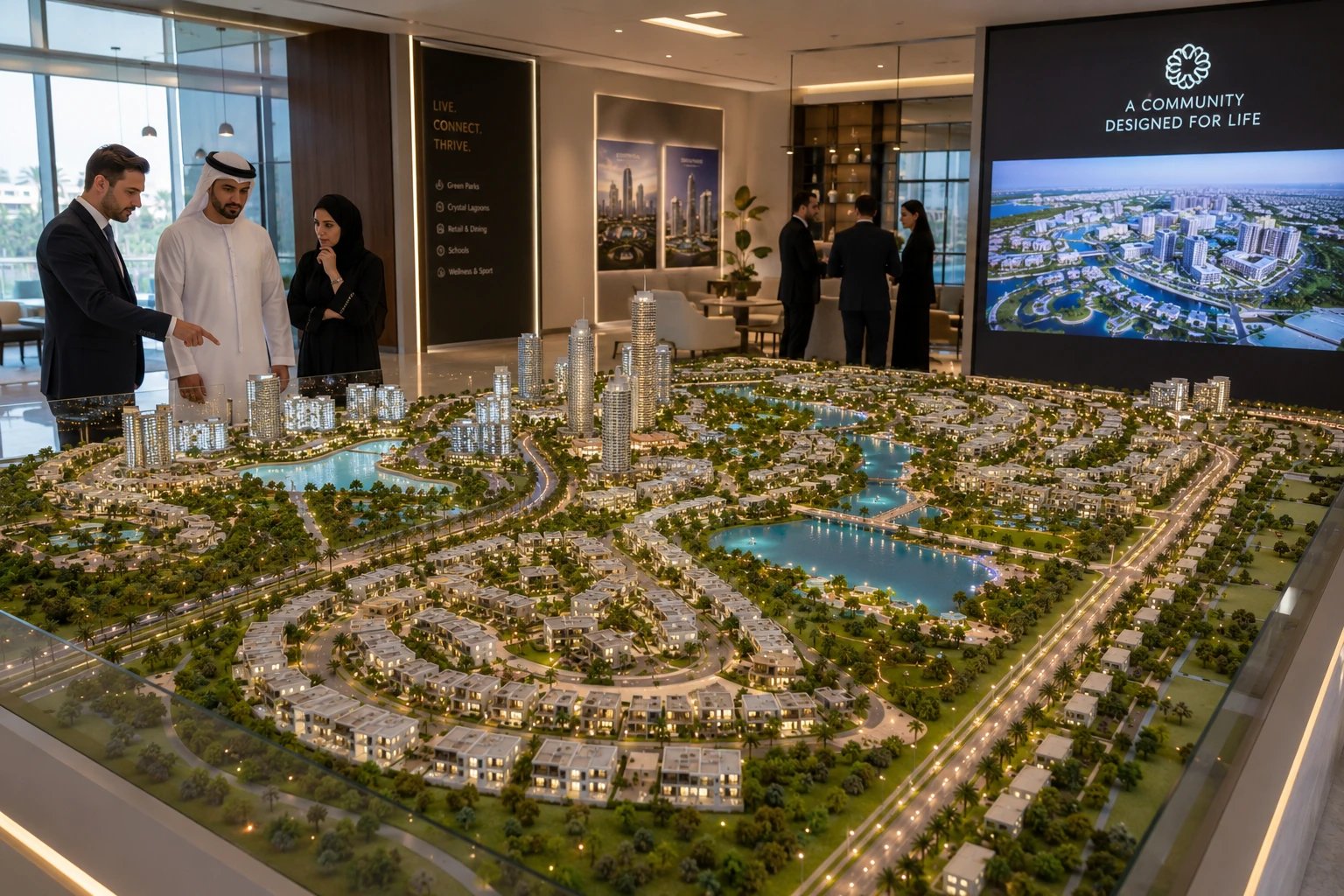
Choose off-plan property if you want lower introductory pricing, flexible multi-year payment plans, and high potential capital appreciation upon completion. Choose a ready property if you want immediate rental income, zero construction delay risk, or a home you can move into right away.
When comparing off plan vs ready property Dubai, consider your investment horizon:
| Factor | Off-Plan Property | Ready Property |
|---|---|---|
| Purchase price | Often discounted at launch | Reflects current market value |
| Cash flow | No rental income during construction | Immediate rental yield, roughly 6% to 9% |
| Payment structure | Staged payment plan to handover | Full payment or standard mortgage |
| Capital growth | Tied to construction milestones | Tied to broader market trends |
| Agency fees | Often 0% for the buyer | Standard 2% commission |
14. How are buyer payments protected in off-plan projects?
Buyer funds for off-plan properties are protected by UAE Federal Law No. 8 of 2007, which mandates that all buyer installments must be deposited directly into a designated, RERA-approved project Escrow Account. The developer can only withdraw these funds based on audited construction progress.
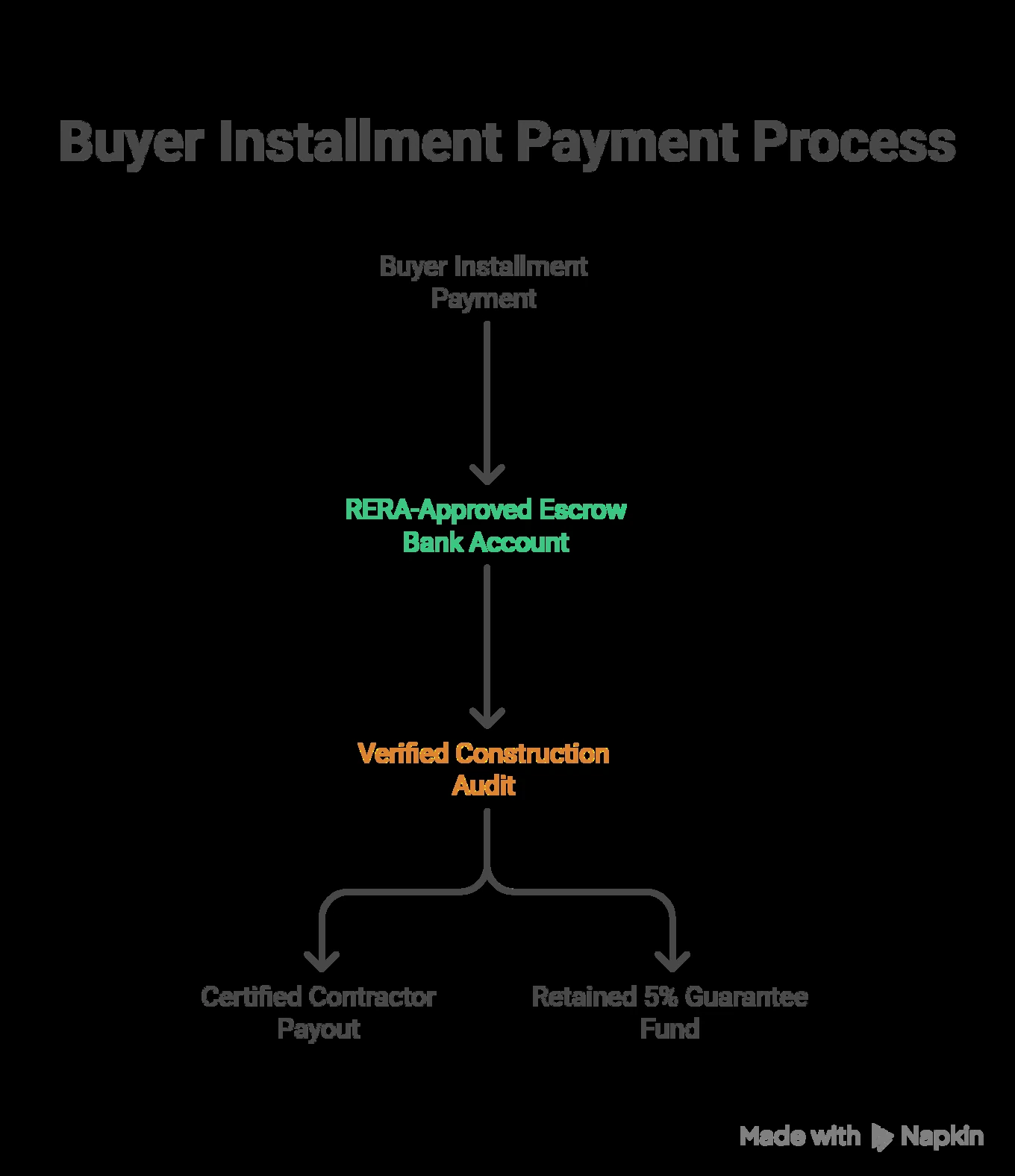
The escrow mechanism guarantees:
- No Fund Diversion: Developers cannot take your installment money and spend it on other land purchases or separate marketing campaigns.
- Engineering Audits: RERA-certified engineers must physically audit on-site foundation, structural, and finishing work before money is released to the builder.
- Retained Guarantee Sum: A minimum of 5% of the total project value is held back in escrow for one full year after project handover to cover any structural snagging obligations.
15. What happens if an off-plan developer delays handover?
Under standard RERA-compliant Sales and Purchase Agreements (SPAs), developers are permitted an industry-standard grace period of up to 12 months for construction delays. If delays extend past this period without legitimate force majeure causes, buyers can seek contractual remedies, payment deferrals, or formal contract cancellation through RERA and the Dubai Courts.
If you experience extended delays:
- Check the Dubai REST App: Verify the official construction progress percentage logged by RERA auditors.
- Review Your SPA Default Clauses: Examine the specific delay and compensation terms specified in your signed contract.
- Lodge an Official RERA Inquiry: Submit a formal query through the DLD's Real Estate Violation system if a developer halts construction without regulatory approval.
16. What is an Oqood, and how is it different from a title deed?
An Oqood is the interim registration of an off plan property with the Dubai Land Department during construction. It converts into a permanent title deed once the developer completes the handover.
- An Oqood confirms your legal interest in the unit and blocks the developer from reselling it
- A title deed is the final, transferable, mortgageable ownership document
- Some financing and services are unavailable until the upgrade to a full title deed
- Converting from Oqood to title deed carries a small fixed fee
- Always confirm current registration status through the DLD portal before a resale
Rental Yields, Service Charges, and Remote Management
17. What is the average rental yield (ROI) in Dubai?
Dubai delivers average gross rental yields ranging from 6% to 9% annually, significantly outperforming major global real estate capitals like London, New York, Hong Kong, and Paris (which typically average 3% to 4.5%).
Net yields in Dubai remain high because owners pay zero annual property income taxes. Your returns depend on property type and management strategy:
- Long-Term Leases (Standard 1-Year Contracts): Typically yield 6% to 8% gross returns with predictable, stable cash flows.
- Short-Term Holiday Homes (Airbnb / Serviced): Can yield 8% to 11% gross returns in prime tourist hubs (Downtown, Palm Jumeirah, Dubai Marina), though management fees and utility costs are higher.
18. Which areas in Dubai offer the highest rental ROI?
Emerging, mid-market communities such as JVC, Arjan, Dubai Silicon Oasis, and Al Furjan consistently deliver the strongest rental yields. Prime addresses trade lower yield for stronger long term appreciation.
| Community | Property Type | Typical Gross Yield | Main Appeal |
|---|---|---|---|
| Jumeirah Village Circle | Apartments | 7.5% to 9.0% | Strong tenant demand, good connectivity |
| Dubai Marina | Apartments | 6.5% to 7.8% | Waterfront appeal, high liquidity |
| Downtown Dubai | Apartments | 5.5% to 6.8% | Luxury profile, long term price stability |
| Dubai Hills Estate | Villas and apartments | 6.0% to 7.5% | Family community, strong capital growth |
| Arjan | Apartments | 8.0% to 9.5% | Lower entry price, active rental pool |
19. What are property service charges, and how are they calculated?
Service charges are recurring maintenance fees paid by property owners to cover the upkeep of common areas, elevators, swimming pools, security staff, landscaping, and building insurance. They are calculated on a fixed rate per square foot based on the official RERA Service Charge Index.
For example, if you own an 800 sq. ft. apartment in a building with a RERA service charge rate of AED 15 per sq. ft., your annual maintenance cost is AED 12,000.
You can verify the exact historical and approved service fees for any residential building using the Service Charge Index on the Dubai Land Department portal.
Tenants do not pay service charges; these fees are the sole responsibility of the property owner.
20. Can you manage and rent out a Dubai property from abroad?
Yes. Owners living overseas can lease a Dubai property fully remotely by appointing a RERA-licensed property management company. The company handles marketing, tenant screening, Ejari registration, rent collection, and maintenance.
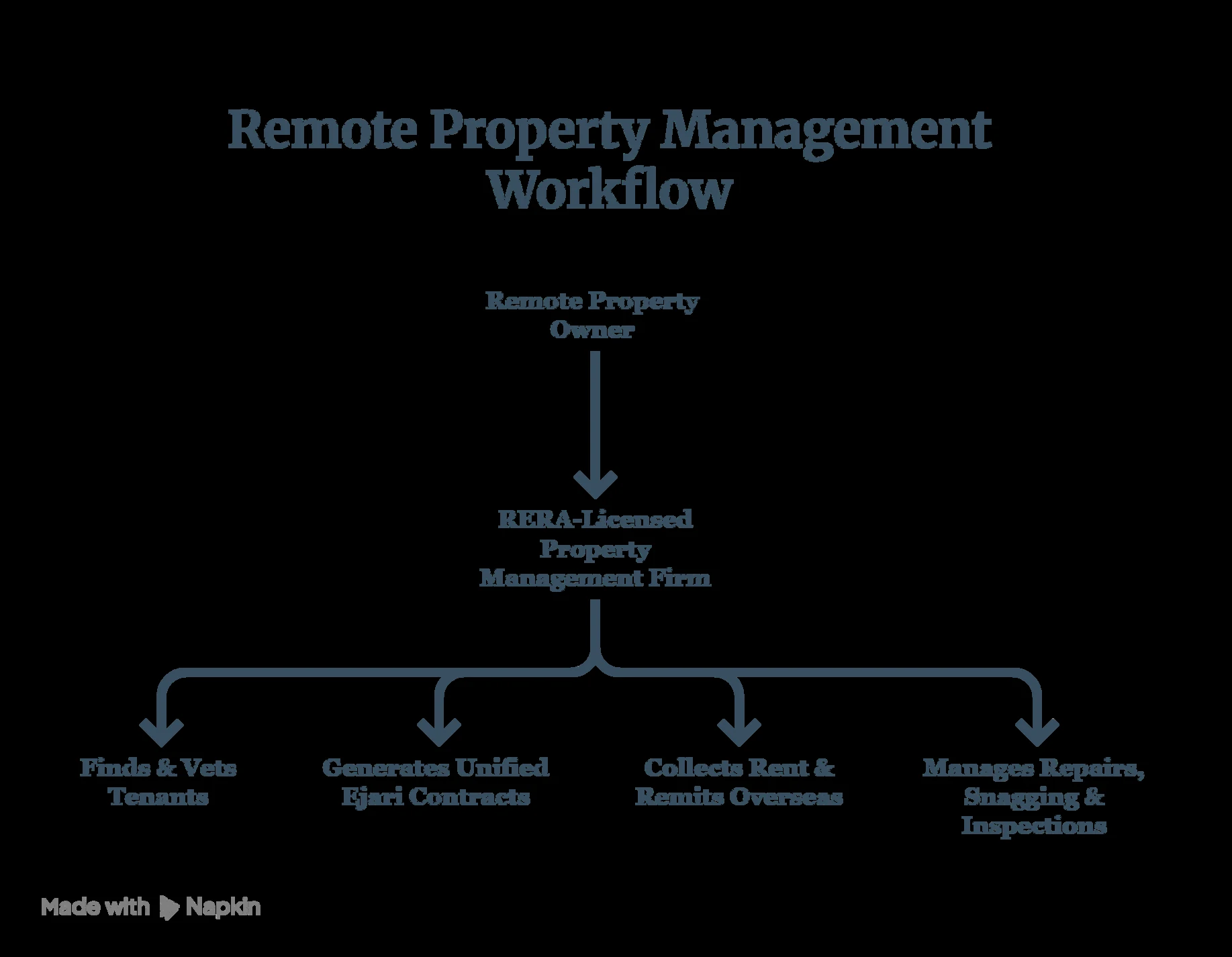
With Dubai's fully digital legal infrastructure:
- Tenancy contracts are registered online via the Ejari system.
- Utility activations (DEWA) and air conditioning setups (Empower / Tabreed) are completed remotely through digital portals.
- Landlords can sign official management authorizations digitally from anywhere in the world.
Final Thoughts: Taking Your Next Step in Dubai Real Estate
Dubai's real estate landscape continues to reward well-informed buyers. With a robust legal framework governed by RERA, zero residential property taxes, accessible 10-year Golden Visas, and rental yields that outpace most global gateway cities, the market offers exceptional value.
The key to a successful purchase lies in solid due diligence:
- Always confirm that your target community is a certified freehold area.
- Verify all off-plan developers and escrow accounts via the official Dubai REST app.
- Factor in the standard 6% to 8% closing fees when planning your total acquisition budget.
- Partner with licensed, reputable real estate consultants who provide data-backed insights across the entire market.
Ready to Find Your Ideal Property in Dubai?
Searching for an off-plan project with flexible payment plans or ready-to-move luxury apartments with proven rental returns? Working with certified property specialists ensures your capital is protected every step of the way.
Explore our verified Dubai property listings and connect with an expert advisor today.