
A Dubai Invite: Become a City Ambassador and Claim Up to AED 3,000 in Rewards Home › A Dubai Invite Quick Answer A Dubai Invite is a free rewards programme from Dubai’s Department of Economy and Tourism. UAE residents and citizens aged 18 or over nominate overseas friends or family before they visit between 20 July and 31 October 2026. When a guest arrives, the resident unlocks up to three benefit packages, each worth over AED 3,000, covering hotels, dining and attractions. There is no fee to take part, and benefits are valid until 31 December 2026. Overview How It Works 🎢 Attractions 🏨 Hotels 🍽 Dining 🚗 Transport Eligibility Key Dates FAQs What Is A Dubai Invite? The Resident Reward The Dubai Department of Economy and Tourism (DET) has launched a programme called A Dubai Invite. The idea is simple: invite your loved ones to the city, and when they arrive, you get rewarded. Not with a token discount, you get the benefits worth over AED 3,000 per package, spread across Dubai’s best hotels, restaurants and attractions. A Dubai Invite makes you an ambassador for your own city. Instead of a billboard telling “Habibi Come to Dubai”, it is you, the resident, who does the inviting. And that matters. Around 200 nationalities live here, and almost every one of us has a parent, sibling or friend who has only seen the Burj Khalifa on a screen. Here is the catch. You nominate your guests before they travel. They arrive. You collect a rewards package packed with more than 20 perks. Each package covers hotel stays, dining and attraction tickets. One thing to be clear about from the start. This is a residents’ programme. Your cousin cannot sign up from Manila or Mumbai. The nomination has to come from your side, and it has to happen before they land. Key A Dubai Invite Highlights You Should Not Miss 🎁 AED 9,000+ Up to three reward packages, each worth over AED 3,000 — total value can stretch past AED 9,000. 🎢 Free Attraction Tickets A full-day pass to Aquaventure World and a free day at IMG Worlds of Adventure, plus 50% off Grand Hyatt Dubai Waterpark. 🏨 Up to 45% Off Hotels Hotel deals up to 45% off, with free nights, room upgrades and full credit back on your spend. 🍽 Dining Deals Two-for-one dining and AED 100 savings at more than ten of Dubai’s best-loved restaurants. ✅ Free to Join Free to join, quick to nominate, verified automatically, and redeemable all the way to 31 December 2026. How Does A Dubai Invite Work? 3 Simple Steps to Your Rewards Three simple steps only. And you become part of “A Dubai Invite” 1 Invite Register your guests’ details and arrival date on the nomination form at the Visit Dubai website. You can add up to five people at a time. Need to invite more? Submit another entry. 2 Greet Welcome your visitors to Dubai anytime between 20 July and 31 October 2026. Their arrival gets confirmed automatically, so there is no paperwork. 3 Enjoy Once the arrival is verified, you receive an email with your full package and how to redeem each offer. Packages are issued from August 2026 and stay valid until 31 December 2026, unless a specific offer says otherwise. Packages go out on a first-come, first-served basis and depend on availability. So register early. It costs nothing and secures your spot. How Many Reward Packages Can You Earn? 3 Max packages AED9,000 Max total benefit 20+ Perks per package Under this programme, you can get a maximum reward packages total benefit of AED 9000. One nomination = One package: Each time you nominate a group (no matter how many people are in it), you get one package, provided at least one of them arrives during the campaign. Three packages max: You can earn up to three packages in total. Even if you submit more than three nominations, you will not receive more than three rewards. Availability matters: Rewards are subject to availability. What Information Do You Need to Nominate Someone? You will need to submit a short set of details about yourself and your guest through the official nomination form. 👤 About You Emirates ID Date of birth Email address ✈️ About Your Guests Arrival month Passport number Date of birth Nationality Free Dubai Attraction Tickets: The Best Part of the Whole Deal This is the headline. Three of Dubai’s biggest names, and you walk into two of them for free. Attraction What You Get The Highlights Aquaventure World Free Full-day package ticket The biggest waterpark on the planet, 105 rides and slides on Palm Jumeirah, plus beach access and a Dolphin Discovery presentation IMG Worlds of Adventure Free Full-day general admission Dubai’s largest indoor theme park, 22 rides bringing Marvel and Cartoon Network characters to life, 38 dining outlets and 25 retail stores in the City of Arabia Grand Hyatt Dubai Waterpark 50% Off Tickets A brand-new park with 16 aquatic attractions, the Boomerango slide, Parallel Pursuit, Aqua Twist, the region’s first FlowRider Triple surf simulator, a lazy river and a wave pool Why do these stand out from the rest of the package? Because you were probably taking your visitors to a waterpark or a theme park anyway, free and half-price tickets on experiences already on your list feel close to free money. The hotel and dining perks are great, but they only pay off when you spend. These pay off the moment you walk in. A Dubai Invite Hotel Offers: Up to 45% Off, Free Nights and Full Credit Back Four hotel groups are in on the programme, and the discounts are huge. Hotel What You Get Meliá Desert Palm 45% off rooms, suites and villas, plus AED 100 spa credit per person and AED 100 food and beverage credit per stay ME Dubai by Meliá 35% off the best available rate, a complimentary room upgrade, free stays for children under 12 and 35%

How to Get a Dubai Golden Visa Through Property Investment?
Dubai Golden Visa Through Property Investment: 2026 Guide Home › Dubai Golden Visa › Property Investment Guide 2026 ⚡ Quick Answer To obtain a Dubai Golden Visa through property investment, you must own UAE real estate with a total value of at least AED 2,000,000 (USD 545,000), confirmed by a Dubai Land Department (DLD) title deed or a licensed valuation certificate. The application is made through the DLD or an authorised centre, and the General Directorate of Residency and Foreigners Affairs (GDRFA) issues a 10-year renewable Golden Residence Permit. Since a policy update dated 20 February 2026, there is no minimum down payment condition. Mortgaged and off-plan properties now qualify on their total registered value, regardless of how much of the price has been paid. 📋 In This Guide What is the Dubai Golden Visa? Top Benefits of 10-Year UAE Residency Minimum Property Investment Required The 2026 Policy Change Which Properties Can Qualify? Off-Plan vs Ready Properties Buying with a Mortgage Step-by-Step Application Guide Essential Documents Required Where to Apply How Long Does Approval Take? How Much Does It Cost? Family Inclusion Rules Golden Visa vs Other Visas FAQs The property route is the most popular way to get Dubai’s Golden Visa. Buy a qualifying home, and you unlock 10 years of renewable UAE residency for you and your family, with no employer sponsor and no forced minimum stay. 🔔 Key 2026 Updates Feb 2026 The old “pay 50% first” rule was scrapped — mortgaged and off-plan properties now qualify on their total registered value with no minimum down payment. Apr 2026 The DLD and GDRFA application steps were streamlined and connected, so clean files clear faster with fewer handoffs. What is the Dubai Golden Visa? The Dubai Golden Visa is a long-term residence permit that allows foreign nationals to live, work, study, and conduct business in the UAE without a local sponsor. For property investors, it takes the form of a 10-year renewable Golden Residence Permit tied to qualifying real estate. The key difference from an ordinary residence visa is independence from an employer: Feature Ordinary Residence Visa Golden Visa (Property) Basis A job or company sponsor The investor’s property Ends if Employment ends Renews while conditions are met Duration Usually 1 to 3 years 10 years, renewable Local Sponsor Required Not required Two authorities manage the process: The DLD registers the property and issues the title deed, valuation, and status certificates that confirm value and ownership. The GDRFA issues the 10-year residence permit, based on the property evidence and standard eligibility checks. Top Benefits of the 10-Year UAE Residency for Real Estate Investors The AED 2,000,000 threshold is higher than short-term investor visas, but the benefits are correspondingly stronger: 📅 Long Duration A 10-year, renewable permit provides a stable base to settle, educate children, and build a business. ✈️ Travel Flexibility Holders are exempt from the 180-day rule. The permit stays valid even after six consecutive months outside the UAE. 🏢 No Employer Dependency Residency rests on the property, not a job — full freedom to work, invest, or run a company. 💰 Productive Asset The qualifying property can generate rental income or appreciate in value while supporting the visa. Minimum Property Investment Required for the Golden Visa AED 2,000,000 Minimum Total Property Value — The Golden Visa Standard Since 2022 The requirement relates to the total value on the DLD title deed or an official valuation, not the down payment or paid equity. If the property was purchased below AED 2,000,000 but its current market value has reached AED 2,000,000 or more, a DLD-certified valuation may be used. The GDRFA confirms value through a property status certificate or a licensed valuation certificate. The 2026 Policy Change A policy circular dated 20 February 2026 removed the requirement to have paid 50%, or a minimum of AED 1,000,000, of the property value before applying. The qualifying criterion is now the total registered value, regardless of mortgage status or payment schedule. Because the property is the basis of the residency, the investment must be maintained. The permit renews only while the conditions continue to be met — so selling the qualifying property may affect future renewals. Which Properties Can Qualify in Dubai for a Golden Visa? A property qualifies when it meets all of the following conditions: ✓Value: A total of at least AED 2,000,000 on the DLD title deed or valuation. ✓Location: Must be in a DLD-recognised freehold area where foreign ownership is permitted. Leasehold property does not qualify. ✓Ownership: Registered in the applicant’s own name. ✓Type: Apartments, villas, townhouses, and penthouses qualify, as do certain DLD-registered commercial units. Mortgaged property is accepted. Joint Ownership Rules Under the GDRFA rules, the applicant’s individual share must reach AED 2,000,000 on its own — not merely the whole property. The DLD wording states that the value must be wholly owned in the investor’s name. Because the two authorities word this differently, applicants with joint ownership — for example, with a business partner — should confirm their specific structure with both authorities before applying. Can You Combine Multiple Properties to Meet the Threshold? Yes. A single AED 2,000,000 property is not required for a Golden Visa application. Two or more properties may be combined to reach the total. Each property must be registered in the applicant’s own name. There is no cap on the number of properties. Example: Two apartments valued at AED 1,100,000 each combine to AED 2,200,000 and qualify — even though neither would qualify alone. The DLD issues title deeds covering all recognised units, and the GDRFA confirms the combined value. Off-Plan vs. Ready Properties: Which Qualifies for Residency? Both off-plan and ready (completed) properties can qualify for the 10-year Golden Visa, but they are documented differently. Side-by-Side Comparison Off-Plan Details Ready Property Details Point Ready Property Off-Plan Property Proof of ownership Title deed or eCertificate of Title Registered Oqood certificate Additional document None specific Developer statement of account may be required Timing Apply once registered and valued
Off-Plan Payment Plans in Dubai Explained: 1%, 60/40 and Post Handover
Home›Blogs›Off-Plan Payment Plans in Dubai Quick answer Off-plan payment plans in Dubai let you buy a property that is still under construction and spread the cost over months or years instead of paying everything at once. The most common structures are the 1% monthly payment plan, the 60/40 payment plan, and the post-handover payment plan. A 1% monthly plan includes a small down payment followed by roughly 1% of the price each month. A 60/40 plan means 60% during construction and 40% at handover. A post-handover plan lets you pay part of the price after you receive the keys. The best choice depends on your cash flow, your exit strategy, and the developer. If you are going to invest in Dubai real estate, the developer payment plan is a very important factor. Every off-plan project in Dubai comes with a different payment plan, so understanding the core basics helps you choose the best property and stay on track with your financial goals. On this page What is an off-plan payment plan? Escrow account protection Payment plan comparison table Plan by plan: pros and cons How to choose based on your goals Real example calculation DLD payment schedule and fees FAQs What is an off-plan payment plan? When you buy an off-plan property, you are buying a unit directly from a developer before it is finished, sometimes before construction has even started. Because the property does not yet exist as a completed asset, developers offer a staged payment schedule instead of asking for the full price upfront. If you are new to the process, start with our step-by-step guide to buying off-plan property in Dubai. A payment plan replaces the need for a mortgage during construction. Banks usually do not lend against an off-plan unit, so the developer’s own instalment plan covers the period before handover. The three stages of every plan Booking down payment — paid when you sign the reservation form and the Sales and Purchase Agreement (SPA). This is usually 10 to 20% of the price. Construction instalments — paid in stages during the build. These can be construction-linked (tied to verified building milestones) or time-linked (fixed calendar dates regardless of progress). Handover and post-handover payments — the balance due when you collect the keys, and in some plans, further instalments spread over several years after handover. The numbers you see in listings, such as 60/40 or 80/20, describe the split between what you pay during construction and what you pay at or after handover. Escrow account protection One important safeguard: under Dubai Law No. 8 of 2007, every payment you make on an off-plan project must be deposited into a project-specific escrow account held by a bank approved by the Dubai Land Department (DLD). The account keeps the buyer’s funds legally separated from the developer’s other finances. The developer can only draw funds as construction milestones are verified, which reduces the risk of paying into a project that stalls. Your purchase itself is recorded through the DLD’s interim register — explained in our guide to Oqood registration. Common off-plan payment plan types Here is a full comparison of the structures you will encounter. Each one balances how much cash you commit early against how much you defer. Comparison of off-plan payment plans in Dubai Payment plan Typical down payment During construction On handover Post-handover terms Best for 1% monthly 10–20% at booking 1% of the price per month Balance, if any Often extends 2–5 years past handover Salaried buyers wanting rent-style instalments 60/40 10–20% (part of the 60%) 60% total in stages 40% at handover None Cash buyers and mid-term investors 80/20 10–20% (part of the 80%) 80% total in stages 20% at handover None Buyers comfortable committing capital early 70/30 20% common 70% total in stages 30% at handover None Balanced cash flow, no post-handover tail 50/50 10–20% (part of the 50%) 50% total in stages 50% at handover None Buyers planning a mortgage at handover 40/60 10–20% (part of the 40%) 40% total in stages 60% at handover None Buyers minimising capital tied up early Post-handover 10–20% at booking 40–60% during build Part at handover Remaining 40–60% over 2–5 years Buy-to-let investors funding payments from rent 10/90 or 20/80 10–20% at booking Very little during build 80–90% at handover Sometimes spread post-handover Investors wanting minimal early outlay (rarer in 2026) Swipe the table sideways on mobile to see every column. Note: Down payment and split percentages vary by developer and project. Always confirm the exact schedule in the SPA before you sign. Plan by plan: how each structure works Select a plan to see how it works, who offers it, and the trade-offs. 1% Monthly 60/40 80/20 & 70/30 50/50 & 40/60 Post-Handover 1% monthly payment plan The 1% monthly plan is designed to feel like paying rent. You pay a booking amount, commonly 10 to 20%, and then pay approximately 1% of the property price every month. On a property of AED 1,000,000, that is around AED 10,000 per month. Danube Properties popularised this structure and it is now offered widely, including by Samana and DAMAC, stretching payment terms up to 3 to 5 years after handover. Some developers slot a 6 to 7% lump payment in between the 1% instalments, so always verify the full schedule with your property consultant. Pros Low, predictable monthly payments. Makes ownership accessible to salaried buyers without a large lump sum. Usually interest-free from the developer. Cons Often carries a larger down payment than it first appears. May include a balloon payment at handover. Long payment tails mean you are committed for years. 60/40 payment plan A 60/40 plan splits the price so that you pay 60% across the construction period and the final 40% when the property is handed over. It is one of the most balanced and popular structures in Dubai. Developers such as Sobha Realty, Aldar and Object 1 use 60/40 as a default on many launches. Pros Balanced split that defers a meaningful
Emaar Golf Trails Payment Plan 2026: Complete Installment Structure & Price Breakdown
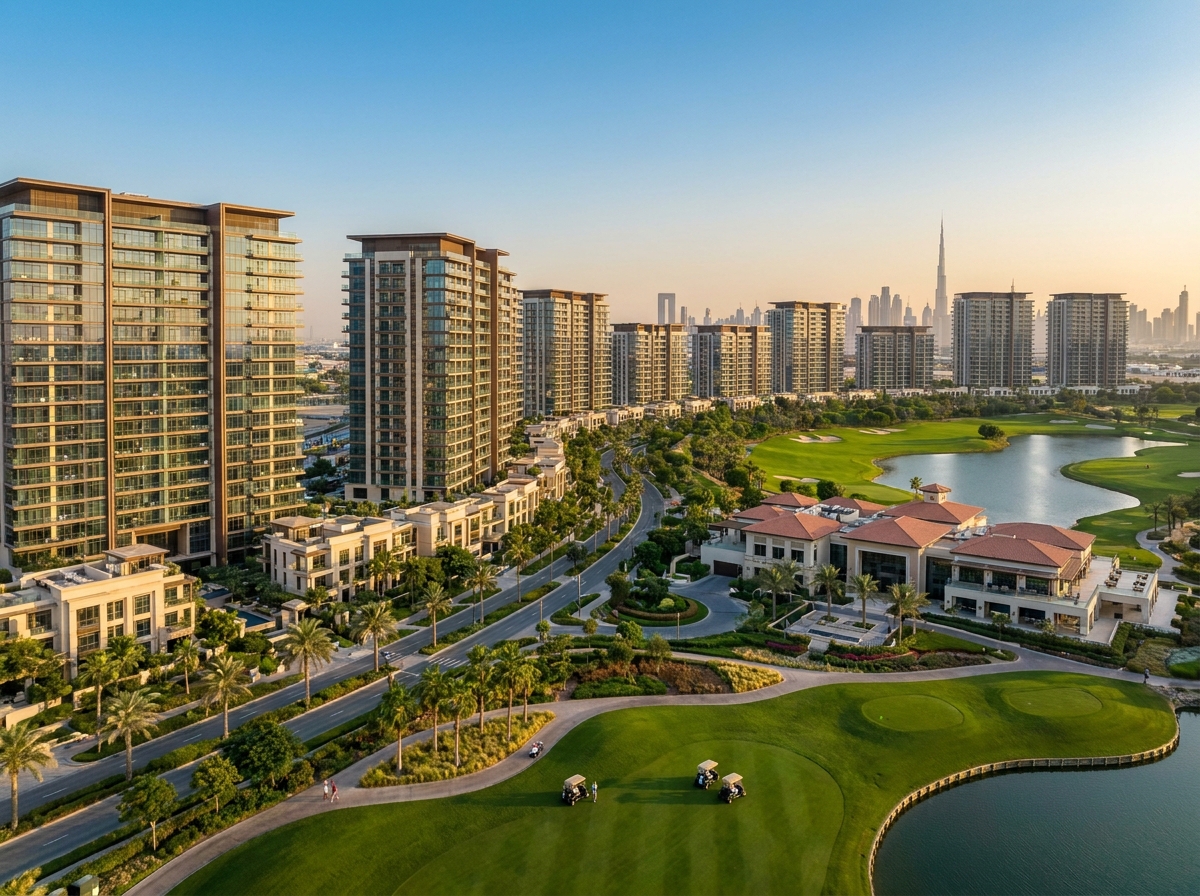
Soon to be launched — register your interest early Searching for the right Dubai off-plan property to invest in? Emaar Golf Trails has quickly become one of the most talked-about launches in the market. Set within the Emaar South district of Dubai South, the development delivers golf course views and fast connectivity to Al Maktoum International Airport. Yet for most serious buyers, location isn’t the final decision-maker — it’s the price and, above all, how the payment plan is structured. Like most Emaar developments, Emaar Golf Trails runs on an 80:20 payment ratio: you pay 80% across the construction phase and the remaining 20% at handover. Below is the full breakdown of what you’ll actually pay, and when. Emaar Golf Trails Installment Structure Explained The plan follows a clear 10 | 70 | 20 split — 10% down payment, 70% through construction, and 20% as the final handover payment. Use the tabs below to see each phase. 10% Down Payment 70% Construction 20% Handover 10% Down Payment (Booking Amount) This secures your unit. Here’s what that looks like across the different apartment types: 1-bedroom apartment starting at AED 1.25M → AED 125,000 down payment 2-bedroom apartment priced at AED 1.81M → AED 181,000 down payment 3-bedroom apartment → AED 271,000 down payment Note: the 10% shown above is the down payment only. At booking you also pay the 4% DLD registration fee plus an admin/oqood fee of approximately AED 3,500 — both are separate from, and additional to, the 10% down payment. 70% During the Construction Phase Instead of one large lump sum, Emaar breaks the 70% into manageable installments spread across the build. For a 1-bedroom apartment, that’s AED 875,000 paid across 7 installments: Installment Trigger Amount Timing 1st Time-based milestone AED 125,000 Within 60 days of booking date 2nd Time-based milestone AED 125,000 Within 6 months of booking date 3rd Time-based milestone AED 125,000 Within 10 months of booking date 4th Time-based milestone AED 125,000 Within 14 months of booking date 5th Construction-linked AED 125,000 At 50% construction completion 6th Construction-linked AED 125,000 At 70% construction completion 7th Construction-linked AED 125,000 At 90% construction completion 20% on Handover The final 20% is payable on handover, scheduled for 2030. How it adds up (1-bedroom): 10% down payment (AED 125,000) + 70% across 7 construction installments (AED 875,000) + 20% on handover (AED 250,000) = AED 1,250,000, the full price of the unit. The 10% booking and the 70% construction stage together make up the 80% paid before handover; the final 20% completes the price. Why the Emaar Golf Trails 80:20 Payment Plan Works in Your Favor This payment structure offers several clear advantages for off-plan buyers: Low upfront capital. You only need 10% of the unit price to book. Historically, off-plan properties appreciate around 20–30% between launch and handover — buy now on the 80:20 plan and you’re positioned to capture that same upside. See our full breakdown of off-plan ROI, rental yields and payment plans. Mortgage-friendly. The installment structure is compatible with bank mortgages, so you can finance your payments through a lender. Run the numbers with our mortgage calculator. Golden Visa eligibility. Purchase a 3-bedroom apartment (or one of the limited 3-bedroom townhouses) and you can comfortably qualify for the UAE Golden Visa — see the 2026 UAE visa rule changes for the current thresholds. Additional Costs to Budget For The 80:20 plan keeps your entry cost low, but factor these one-time fees into your initial outlay: DLD Registration Fee — 4% of property value (payable separately, on top of the down payment) Agency Fee — 2% Admin / Oqood Fee — approximately AED 3,500 New to the process? Start with our step-by-step guide to buying off-plan property in Dubai. Emaar Golf Trails: A Rare Entry Point Into an Established Golf Community A compelling new opportunity has arrived in one of Dubai’s most established golf course communities. Emaar Golf Trails is coming soon, and it’s the kind of launch that rewards buyers who move early. Indicative starting prices (approximate): 1-Bedroomfrom AED 1.25M 2-Bedroomfrom AED 1.81M 3-Bedroomfrom AED 2.71M 3-Bed Townhousefrom AED 5.25M Per sq. ft.approx. AED 1,800 Please note: all prices above are approximate and subject to change at official launch. Exceptional pricing, an established golf course community, and genuine long-term upside — this is an opportunity serious investors won’t want to miss. It’s coming soon — get your clients ready. Why Emaar Golf Trails Is a Strong Investment 1 Set Within an Established Championship Golf Community Emaar Golf Trails sits inside Emaar South, a fully realised master community built around an 18-hole championship golf course set amidst vibrant greenery. Golf-fronting homes are among the most resilient assets in Dubai — the view and lifestyle can never be built out or replicated next door, which protects both resale value and rental demand over the long term. Existing golf-facing releases in the same community include Emaar Golf Hills, Emaar Golf Verge and Emaar Fairway Villas III. 2 A Master-Planned Community at Scale Emaar South isn’t a standalone tower — it’s a thriving, fully planned community with 22,700 residential units, 15,360 apartments, 53,000 sqm of retail and dining space, and 25 neighbourhood parks. Residents already enjoy schools such as Greenfield International School, healthcare including the Saudi German Clinic, and a full spread of retail and leisure. Buying into a community of this scale means your investment grows alongside years of continued infrastructure and population inflow. Browse every live release across the district on our Dubai South community page. 3 Five Minutes From Al Maktoum International Airport (DWC) Emaar South is just 5 minutes from Al Maktoum International Airport (DWC) — set to become the world’s largest airport. As passenger capacity and airport-linked employment scale up, demand for quality housing nearby rises with it. Proximity to a mega-airport is one of the clearest long-term rental-demand drivers in any global city. We covered the numbers in detail in how the Al Maktoum airport expansion is impacting Dubai South off-plan prices.

The UAE Railway Revolution: How the Abu Dhabi–Dubai Link is Changing Lives (and Real Estate) in 2026
Off-Plan Investment By First Stone Real Estate • 9 July 2026 • 8 min read For decades, the journey between Abu Dhabi and Dubai was defined by the E11 highway — thousands of professionals making an exhausting 1.5 to 2-hour drive every single day, waking before dawn and losing precious hours to rush-hour traffic. In 2026, that changed. The launch of the UAE’s national passenger railway is not just an infrastructure upgrade; it is a lifestyle revolution that is fundamentally reshaping where people choose to live and work. For savvy real estate investors, this shift has opened one of the most lucrative off-plan investment windows in UAE history. Below is a closer look at how the railway started, its first passenger journey, the stations it connects, the impact it is already creating, and why properties positioned between Abu Dhabi and Dubai are set to rise in value. ⚡ Key Takeaways The first Etihad Rail passenger train ran on 30 June 2026 from Fujairah to Abu Dhabi. The Dubai station (Jumeirah Golf Estates) opens 30 September 2026 — directly linking Dubai and Abu Dhabi by rail. Train travel between the two cities will take about 57 minutes, roughly half the peak-hour drive. Corridor communities like Dubai South and areas near Jebel Ali are prime off-plan zones benefiting from the “transit premium”. In this article How the railway started The first passenger train Every station on the map Early feedback When Dubai station opens Why it’s a goldmine for investors Frequently asked questions How the Railway Started The vision for a national rail network began as a central pillar of the UAE’s “Projects of the 50” initiative, launched in 2021 to connect all seven emirates and eventually integrate with the wider GCC. For years, the 900-km Etihad Rail network quietly proved itself by running freight trains, taking thousands of heavy trucks off the roads. In 2026, that same network reached a historic turning point: the transition from moving cargo to moving people. Passenger operations are run by Etihad Rail Passenger Services — a joint venture between Etihad Rail and global transport operator Keolis — with a fleet of 13 modern trains built by Spain’s CAF, each carrying up to 400 passengers and capable of speeds up to 200 km/h. 900kmNational network length 13Modern CAF trains 200km/hTop passenger speed 400Passengers per train The First Passenger Train: Where It Started and Where It Went History was made on the morning of 30 June 2026. At 5:34 am, the very first Etihad Rail passenger train pulled out of Al Hilal City station in Fujairah and set off across the country toward Mohamed bin Zayed City station in Abu Dhabi. The inaugural journey covered the Abu Dhabi–Fujairah corridor in about 1 hour and 45 minutes, gliding at speeds of up to 200 km/h — a route that would normally take far longer by road. Six daily return journeys now run on this introductory line, with fares starting at just AED 55 for Comfort Class and AED 120 for Premium Class. Every Stop on the Etihad Rail Map The full Etihad Rail passenger network will eventually connect 11 cities and regions in one continuous line, stretching from Al Sila in the far west to Fujairah in the east. The stations are opening in carefully planned phases — use the tabs below to explore each one. Phase 1 Phase 2 Phase 3 Phase 4 30 June 2026 — Introductory Phase The network goes live The first two stations open: Mohamed bin Zayed City (Abu Dhabi) and Al Hilal City (Fujairah), launching the Abu Dhabi–Fujairah corridor with six daily return journeys. 30 September 2026 — Official Launch Dubai joins the network The Dubai station at Jumeirah Golf Estates and Al Dhaid (Sharjah) come online — the moment Dubai and Abu Dhabi are directly linked by rail. The Dubai station connects to the city via RTA feeder buses and taxis for smooth last-mile access. This is the date that matters most for investors. 30 December 2026 The Al Dhafra region opens Five western stations go live: Al Sila, Al Dhannah, Mirfa, Madinat Zayed and Liwa — extending the line deep into the Al Dhafra region. 30 March 2027 The network is complete Sharjah’s University City station opens, completing the full national passenger network from Al Sila to Fujairah. The Early Feedback: A Nation That Couldn’t Wait Public response has been overwhelming. When tickets first went on sale on 23 June 2026, seats for the opening day sold out within hours. On launch morning, hundreds of passengers packed the very first departure from Fujairah — a powerful signal of just how much demand there was for a faster, greener way to travel between the emirates. Etihad Rail expects annual ridership to climb toward 36.5 million passengers by 2030, and executives project the passenger network alone will generate roughly AED 91 billion in economic and social benefits over the next 50 years. What Happens When the Dubai Station Opens on 30 September 2026 This is the date that changes everything for residents and investors between the two cities. Once the Jumeirah Golf Estates station opens, Abu Dhabi and Dubai will be directly linked by rail for the first time. Here’s what that means for everyday life: 1 The Abu Dhabi–Dubai connection Travel between the two economic capitals will take around 57 minutes by train — roughly half the typical peak-hour drive. A separate high-speed line, capable of up to 350 km/h, is planned to eventually cut this to just 30 minutes. 2 Freedom of location Previously, if you worked in Abu Dhabi you had to live in Abu Dhabi. Now a professional can accept a high-paying job in the capital while living in a vibrant Dubai community like Jumeirah Golf Estates or Dubai South — or the other way around. 3 Productive, comfortable commutes Guaranteed seating, reclining premium seats, charging points, air-conditioned comfort and onboard dining turn a stressful drive into productive work time or relaxing downtime. 4 A greener, safer

UAE Visa Rule Changes 2026: What They Mean for Off Plan Property Investors
Home › Blogs › UAE Visa Rule Changes 2026 & Off Plan Property Trending News · UAE 2026 Updated: 7 July 2026 Read: 12 min By: First Stone Real Estate Investor & NRI focused ⚡ Quick Answer The UAE introduced six major visa rule changes in 2026: expanded visa-on-arrival for six new nationalities, 48-hour Dubai tourist visas, revised property investor visa rules, a 30-day overstay grace period, an upcoming Smart Medical Visa, and a precautionary visa suspension for three Ebola-affected countries. For off plan property buyers, the headline is change #3: the old AED 750,000 minimum was removed for the 2-year property investor visa — a sole owner now qualifies at any value, while joint owners each need a share of at least AED 400,000. Off-plan units also count toward the AED 2 million Golden Visa route, so residency and a growing asset can now be secured together. 6Major visa changes in 2026 48hrDubai tourist visa approval 0Min value — sole-owner investor visa 2MAED Golden Visa (off-plan eligible) Few markets rewrite their rulebook as often as the UAE — and 2026 has been a heavy year for it. Between June and July, authorities rolled out a cluster of visa reforms that touch tourists, medical travellers, and, most importantly for our clients, property investors. If you are researching off plan property in Dubai or the wider Emirates, these changes directly affect how — and how quickly — a purchase can convert into UAE residency. This guide breaks down all six changes in plain English, then goes deeper on the two that matter most to buyers: the revised property investor visa and the AED 2 million Golden Visa off-plan route. Everything here reflects publicly reported updates as of July 2026; visa policy moves fast, so always confirm the current position with the DLD, ICP or GDRFA (or ask our team) before you commit. On this page Which change affects you? Expanded visa-on-arrival 48-hour Dubai tourist visa Property investor visa rules Overstay fine relief Smart Medical Visa Ebola-related suspension Off-plan + the AED 2M Golden Visa Property tiers vs visa routes How First Stone helps FAQs Which change affects you? The 2026 reforms are not one-size-fits-all — each measure targets a different type of visitor. Pick your profile below to see exactly what changed for you. 🏠 Property Investors ✈️ Tourists 🩺 Medical Travellers 💼 Business & Others Biggest impact What changed for property buyers The AED 750,000 minimum property value for the 2-year investor visa has been removed for sole owners — you now qualify regardless of the unit’s value if you hold it 100% in your name. Joint owners must each hold a share worth at least AED 400,000, even when ownership is split equally. Off-plan units qualify for the AED 2M, 10-year Golden Visa — you don’t have to wait for handover to start the residency process. A unified GDRFA–DLD digital platform has shortened property-linked visa processing dramatically in 2026. Faster entry What changed for tourists Visa-on-arrival now extends to nationals of Indonesia, Vietnam, Thailand, the Philippines, Kenya and South Africa (previously limited to India). More qualifying residence countries were added — including Singapore, Japan, South Korea, Australia, New Zealand and Canada — alongside the US, UK and EU. Dubai single-entry tourist visas can be approved in 48 hours via authorised tourism offices. Coming soon What changed for medical travellers Dubai is launching a Smart Medical Visa that links visa, residency and healthcare into a single digital journey. It follows a memorandum of understanding between GDRFA – Dubai and the Dubai Health Authority. Patients would move from application to treatment and follow-up without juggling separate approvals. Good to know What changed for everyone else A 30-day grace period was granted to visitors who overstayed because of regional airspace closures and flight disruptions earlier in 2026. New visa issuance was temporarily suspended for nationals of the DRC, Uganda and South Sudan as an Ebola precaution (effective 6 June 2026). Business travellers benefit indirectly from the 48-hour tourist visa window for last-minute trips. 01Expanded visa-on-arrival 1 Six new nationalities, plus more qualifying residencies The Federal Authority for Identity, Citizenship, Customs and Port Security (ICP) widened the visa-on-arrival scheme that was previously available only to eligible Indian passport holders. It now covers citizens of Indonesia, Vietnam, Thailand, the Philippines, Kenya and South Africa under the 14-day and 60-day visitor categories. Separately, the list of qualifying countries of residence expanded. In addition to holding US, UK or EU residency, applicants can now also use valid residency in Singapore, Japan, South Korea, Australia, New Zealand or Canada. In practice, this removes weeks of embassy processing for a large pool of travellers — many of whom later become buyers. 0248-hour Dubai tourist visa 2 Single-entry approval in two days Travellers heading to Dubai can now have a single-entry tourist visa approved within 48 hours when they apply through authorised tourism offices, according to the General Directorate of Identity and Foreigners Affairs – Dubai (GDRFA). These visas are typically valid for 30 to 60 days. For overseas buyers, this matters more than it looks: a faster tourist visa means you can fly in for a launch event or a site visit on short notice, view a shortlist of off plan projects in Dubai, and reserve a unit while prices are still at launch level. 03Updated property investor visa rules 3 The AED 750K floor is gone — the change every buyer should know This is the reform with the most direct impact on real estate. Under the revised rule for the two-year property-linked residency, the previous minimum property value of AED 750,000 for individual investors has been removed. A sole owner can now qualify regardless of the property’s value. There is one important condition for co-buyers: if a property is jointly owned, each investor must hold a share worth at least AED 400,000 to be eligible — even where ownership is split equally. So a couple buying together should structure the purchase with this threshold in

Sold Out Before Sunset: How Al Ghadeer Gardens Cleared AED 1 Billion in Hours — and Why Phase 2 on 8 July Is Your Second Chance
Sold Out Before Sunset: Al Ghadeer Gardens Phase 2 — First Stone Real Estate First Stone Real Estate Published by First Stone Real Estate 437 homes. A few hours. Over AED 1 billion gone. And 64% of the buyers were not even in the UAE. Phase 2 of Al Ghadeer Gardens opens on 8 July 2026, and the same investors are circling again. Register with First Stone Real Estate before the portal opens, because the first phase did not wait for anyone. Picture the launch day. Aldar puts 437 townhouses and villas on the market at a spot on the Abu Dhabi–Dubai border that most people could not point to on a map. By the time the working day was over, every home was sold and the tally had crossed a billion dirhams. No slow burn. No months of “selling well.” Gone. The obvious question is why. Why would investors from India, China, the UK, and across the UAE throw more than AED 1 billion at a community that will not even hand over keys until 2029? Sit with that question, because the answer is the whole reason Phase 2 is worth your attention right now. The Sell-Out Was the Real Advertisement Forget the brochure for a second. The most honest thing anyone can tell you about Al Ghadeer Gardens is what the market did with the first release. Two numbers cut through the noise: 83% of the buyers were first-time Aldar customers. This was not existing owners shuffling money around. It was brand new demand walking in the door. 64% of sales came from expats and overseas investors, with buyers from the UAE, India, China, and Jordan leading the pack. When people who can buy property anywhere in the world look at their options and put their money here, in a phase that clears in hours, that is a signal you cannot fake. Aldar saw it too. Rather than sit on the momentum, the developer pulled the second phase forward. Phase 2 launches on 8 July 2026. That is your opening. Same corridor. Same pricing structure. Same appetite that emptied the first release. A fresh batch of units, and a short runway before they go the same way. What Those Investors Actually Saw Most buyers look at a home and ask where it is today. Investors look at the same home and ask where the map is heading. Al Ghadeer Gardens sits on top of the answer. Inside a 20-minute radius you have three of the biggest bets the UAE is making this decade: Al Maktoum International Airport, being expanded into what is planned as the largest airport on earth, built for 260 million passengers a year Dubai South and Expo City, the business and logistics engine filling in around that airport The future Palm Jebel Ali, Dubai’s next signature waterfront None of it is finished. That is the point. The land and homes around this growth have not yet priced in what the area becomes once the cranes come down. Buy now and you are standing at the front of the curve, not chasing it after everyone else has. The track record supports the thesis. Knight Frank puts Abu Dhabi villa price growth at roughly 35% over five years. Now drop a mid-market entry point onto the seam between two of the world’s most active cities. You do not need a spreadsheet to see where that goes over a decade. The Numbers That Make Investors Lean In This is where it stops being a story and starts being a deal: Entry from AED 1.7 million for a two-bedroom townhouse, which is genuinely mid-market for a villa community in this location 5% on booking, with a 55/45 payment plan, so most of your capital stays in your pocket while the asset appreciates through construction Rental yields of 5–6% a year across the wider Al Ghadeer area, kept steady by airline crews, logistics staff, and cross-emirate commuters who need exactly this address A 2% registration fee in Abu Dhabi, half of Dubai’s 4%, which quietly shaves thousands off your cost of entry Golden Visa territory above AED 2 million, so the asset comes with 10-year residency for you and your family If you are a Dubai resident who has watched villa prices at home climb out of reach, or an investor sitting in the US or UK who wants a real asset in a stable, dollar-pegged market, this stack of low entry, deferred payments, yield, tax efficiency, and residency is hard to find anywhere else in one place. Read the Marketing. It Is Telling You Something. Notice how hard Aldar is pushing this one. The campaign is on every feed, the creatives are polished to a shine, there are sales centres running on both Yas Island and Jumeirah Beach Road, and the whole launch is built on a digital broker portal designed to handle a flood of buyers. Developers do not spend like that on projects they expect to whisper out the door. A marketing push this size is deliberate, and seasoned investors know how to read it. It means Aldar is manufacturing demand, and demand is the thing that gives you resale liquidity and price support years from now. When the developer is this invested in filling a community, your future exit gets easier, because there will always be someone behind you wanting in. So the marketing is not just hype washing over your feed. It is Aldar building the exact demand that protects your investment on the way out. What You Are Actually Buying Al Ghadeer Gardens is a low-rise community of townhouses and villas from Aldar, Abu Dhabi’s largest developer. The first phase offered: Two-bedroom townhouses from around 152 sqm Three-bedroom townhouses in middle and corner layouts up to about 200 sqm Four-bedroom standalone villas around 247 sqm, with their own private pools Every home opens up on the ground floor, comes with a fitted kitchen and a private garden, and offers a choice of light

Off Plan Property Investment in Dubai: ROI, Rental Yields & Payment Plans (2026)

Off Plan Property: The Complete 2026 Guide to Meaning, Process, Risks & How to Buy in Dubai

Off Plan Property by West F5 | 2026 Dubai Projects, Prices & Plans
Off Plan Property by West F5 | 2026 Dubai Projects, Prices & Plans Home / Blogs / Off Plan Property by West F5 West F5 Developer Guide · Dubai 2026 Every live West F5 Development off plan project in Dubai — including the nature-inspired West 5 Residences and the branded DoubleTree by Hilton — with real prices, payment plans, yields, freehold rules and Golden Visa eligibility. By First Stone Real Estate · Dubai Off-Plan Specialists · Updated June 2026 · 10 min read ⚡ Quick Answer Off plan property by West F5 Development means investing with one of Dubai’s fastest-rising boutique luxury developers. Formed in 2024 as a strategic powerhouse alliance between the UAE retail giant West Zone Group and real estate powerhouse Fortune 5, West F5 is dominating the urban regeneration of Jumeirah Garden City (Al Satwa). Their 2026 portfolio is anchored by West 5 Residences and the branded DoubleTree by Hilton Residences. Prices start from around AED 1.5 million, with highly flexible 50/50 payment plans, 6–8% rental yields, full freehold ownership, and immediate Golden Visa eligibility above AED 2 million. On This Page What is off plan property by West F5? Why West F5 is a smart Dubai bet in 2026 Is it a good investment in 2026? Every West F5 off plan project West F5 off plan prices Payment plans explained Freehold, Golden Visa & tax How to buy, step by step Why Jumeirah Garden City? Frequently asked questions What is off plan property by West F5 Development? Off plan property by West F5 Development is a premium residential or branded asset that you secure directly from the developer before construction completes, paying via structured milestones tied to the build phase. West F5 is not a mass-market builder erecting identical towers in the desert. They focus specifically on the high-end urban regeneration of central Dubai districts. When you buy off plan with West F5, your capital is protected under the strict escrow laws of the Dubai Land Department (DLD), allowing you to lock in introductory pricing and capture massive capital appreciation as the building rises to its Q2 2027 handover dates. The appeal is clear: strategic urban locations, world-class hospitality partnerships, smart-home integration, and the financial security of a multi-billion-dirham retail conglomerate. Why West F5 is a smart Dubai off-plan bet in 2026 West F5 Development emerged with an unprecedented market advantage. Established as a strategic alliance, it combines the immense retail supply chain dominance of the West Zone Group with the deep real estate investment acumen of Fortune 5. 2024Alliance Formed AED 500M+Project Launch Value BrandedHilton & Marriott 6–8%Target Rental Yields In 2026, their market strategy is razor-sharp. They are not competing in saturated areas; they are cornering the market in Dubai’s most vital emerging neighborhood: The Hospitality Edge: Beyond standard residential, West F5 is heavily vested in hospitality, including the launch of DoubleTree by Hilton Residences and the Marriott Marquis Dubai at Jewel of the Creek, proving their execution capability to global brands. Financial Muscle: Because they are backed by the West Zone Group—a retail titan with massive liquidity—investors face practically zero completion risk. Design Philosophy: West F5 focuses on “nature-inspired urban luxury.” Their 11-storey structures incorporate smart tech, high-end glazing, and abundant greenery right in the center of the concrete city. Is off plan property by West F5 a good investment in 2026? Yes — off plan property by West F5 represents a highly strategic, capital-growth play due to its hyper-central geography. The investment case rests on the regeneration of Al Satwa into Jumeirah Garden City. The “Downtown Extension” Effect: Jumeirah Garden City sits parallel to Sheikh Zayed Road, literally minutes from DIFC, Downtown Dubai, and City Walk. Buying off-plan here captures the corporate tenant overflow from Dubai’s financial centers. The Branded Premium: Properties like DoubleTree by Hilton Residences historically command a 25% to 35% resale premium and higher nightly rental rates compared to non-branded buildings. Tax & Ownership: Full freehold for all nationalities, zero property tax, zero capital gains tax, and Golden Visa eligibility for properties over AED 2 million. Model your exact numbers with our mortgage calculator, or talk to our advisory team to match a floor plan to your goals. Every West F5 off plan project in 2026 West F5’s portfolio is sharply focused on urban luxury. Use the tabs below to explore their active residential and branded hospitality developments. Prices are launch figures and move rapidly with market demand — confirm live pricing before reserving. West 5 Residences DoubleTree by Hilton Marriott Marquis Dubai West 5 Residences — The Nature-Inspired Sanctuary Located in the heart of Jumeirah Garden City (Al Satwa), West 5 Residences is an 11-storey architectural gem. It combines modern elegance with extensive community greenery, offering premium 1 and 2-bedroom light-filled apartments tailored for young professionals and investors seeking high ROI. Detail Information Property Type 1 & 2 Bedroom Premium Apartments Size Range 818 to 1,453 Sq.Ft. Starting Price From ~ AED 1,500,000 Payment Plan 50 / 50 Handover Q2 2027 Browse live West 5 availability on our Dubai off-plan page. DoubleTree by Hilton Residences — Branded Luxury A landmark AED 500 million branded residential complex in Jumeirah Garden City. This 128-apartment development fuses residential privacy with world-class Hilton hospitality. Owners gain exclusive Hilton Honors Gold status, unlocking global discounts and VIP concierge access. Detail Information Property Type 1 & 2 Bedroom Branded Residences Size Range 667 to 1,130 Sq.Ft. Starting Price AED 1,750,000 Payment Plan 50 / 50 Handover Q2 2027 Marriott Marquis Dubai — Master Hospitality Highlighting West F5’s massive capabilities beyond standard residential, they are the driving force behind the Marriott Marquis Dubai at the Jewel of the Creek. A 590-key luxury complex featuring extensive retail promenades and an 85-berth marina. Highlight Detail Scope 434 Guest Rooms & 156 Serviced Apartments Amenities Six F&B outlets, Marina, Spa, Conference Centers Significance Proves West F5’s elite execution standards How much does off plan property by West F5 cost? Off plan property by West F5 starts from